September 12, 2026
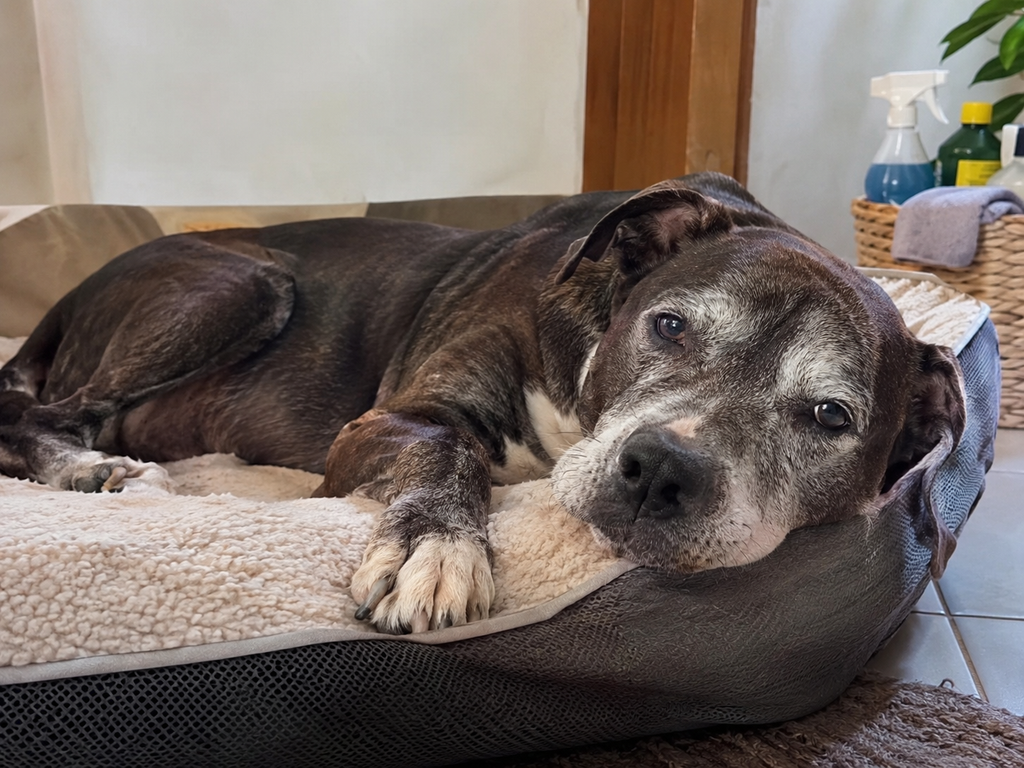
When evaluating what are the dangers at home for older dogs, the correct storage of substances is the preventive barrier that prevents the domestic environment from exposing the senior patient to unpleasant surprises and preventable intoxications.
Disclaimer: This article is strictly informative and educational in character, and does not in any way replace consultation, diagnosis, and prescription from a duly qualified veterinarian. Each organism reacts uniquely, and any alteration in your pet’s routine, medication, or management must be done exclusively under professional guidance.
Aging brings with it a series of silent physical and neurological transformations that profoundly alter the animal’s relationship with its living environment. What was once a perfectly safe home for a young, energetic dog can transform into a true labyrinth of risks for a senior canine. The concept of what are the dangers at home for older dogs goes far beyond obvious poisons or poorly stored cleaning products; it encompasses the very architecture of the home, cognitive declines, and the organic vulnerability typical of advanced age. Understanding these invisible threats is the first step toward guaranteeing a dignified, safe old age free of preventable accidents.
Environmental and Physical Risks and the Impact of Cognitive Dysfunction
Over the years, the canine organism suffers joint wear, loss of muscle mass, and sensory changes, such as the gradual decrease in vision and hearing. It is in this scenario that everyday environmental risks take on a dramatic weight. Slippery floors, such as polished porcelain or laminate, become extremely slick surfaces for paws that no longer possess the same grip or strength. Every attempt to walk can result in micro-slips, generating severe joint stress and drastically increasing the likelihood of falls and fractures.
Added to this are unprotected stairs and level changes between rooms, which represent dangerous traps for dogs with reduced mobility. High furniture and elevated beds also enter the list of physical risks, as many senior animals insist on jumping up or down by impulse, ignoring the limits of their own bodies and suffering disastrous impacts upon landing.
However, the dangers are not limited only to the physical structure of the house. Neurological decline, frequently associated with canine cognitive dysfunction syndrome—the equivalent of human Alzheimer’s—alters the animal’s spatial perception and memory.
My Genuine Experience with Goe
In accounts of practical experiences with my senior dog Goe, I observed some very clear signs of mental confusion, monitored integrally by the veterinarians who cared for him. In moments of greater disorientation, it was common to see him standing still staring at a wall or trapped behind a piece of furniture because he didn’t know how to back up, a direct reflection of the neurological wear that altered his spatial perception. To modulate associated chronic pain and calm the central nervous system in these situations, the use of gabapentin was utilized—a neuromodulatory medication prescribed with rigorous veterinary medical monitoring to guarantee the comfort and safety of the patient.
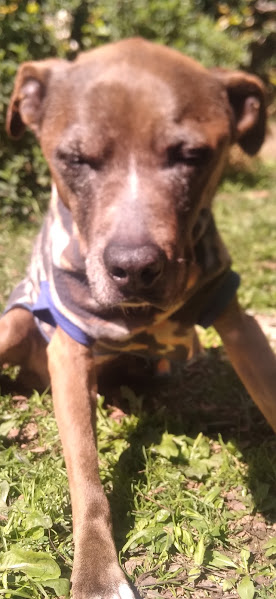
Goe enjoying a peaceful sunbath after the administration of gabapentin, in a moment of pause where comfort and neurological stability walk hand in hand.
👉 For a better understanding of this topic, we recommend reading the article below: https://logicalbark.com/gabapentin-for-senior-dogs-experience-with-goe-and-essential-information/
How to Adapt the Home to Protect the Senior Dog
Modifying the domestic environment to meet the needs of an older animal is an act of deep respect and preventive care. Adaptation must be surgical and focused on eliminating barriers that compromise the patient’s autonomy and safety.
- Floor Adequacy: Cover heavy traffic areas and hallways with non-slip rubberized rugs or firm runners. This creates safe “trails” where the dog can support itself without the risk of sliding.
- Blocking Level Changes: Install safety gates on stairs and restrict access to upper or lower floors when the owner is not around to supervise.
- Furniture Stability and Accessibility: Avoid abruptly changing the layout of the home’s furniture, as older dogs—especially those presenting visual or cognitive deficits—depend on spatial and tactile memory to move around without bumping into structures. If the dog has the habit of getting on the sofa, use access ramps covered with non-slip carpet instead of loose steps.
- Thermal and Orthopedic Comfort: Replace ordinary beds with high-density orthopedic mattresses, positioned in easily accessible places, away from drafts and where the animal can rest without being surprised by noises or bumps.
To complement the article, here is an example for knowledge: https://amzn.to/4hoCB9m
Signs of Pain That Demand Immediate Attention
Identifying physical suffering in an older dog requires detailed observation, since animals tend to mask symptoms of pain as a survival instinct. Subtle changes in daily behavior are usually the first indicators that something is wrong.
Among the most evident signs of chronic pain—frequently associated with osteoarthritis or spinal degenerations—are prolonged hesitation before getting up, reluctance to climb onto surfaces where they previously went with ease, rapid breathing at rest, and insistent licking of a specific joint. Stiffness when walking after rest periods and mood alterations, such as apathy or irritability to touch, also merit immediate clinical investigation for the institution of appropriate analgesic protocols.
Inappropriate Foods, Cleaning Products, and Poisons
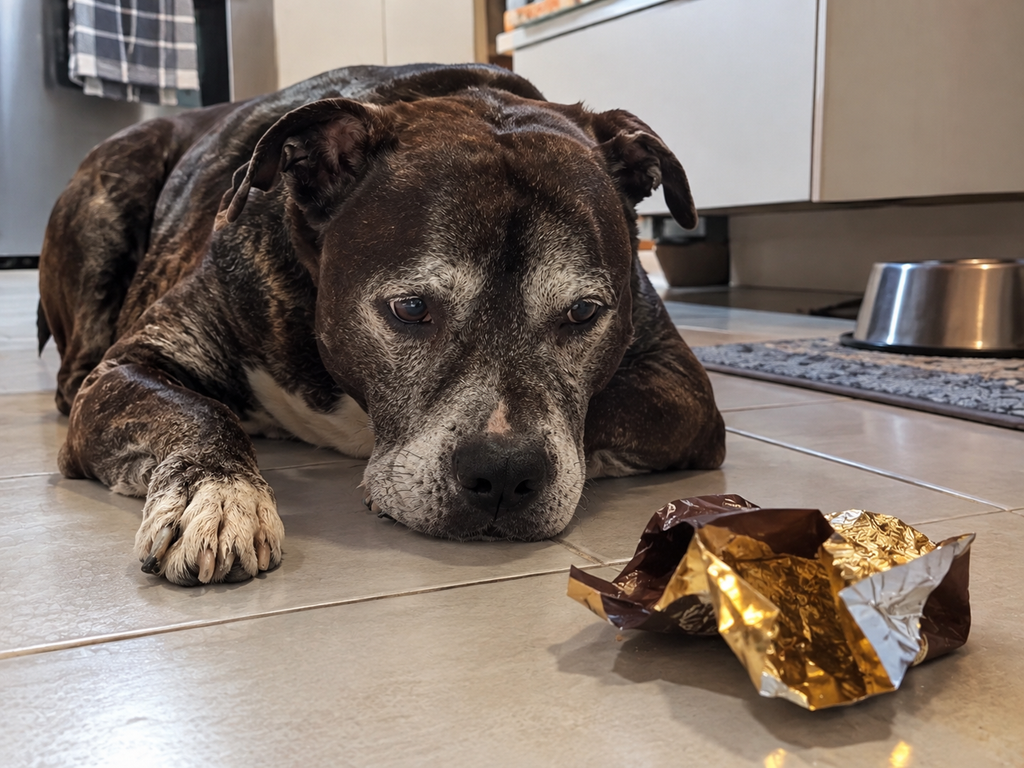
The olfactive curiosity of a senior dog in front of discarded wrappings reveals what are the dangers at home for older dogs that demand redoubled attention, transforming a simple chocolate disposal into a potential metabolic emergency.
The metabolic vulnerability of the senior dog turns any carelessness regarding the ingestion of inappropriate substances into a true medical emergency. With the hepatic and renal systems operating with lower efficiency, the senior organism has much more difficulty processing toxins.
One of the most frequent dangers inside the home stems from curiosity associated with cognitive disorientation, leading the animal to rummage through trash cans in search of food scraps. Foods highly toxic to dogs—such as chocolate, onion, garlic, grapes, and xylitol-based sweeteners—can cause severe organ failure within hours.
In addition to inappropriate foods, accidents with cleaning products and household poisons represent an invisible threat. Chlorinated disinfectants, scouring powders, laundry powders left in buckets on the floor, and rodenticides applied in hard-to-reach corners are easily licked or absorbed by the paws of dogs that walk dragging themselves along the floor. The rigorous storage of these substances in locked cabinets and the use of pet-friendly cleaning products are non-negotiable measures to preserve the physical integrity of the senior patient.
Conclusion: All this adaptation is part of it, and we at Latido Lógico believe that all care to adapt the home for an older dog should pass unnoticed, because logic exists not only in barks, but in aging as a whole.
You may also like

Lusiane Costa is a digital writer with degrees in Marketing and English Literature.
Creator of Latido Lógico and Logical Bark, she develops evidence-based content on canine aging, wellness, and senior-dog health.
The project was inspired by Goe — a senior dog whose longevity and resilience shaped a grounded, compassionate view on the challenges of aging in pets.
Each article reflects her commitment to transforming real experiences into accessible knowledge, helping owners understand, prevent, and care better for their animals at every stage of life.
Goe remains the heartbeat of this project.