
The arrival of old age in a dog’s life brings a series of profound transformations in behavior, mobility, and the perception of the world around them. If our companion once explored every corner of the yard with inexhaustible energy and quick reflexes, in maturity they become more vulnerable, curious in a different way, and often less agile in dodging dangers that once went unnoticed. It is precisely at this stage that home safety needs to be redoubled, and one of the most silent and neglected dangers inside the house or in the garden lies in the vegetation we choose to decorate the environment. Knowing exactly what are the toxic plants for your senior dog is a vital act of protection, because the senior organism no longer deals with toxins and chemical compounds with the same metabolic efficiency as a young animal.
The silent danger inside the house and in the garden
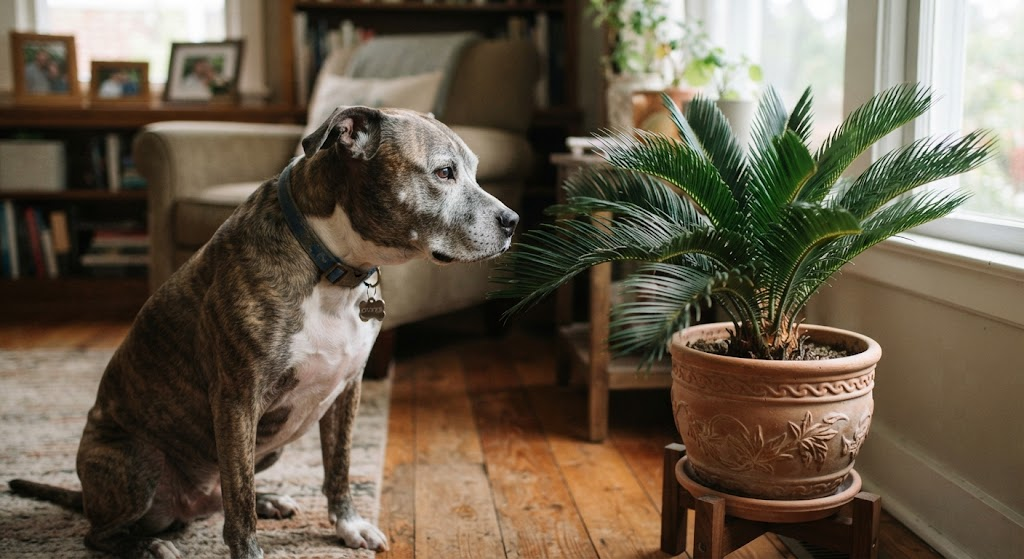
Curiosity that demands attention: monitoring the environment and knowing what are the toxic plants for your senior dog is the first step to ensuring a truly safe home in old age.
Many pet parents mistakenly believe that dogs have an infallible natural instinct that prevents them from chewing or ingesting what could harm them. Unfortunately, the clinical reality in canine geriatrics shows us the opposite. Senior dogs may present cognitive changes, gradual loss of vision or smell, boredom resulting from decreased outdoor walks, or simply the habit of exploring textures with their mouths. When faced with showy foliage, colorful flowers, or succulent stems, the risk of accidental ingestion increases drastically.
When a puppy is poisoned, its young liver and kidneys can often process and excrete the poison much more easily. However, the senior dog frequently already lives with some degree of decline in hepatic or renal function, which turns a simple plant poisoning into a serious medical emergency, capable of triggering multiple organ failure in just a few hours if there is no quick and assertive intervention.
What are the most common poisonous plants and their risks?
To shield the environment where your companion lives, the first step is to know the enemy. Several ornamental species very popular in homes and public squares hide highly harmful active principles. Among the main species that figure on the list of what are the toxic plants for your senior dog, stand out:
- Dieffenbachia (Comigo-ninguém-pode): It is one of the most dangerous and common plants in Brazilian homes. Its leaves contain needle-shaped calcium oxalate crystals. When chewed, these crystals penetrate the tissues of the mouth, tongue, and throat, releasing irritating substances.
- Snake Plant (Espada-de-São-Jorge / Sansevieria trifasciata): Widely used for superstition or aesthetics, it contains saponins in its composition. Ingestion causes strong gastric irritation, intense salivation, nausea, vomiting, and severe diarrhea.
- Monstera / Split-leaf Philodendron (Costela-de-Adão / Monstera deliciosa): Much like the dieffenbachia, it also contains calcium oxalate crystals, causing immediate pain and swelling in the airways.
- Azalea (Azaleia / Rhododendron simsii): It possesses andromedotoxins, which directly affect the central nervous system and the cardiovascular system, potentially leading to severe cardiac arrhythmias and circulatory collapse.
- Calla Lily (Copos-de-leite / Zantedeschia aethiopica): They contain toxins that irritate mucous membranes, causing extreme difficulty in swallowing, choking, and deep gastrointestinal problems.
- Lilies (Lírios / Lilium spp.): Although extremely fatal to cats, lilies and related species also cause significant renal and gastrointestinal damage in dogs.
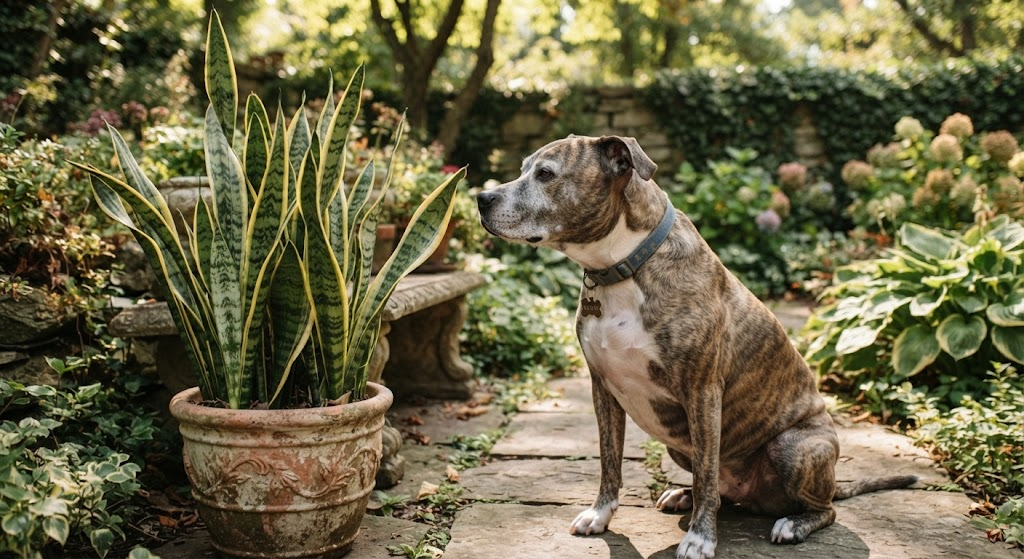
Between myths and real risks: the imposing presence of the snake plant in the garden demands redoubled care, after all, knowing what are the toxic plants for your senior dog prevents severe emergencies during the curious exploration of old age.
Signs of poisoning: how to identify that something is wrong?
Since the senior dog cannot always express pain in an obvious way, the pet parent must be extremely attentive to any subtle change in the animal’s behavior and physiology right after contact with the garden. The signs of plant poisoning can vary depending on the species ingested, but generally include a classic clinical picture that requires immediate attention:
- Gastrointestinal signs: Persistent vomiting, diarrhea with or without the presence of blood, constant nausea, and total loss of appetite.
- Changes in the oral cavity: Excessive salivation (stringy drool), visible swelling on the tongue, lips, or throat, extreme difficulty in swallowing, and frantic licking of their own lips.
- Neurological and systemic signs: Deep lethargy, sudden weakness in the hind legs, disorientation, muscle tremors, seizures, and changes in heart rate (very fast or very slow rhythm).
👉 Want to know more? Also check out this article: https://logicalbark.com/what-are-the-dangers-at-home-for-older-dogs/
Upon noticing any of these symptoms and suspecting that the animal chewed a leaf or flower, despair must give way to technical action. Never try to induce vomiting on your own without the explicit guidance of a veterinarian, because caustic substances can burn the esophagus twice on the way back up. Collect a sample of the suspicious plant and rush to the nearest veterinary clinic.
How to keep your pet away from plants and ensure a safe environment?
Prevention is always the best medicine, and adapting the home to protect a senior dog requires physical and environmental planning. If you do not want to give up having greenery at home, there are efficient strategies to create an impassable physical barrier between the pet and the vegetation.
The use of elevated supports, high shelves, and hanging pots (as long as they stay out of reach of any jump or bump) helps keep the danger away. However, for senior dogs that walk on the yard floor, the safest method is the physical isolation of the green areas.
In my personal experience caring for my dogs and, especially, during the senior phase of my dog Goe, I learned that love is demonstrated with rigorous limits and practical planning. To ensure he could roam freely around the yard without running the risk of approaching ornamental plants that could be toxic, I asked for the garden to have a fence for any type of plant so he couldn’t get close. We installed protective fences and bounded flowerbeds surrounded with firm mesh, ensuring that Goe’s walking space stayed 100% free of any dangerous plant species. This simple physical barrier prevented any accidents and allowed him to enjoy the sun and outdoors with total safety and supervised freedom.
For the complement of the article, here are some floating shelf options that some pet parents usually choose: https://amzn.to/4hrf0Ue
The pain and the solution in the routine with the senior dog
The pain of seeing a four-legged companion suffering from an oversight that could have been avoided is something that deeply marks any pet parent. The vulnerability of canine old age places us before an immense responsibility: we are their eyes, their mind, and their protection when the body no longer responds with the same agility as before.
The definitive solution to the dilemma of what are the toxic plants for your senior dog is information combined with practical action. Replacing poisonous plants with completely safe species (such as cat grass, maranta, or harmless aromatic herbs), installing containment fences in flowerbeds, elevating pots, and maintaining constant vigilance transforms the home into a true sanctuary of peace and longevity. Caring for a senior dog is a daily exercise of dedication and respect for the time we have left beside them, ensuring that each day is lived with safety, health, and plenty of affection.
After all, stories about care routines require a human vision that automated responses cannot copy.
Disclaimer: This article is strictly informative and educational in nature. It does not replace in any way the diagnosis, recommendation, or follow-up of a veterinarian. Each animal has metabolic and clinical individualities, and it is essential to consult a specialized professional immediately if you suspect any ingestion of toxic substances or alteration in your dog’s health.
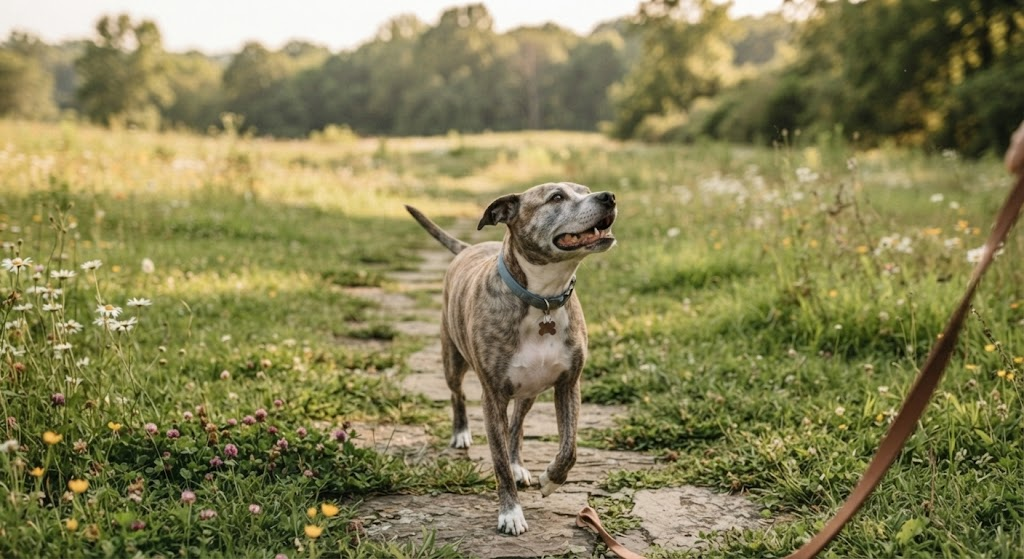
Safe stroll and long life: with the right care and far from hidden perils, canine aging transforms into a light, healthy journey filled with well-being.
You may also like


Lusiane Costa is a digital writer with degrees in Marketing and English Literature.
Creator of Latido Lógico and Logical Bark, she develops evidence-based content on canine aging, wellness, and senior-dog health.
The project was inspired by Goe — a senior dog whose longevity and resilience shaped a grounded, compassionate view on the challenges of aging in pets.
Each article reflects her commitment to transforming real experiences into accessible knowledge, helping owners understand, prevent, and care better for their animals at every stage of life.
Goe remains the heartbeat of this project.