Reaching old age does not mean your dog’s life needs to be reduced to long hours lying on their bed, waiting for time to pass. Quite the contrary: maintaining a well-planned physical exercise routine is one of the most important pillars to guarantee longevity with quality of life. When we talk about what aerobic exercise is good for your senior dog, the concept of exercise needs to be redefined. We are not talking about that strenuous running or uncontrolled play of youth, but rather a structured aerobic activity that slightly elevates the heart rate, stimulates circulation, and, above all, preserves the joints.
Aging brings natural physiological changes, such as the gradual loss of lean mass, joint stiffness, and a decrease in cardiorespiratory capacity. However, a sedentary lifestyle accelerates all these conditions. Introducing adapted aerobic activity is the passport to prevent muscle atrophy and keep your senior’s metabolism functioning in harmony.
The concept of aerobics in canine old age
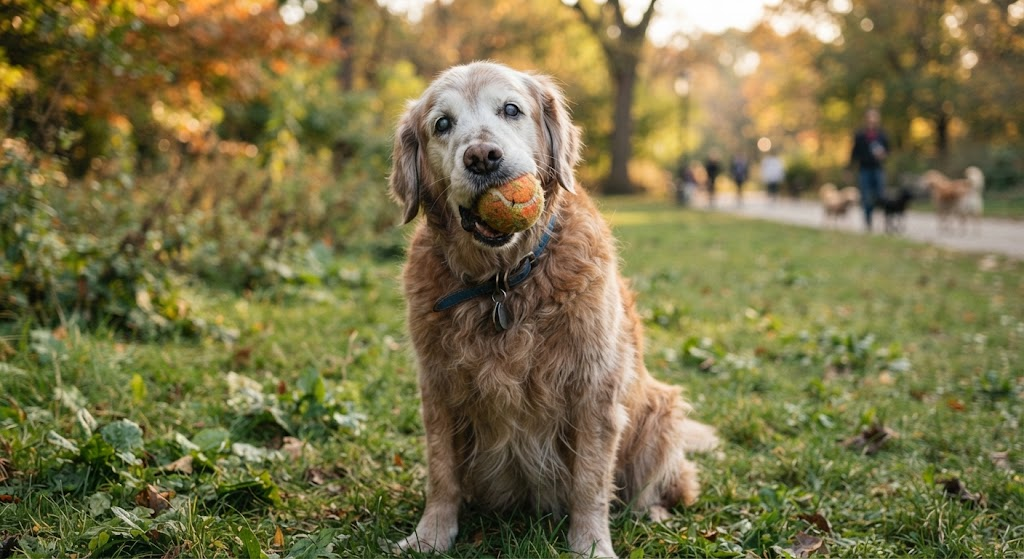
With short, safe throws, the classic game of fetch is one of the best answers regarding what aerobic exercise is good for your senior dog without putting excessive strain on the joints.
When we think of aerobic exercise for humans, treadmills, long-distance running, or high-intensity classes immediately come to mind. In the senior canine universe, the logic is completely different. The appropriate aerobic exercise for an older dog is one that moves the body dynamically, but at a controlled, safe, and strictly individualized pace.
It is not a matter of placing the animal in a quiet, monotonous rhythm where it almost falls asleep walking, nor is it about demanding peaks of physical explosion that overload the skeleton. It is an activity that agitates the pace, slightly accelerates breathing in a healthy way, and activates the cardiovascular system without causing destructive impact.
Before starting any practice, veterinary guidance is absolutely non-negotiable. A complete cardiological and orthopedic check-up will tell you exactly what your dog’s limits are. Knowing what can and cannot be done, the owner gains the freedom to transform simple everyday objects into health tools. The classic game with a ball, for example, can be adapted: instead of long throws that demand violent starts and sudden stops, short, controlled tosses on flat ground or grass are ideal, avoiding slipping and unnecessary impacts on the joints.
The impact on mental health: relieving separation anxiety
The benefits of a good aerobic activity for senior dogs go far beyond muscles and the heart. Psychological well-being is deeply affected by movement, and this is where a crucial point comes in: the relief of separation anxiety.
Many owners believe that separation anxiety is an exclusive problem for puppies or young dogs full of accumulated energy. However, older dogs also suffer intensely from this condition. With advancing age, sensory decline (loss of hearing or vision) and cognitive dysfunction syndrome itself can leave the animal much more insecure, needy, and dependent on the owner’s presence. When the owner leaves the house, panic sets in.
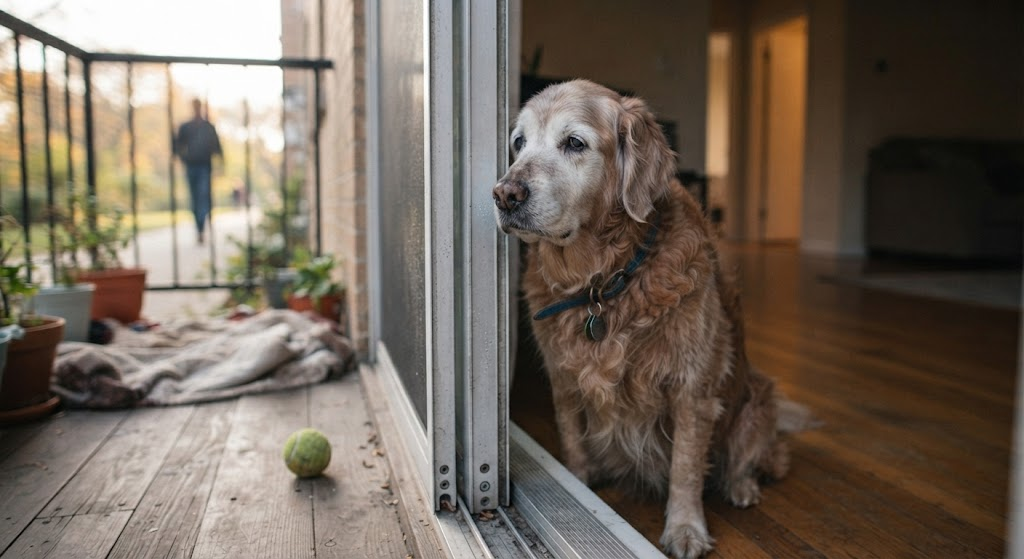
Stress and separation anxiety in old age can be mitigated with daily routines of physical exercise and olfactory walks that help burn off accumulated energy and promote relaxation.
Inserting an aerobic routine of about 30 minutes a day—divided into smaller blocks if necessary—acts as a natural escape valve for accumulated stress. Physical exercise consumes the surplus of circulating cortisol and adrenaline in the dog’s organism. An animal that has spent its energy in an oriented and pleasurable way alongside its owner during the day has a much easier time relaxing, resting, and accepting moments of solitude without panicking. Well-directed physical activity resets the senior dog’s nervous system, bringing peace to the household routine.
👉 Learn more about this subject in the related article below: https://logicalbark.com/separation-anxiety-in-dogs-causes-and-effective-strategies/
How to structure your senior dog’s daily routine
To put all of this into practice safely and efficiently, consistency is the key to success. Reserve that moment of the day to dedicate exclusively to your companion.
- Prior evaluation: Consult your trusted veterinarian to map out the animal’s joint and cardiac conditions.
- Ideal time: Aim to complete about 30 minutes of daily light to moderate activity, always respecting the dog’s pace and fatigue.
- Variety of stimuli and sensory pauses: Alternate controlled walks with strategic stops in squares or green areas, allowing the dog to explore the environment by sniffing freely. This “olfactory walk” is an excellent low-impact aerobic exercise and drastically reduces stress levels.
- Adapted play: Utilize the classic game of fetch with short throws on high-traction surfaces, avoiding slipping and excessive joint impacts.
- Constant observation: Monitor breathing, recovery after exercise, and behavior in the following hours. The goal is to promote vitality, never exhaustion.
In addition to outdoor activities, many owners choose to include soft rubber toys and specific chew toys for senior dogs in their indoor routine. They are excellent for keeping pets entertained at home, stimulating safe lateral chewing, and relieving daily stress without harming the sensitive gums and teeth of old age.
Here is an example for reference: https://amzn.to/4xnWCSg
Neuroplasticity and the power of BDNF
Beyond healthy physical wear, anxiety relief, and exploratory pauses, a fascinating biochemical process happens in the senior dog’s brain when they exercise and learn new things: the production of BDNF (Brain-Derived Neurotrophic Factor).
BDNF is an essential protein for neuroplasticity. It acts as true “fertilizer” for neurons, stimulating the growth, survival, and maintenance of new neural connections. In recent years, veterinary science has discovered that the aging brain is not only capable of learning new behaviors, but requires this stimulus to delay cognitive decline.
When the senior dog performs aerobic activity combined with learning new commands, light tricks, or solving small motor challenges, BDNF production spikes in the brain. This means that aerobic activity, combined with environmental and cognitive enrichment, protects the brain against degeneration, improves memory, sharpens the senses, and keeps your best friend mentally alert and active for much longer.
Caring for an older dog is an act of deep love and respect for the history lived together with so much vitality. Investing in smart, adapted aerobic activities ensures that your best friend’s golden years are lived with dignity, joy, and plenty of physical and mental health.
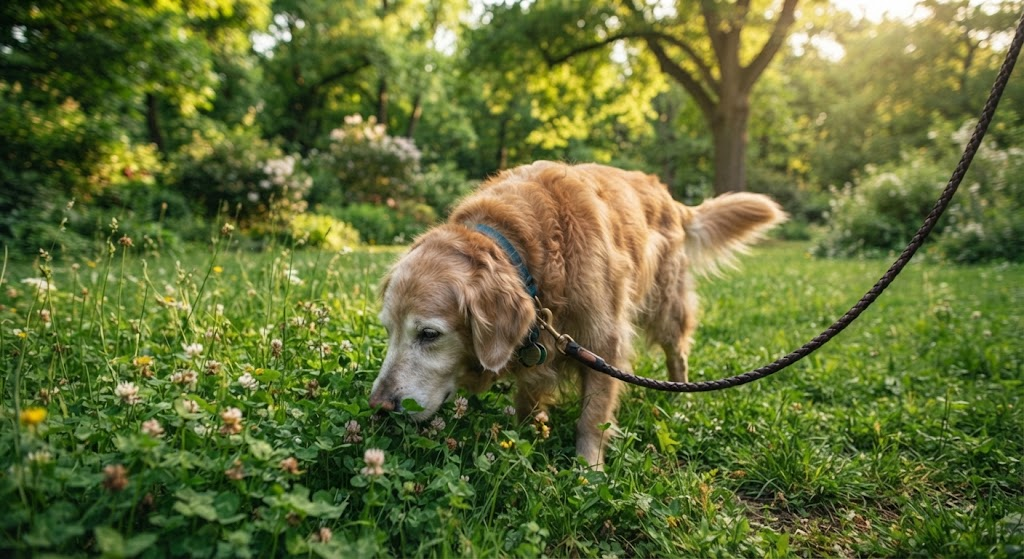
Framed by nature, your companion’s serene gaze translates the world into aromas; each breath of pure air is a breath of vitality that nourishes the soul and sustains health in the fullness of age.
Disclaimer: The information contained in this article is for informational and educational purposes only and does not substitute in any way for consultation, diagnosis, or guidance from a specialized veterinarian.
You may also lke

Lusiane Costa is a digital writer with degrees in Marketing and English Literature.
Creator of Latido Lógico and Logical Bark, she develops evidence-based content on canine aging, wellness, and senior-dog health.
The project was inspired by Goe — a senior dog whose longevity and resilience shaped a grounded, compassionate view on the challenges of aging in pets.
Each article reflects her commitment to transforming real experiences into accessible knowledge, helping owners understand, prevent, and care better for their animals at every stage of life.
Goe remains the heartbeat of this project.