August 13, 2026
If you are looking to better understand your four-legged companion’s behavior and vitality, the dog towel test is an excellent tool. This fun, at-home assessment serves as a quick indicator of your pet’s mental agility, motor coordination, and body awareness. If you are already familiar with the dog towel test, learn in a simple way what it signals and which exams help in clinical investigation. Check out the tips below.
Visual Summary of the Test and Diagnosis
- 🟢 How It Works: Light cloth over the head → Observe the reaction
- ⚡ Normal Time (2 to 5s): Quick reaction → Removes it with head or paws
- 🚨 Warning Sign (10 to 15s+): Dog remains still, confused, or unresponsive
- 🩺 Clinical Investigation: Neurological exam + MRI / CT Scan / CSF Analysis
What Is and How the Dog Towel Test Works
The dog towel test consists of gently placing a light cloth or small towel over the animal’s head and snout, temporarily covering their vision, to observe how quickly they react.
Is putting a small cloth over their face mean? Not at all! The dog towel test is a quick and super safe stimulus to test your furry friend’s perception. Tell us: how many seconds would it take for your dog to pass this test?
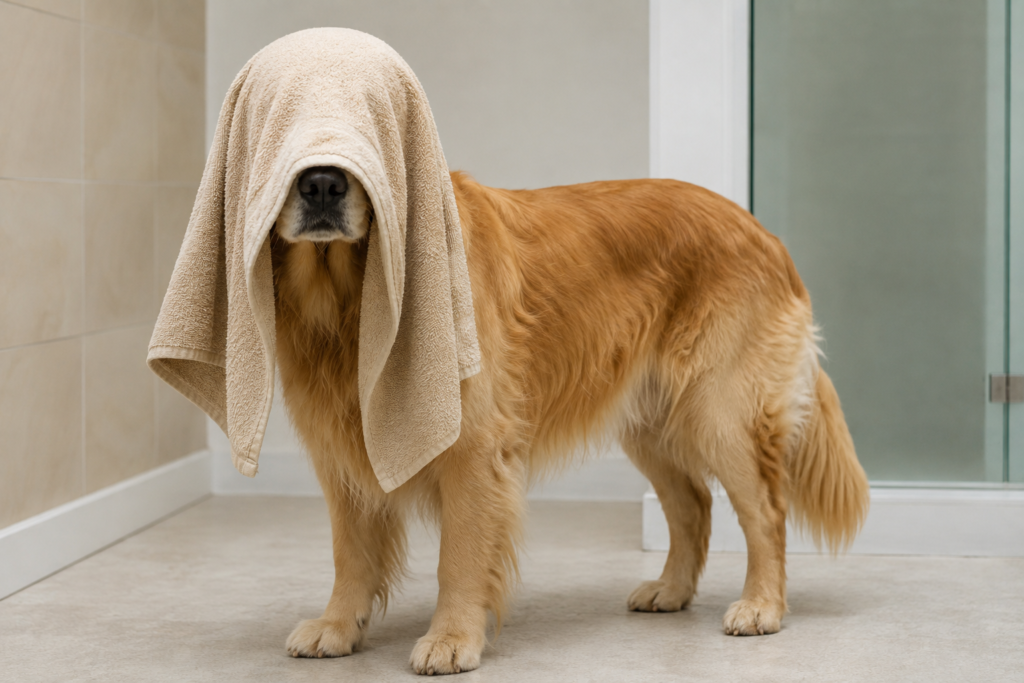
Dog towel test: A simple way to observe your pet’s agility and perception.
1. The Normal and Expected Time
It is considered completely normal when the dog gets bothered almost immediately and manages to remove the towel within 2 to 5 seconds, using head movements or front paws. This quick reaction demonstrates that their reflexes, spatial perception, and neurological processing are well-preserved.
2. Altered Time and Warning Signs
On the other hand, it is not normal when the dog takes 10 to 15 seconds (or more) to try to get rid of the fabric, or if they remain completely still, confused, and unsure of how to react. When applying the dog towel test, noticing this marked delay serves as a warning sign to investigate possible cognitive decline — such as Canine Cognitive Dysfunction (CCD), popularly known as “canine Alzheimer’s” —, sensory loss, or central nervous system changes.
Clinical Investigation: Which Exams Detect Neurological Problems in Dogs?
When the dog towel test or daily observation at home indicates a delay in reflex responses, the next step is to consult a veterinarian. It is important to highlight that there is no single isolated test, but rather a combination of a thorough clinical neurological evaluation with cutting-edge complementary exams.
During the clinical neurological examination, the vet will test the animal’s reflexes, muscle tone, posture, proprioception, and gait. Based on this, specific exams may be requested:
1. Magnetic Resonance Imaging (MRI) — The Gold Standard
MRI is the best imaging test to evaluate soft tissues of the nervous system. It allows extremely precise visualization of the brain and spinal cord, making it essential for identifying herniated discs, inflammatory processes (encephalitis and meningitis), tumors, strokes, and areas of tissue degeneration.
2. Computed Tomography (CT Scan)
Very useful for evaluating bone structures of the spine and skull. It is mainly indicated when researching fractures, congenital malformations, calcifications, and certain types of vascular lesions or compressions.
3. Cerebrospinal Fluid (CSF) Analysis
The collection of the fluid that surrounds and protects the brain and spinal cord helps identify severe infections (such as distemper), immune-mediated inflammation, or the presence of neoplastic cells.
4. Blood and Biochemical Tests
Essential for ruling out metabolic causes (such as hepatic encephalopathy or advanced renal failure) and infectious diseases that can impact neurological symptoms and behavior changes.
5. Electrodiagnostics (EEG and EMG)
Electroencephalography (EEG) evaluates brain electrical activity in cases of suspected epilepsy or seizures, while Electromyography (EMG) investigates the function of peripheral nerves and muscles.
Integrative Approach and Cognitive Stimulation
Combining an accurate diagnosis with physical rehabilitation, physiotherapy, acupuncture, and functional nutrition makes all the difference in delaying the progression of neurological dysfunctions.
Tips to Stimulate Your Pet’s Mental Agility:
- Environmental Enrichment: Stuffable toys and snuffle mats activate reasoning.
- Olfactory Stimulation: Hiding treats and allowing walks focused on sniffing stimulates important neural pathways.
- Adapted Physical Activities: Light exercises maintain proprioceptive coordination and muscle mass.
- Complementary Therapies: Acupuncture assists in cerebral blood flow and the relief of neurogenic pain.
If you want to help your dog maintain their mental agility in a fun way, scent games are indispensable. People always ask me for product suggestions, so I left a recommendation here for an interactive mat model that is excellent for senior routines: https://amzn.to/4cyHrhl
⚠️ IMPORTANT NOTICE (DISCLAIMER)
This content is strictly educational, informative, and intended for home observation. The dog towel test is NOT a definitive diagnostic exam and never replaces an in-person evaluation by a veterinarian. If you notice changes in behavior, mental confusion, disorientation, or sluggishness in your pet, seek an immediate consultation and a full neurological check-up.
History and Family Curiosity
In the case of my Goe, at 16 years old, he showed some dysfunctions due to advanced age and required specific veterinary monitoring with the use of gabapentin for his support and comfort. This is another veterinary history in our family, but I share it here as a matter of curiosity.
👉 If you wish to expand your knowledge on this subject, check out this complementary content: https://logicalbark.com/gabapentin-for-senior-dogs-experience-with-goe-and-essential-information/
At the time, I wasn’t familiar with the dog towel test yet, but I found the concept extremely relevant and useful. For this reason, we prepared this complete article to help other pet parents observe their pets’ mental agility and signs in time to seek the best possible care!
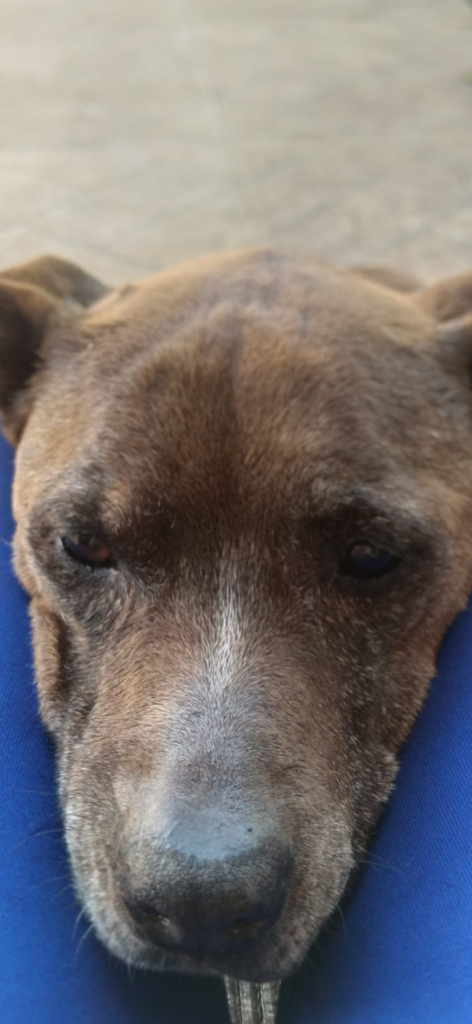
Goe serene, resting on my lap.
You may also like

Lusiane Costa is a digital writer with degrees in Marketing and English Literature.
Creator of Latido Lógico and Logical Bark, she develops evidence-based content on canine aging, wellness, and senior-dog health.
The project was inspired by Goe — a senior dog whose longevity and resilience shaped a grounded, compassionate view on the challenges of aging in pets.
Each article reflects her commitment to transforming real experiences into accessible knowledge, helping owners understand, prevent, and care better for their animals at every stage of life.
Goe remains the heartbeat of this project.