
July 31, 2026
Learning the correct way to lift your senior dog protects their spine, relieves discomfort, and shows love in every gesture.
The Care That Transforms a Senior Dog’s Daily Routine
Many pet owners don’t realize it, but the way we lift our four-legged companions can be a silent source of discomfort. As the years pass, a dog’s body ages, the spine becomes more sensitive, and the joints lose their natural flexibility.
That is why learning how to pick up my senior dog without causing pain is essential knowledge for anyone with an aging pet at home. This simple gesture is part of daily pain management, preventing physical trauma and bringing complete emotional security to your pet.
Which Dogs Need This Care Most?
Although the correct technique should be used with all dogs, it is indispensable in specific health situations:
- Senior dogs: naturally have more delicate muscles and bone structures.
- Dogs with osteoarthritis: feel direct impacts on their joints when lifted improperly.
- Dogs with spinal issues: such as herniated discs or bone spurs, which require total stability.
- Post-operative dogs: cannot experience any tension or stretching in the abdominal area.
- Dogs with leg weakness: struggle with support and lose the ability to compensate for sudden movements.
Many owners also use access ramps to prevent their pets from having to jump off the sofa or bed, protecting their spine and joints.
I left an example of a ramp here for anyone interested: https://amzn.to/4yPp1Cx
Step-by-Step: How to Pick Up My Senior Dog Without Causing Pain
The golden rule is to keep the dog’s spine horizontally aligned at all times, ensuring their body weight is fully distributed.
1. Approach Calmly
Approach your pet slowly and speak in a soft voice. Let them notice your approach before touching them. Avoid coming up unexpectedly from behind, as a sudden surprise causes the dog to tense their muscles, which can trigger sharp pain.
2. Support the Chest and Hip Region
Forget the idea of pulling your dog by their paws or lifting them only from the front. Place one of your arms under their chest, positioning your hand right behind their front legs. With your other arm, firmly support the hip area and the base of the tail, safely holding the rear part of their body.
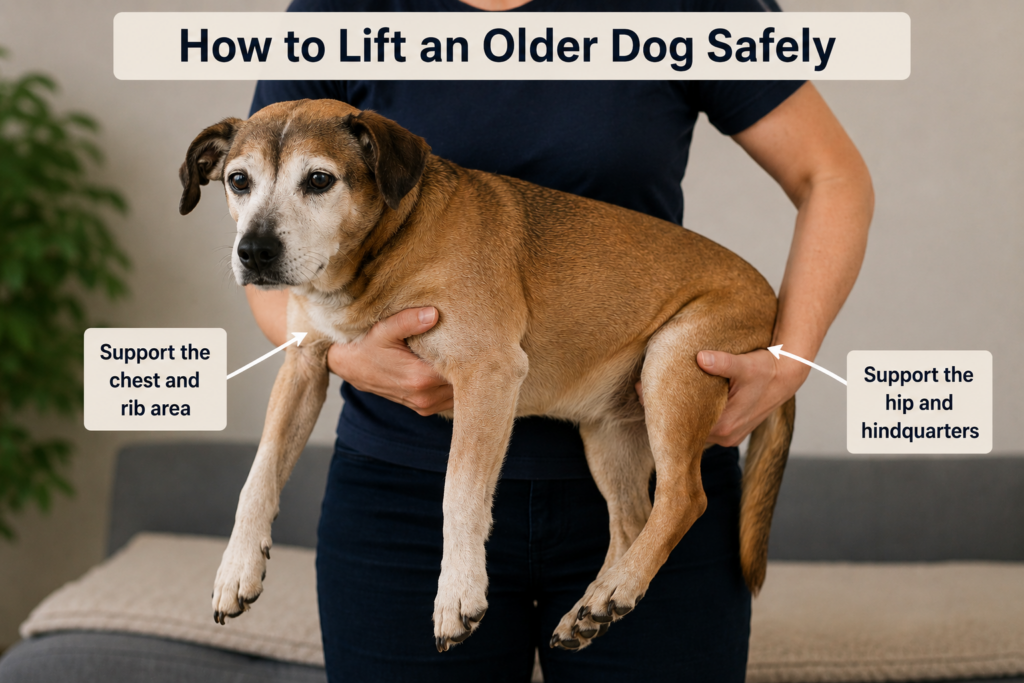
Learning how to pick up my senior dog the right way is essential to prevent pain in their spine and joints!
3. Bring Them Close to Your Body
Before lifting the dog, bring their body close to your chest. This support gives an immediate sense of stability and keeps them from feeling unsupported in mid-air. Stand up using the power of your legs, keeping the dog’s posture steady and horizontal throughout.
Common Dog-Carrying Mistakes (Avoid These!)
We often make mistakes while trying to help. Pay attention to the positions that should be avoided to prevent pain:
Lifting Only from the Front of the Body
Lifting the dog using only their front legs leaves their rear end unsupported, placing an excessive load on the thoracic spine and neck.
Lifting Only by the Belly
Pressing your hands directly against the abdomen compresses internal organs, causing immediate discomfort and improperly curving the spine.
Letting the Dog Sit in Your Lap
Holding the dog in a sitting position on your lap strains the lumbar region and concentrates weight on the hips, which is very harmful to dogs with joint pain.
Carrying Them Belly-Up
Laying the dog on their back like a human baby puts the spine in an unnatural position, causing significant discomfort and risk of injury.
Lifting with a Curved Body
Bending the animal’s body to fit in your arms forces the shoulders and hips, worsening conditions like herniated discs and osteoarthritis.
Lifting Like a Child
Never hold a dog by the armpits and pull them straight up. This violently strains the spine and can cause severe joint accidents.
Benefits of Mindful Lifting Care
By adopting the correct technique in your daily routine, you ensure several health benefits for your senior dog:
- Immediate relief from joint and muscle stress.
- Effective prevention against accidental falls and sprains.
- Strengthening of the bond of trust and affection between owner and dog.
- Greater comfort and security during transport and outings.
👉 This article can complement the information presented here: https://logicalbark.com/ramps-for-senior-dogs-comfort-safety-and-mobility-in-every-step/
My Experience with Goe: Care in Every Movement
I know the practical value of this care firsthand. With Goe, every touch was given with diligence and good judgment.
I would always approach him very calmly, using sweet words to let him know I was there. Goe felt my presence without any sudden fright, knowing he was safe. When it came time to lift him, I was never in a rush and avoided any fast or sudden movements. I would never dream of picking him up by the armpits or like a child.
I positioned myself beside him, tucked my arm firmly under his chest, and with my other arm, carefully supported his hip region. I brought his body right against my chest so he felt completely supported and embraced. It was an act of affection that respected his pace and the fragility of his aging body—my daily promise that I was providing comfort, never the opposite.
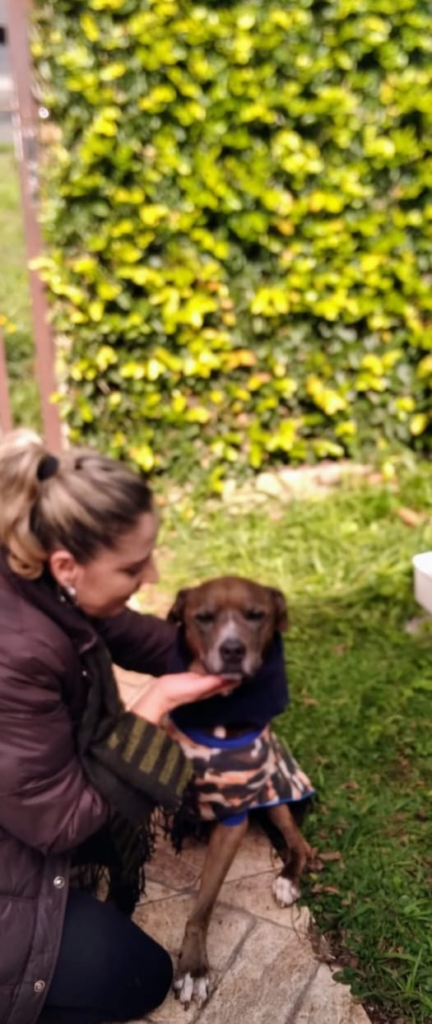
Approaching Goe with calmness and care made all the difference in being able to hold him in my arms.
Disclaimer / Legal Notice: The information contained in this article is strictly for educational and informational purposes, reflecting good pet management practices and personal experiences of owners. This content does not replace consultation, diagnosis, or follow-up by a licensed veterinarian or veterinary physical therapist. If your senior dog shows signs of severe pain, serious mobility issues, or reluctance to be touched, consult a qualified professional immediately.
You may also like

Lusiane Costa is a digital writer with degrees in Marketing and English Literature.
Creator of Latido Lógico and Logical Bark, she develops evidence-based content on canine aging, wellness, and senior-dog health.
The project was inspired by Goe — a senior dog whose longevity and resilience shaped a grounded, compassionate view on the challenges of aging in pets.
Each article reflects her commitment to transforming real experiences into accessible knowledge, helping owners understand, prevent, and care better for their animals at every stage of life.
Goe remains the heartbeat of this project.