August 19, 2026
Old age is a biological stage marked by profound transformations in a dog’s body and behavior. Throughout adult life, a dog’s emotional balance and sense of security depend directly on the stability of their senses and the memories they have accumulated. However, as the years advance, a natural decline in perception takes place. It is precisely at this moment of heightened vulnerability that unprecedented fears emerge, leading guardians to ask themselves: after all, what are senior dogs most afraid of and where do these misgivings come from?
Unlike youthful fears, which usually arise from a lack of exposure to new things, fear in senior dogs stems mainly from a loss of predictability. When the brain stops processing the environment with the same clarity as before, the feeling of control diminishes, giving way to an anxiety that requires tremendous empathy, patience, and routine adaptations from the guardian.
Sensory Loss and Everyday Uncertainty
To understand fear in golden years, we need to look at the physical changes a dog faces. The weakening of senses and mobility radically transforms how they perceive the world around them.
- Hearing and Vision Loss: With the gradual decline of hearing and sight, the environment becomes unpredictable. Sudden noises, moving shadows, or unexpected approaches can no longer be anticipated in time, often being interpreted as major threats.
- Joint Pain and Loss of Agility: Issues such as osteoarthritis reduce a dog’s ability to quickly move away from something that bothers them. Feeling physically limited and unable to protect themselves or flee, the fear response becomes much more intense.
- Disorientation and Sleep Changes: Aging alters a dog’s biological clock. It is very common for them to sleep more during the day and become restless at night. The dark and the silence often heighten feelings of loneliness and anguish.
The Greatest Fears of Canine Seniority
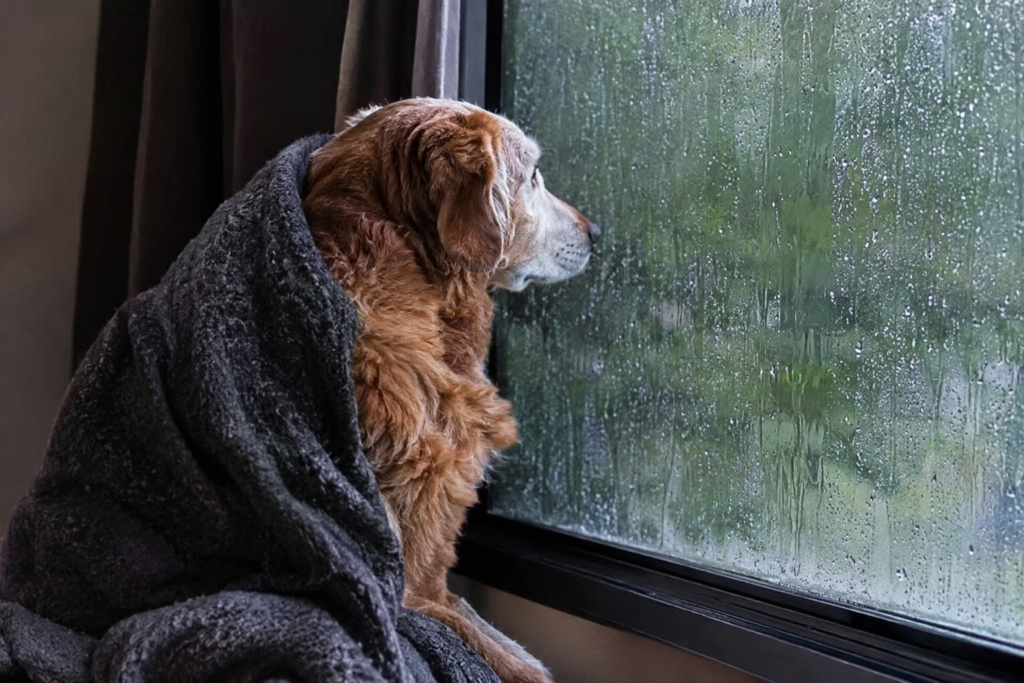

In the care routine for older dogs, we observe that phobias during this phase usually concentrate around very well-defined points:
1. Loud Noises and Storms
Dread of thunder, fireworks, and high-pitched sounds can appear or worsen significantly in old age. Even dogs that were calm in their youth may start showing fear because they can no longer understand where that noise is coming from.
2. The Dark and Nighttime Anxiety
Vision loss makes the night a delicate time. Senior dogs frequently hesitate to walk through dark areas, cry when left alone in a room, or panic when they cannot find their guardians immediately.
3. Smooth and Slippery Floors
The loss of paw grip and balance transforms highly polished floors into real traps. The fear of slipping and experiencing pain causes the dog to freeze, tremble, or refuse to walk across these surfaces.
4. Household Routine Changes
Renovations, moving furniture, or shifts in family schedules disrupt the mental map the dog took years to build. An unpredictable environment becomes a constant source of stress.
Prevention Starts in Puppyhood: The Socialization Window
Although the physical changes of old age are inevitable, a dog’s ability to cope with stress depends directly on the experiences they had early in life. Understanding what are senior dogs most afraid of reinforces the importance of prevention while they are still puppies.
There is a fundamental period in a dog’s puppyhood — lasting approximately until their fourth month of life — when a puppy’s mind is completely open to learning. Positively introducing them to different noises, floor textures, environments, and people creates a reservoir of emotional confidence. Dogs that are well-socialized when young manage to stay calm much more easily when their senses begin to fail in old age.
Training and Behavioral Therapies in Adulthood
It is important to highlight that if your dog did not go through this structured learning as a puppy, all is not lost. The capacity to learn remains active throughout an animal’s entire life.
Today, behavioral medicine features modern and highly effective therapies, such as positive reinforcement training, emotional reconditioning, and environmental enrichment. With the guidance of a specialized professional, it is entirely possible to help a dog overcome traumas, soften phobias, and develop much greater confidence, even at an advanced age.
For those interested in items highly rated by pet guardians, here is an example of environmental enrichment: https://amzn.to/4gmp5l0
The Experience with Goe: Affection, History, and Sensitivity
In our journey with Goe, we experienced firsthand how genetics, upbringing, and the changes of old age intersect. Due to his breed’s traits, Goe was never a dog inclined toward social interaction with other animals. However, because he always possessed an extremely gentle, focused, and loving temperament, we invested heavily in his education from puppyhood, habituating him to people and various everyday situations.
This early groundwork ensured he grew into a confident dog around human beings. With the arrival of his senior years, Goe began experiencing a gradual loss of hearing. Because he couldn’t hear as well, he started showing subtle misgivings when faced with movements or situations that arose unexpectedly without prior auditory cues.
Understanding that this new sensitivity was not stubbornness or a mood swing, but rather a direct consequence of hearing loss, allowed us to adjust our approach. We began approaching him using clear visual signals and soft touches, ensuring he continued to feel safe and protected at all times.


How to Bring More Security to Your Senior Dog
If your elderly companion has been showing signs of insecurity, a few simple everyday actions can restore the peace and comfort they need:
- Keep a Structured Routine: Avoid moving furniture around and maintain consistent schedules for meals, walks, and rest.
- Place Non-Slip Rugs: Spread runners over slippery floors to give firm grip to their paws and prevent falls.
- Facilitate Communication: If your dog is losing their hearing, use clear hand gestures and avoid touching them by surprise when their back is turned or while sleeping.
- Provide Nighttime Light Points: Keeping small plug-in nightlights in hallways helps dogs with failing eyesight navigate the home at night.
- Seek Veterinary Support: Treatments for joint pain, cognitive brain supplements, and behavioral therapies make a world of difference in a senior dog’s quality of life.
Understanding what are senior dogs most afraid of is the pathway to offering loving, attentive, and respectful guardianship, ensuring that our best friend’s most mature phase is lived with lightness and dignity.
👉 If this topic sparked your interest, you might also enjoy this related article: https://logicalbark.com/six-tips-for-taking-care-of-your-senior-dog-the-guide-to-senior-longevity-and-well-being/
⚠️ IMPORTANT DISCLAIMER
This content is strictly educational and informational in nature. The sudden emergence of fears, nighttime crying, restlessness, or mobility difficulties in senior dogs can indicate physical pain or Canine Cognitive Dysfunction Syndrome (canine dementia). In the presence of any changes in your pet’s behavior, always consult a qualified veterinarian.
You may also like

Lusiane Costa is a digital writer with degrees in Marketing and English Literature.
Creator of Latido Lógico and Logical Bark, she develops evidence-based content on canine aging, wellness, and senior-dog health.
The project was inspired by Goe — a senior dog whose longevity and resilience shaped a grounded, compassionate view on the challenges of aging in pets.
Each article reflects her commitment to transforming real experiences into accessible knowledge, helping owners understand, prevent, and care better for their animals at every stage of life.
Goe remains the heartbeat of this project.