
August 12, 2026
Pet aging is a natural process that requires significant adjustments to daily routines, nutrition, and the home environment. Knowing how to act during this stage ensures a longer lifespan, disease prevention, and overall comfort. Below, we present the main six tips for taking care of your senior dog, bringing together the fundamental pillars of health, nutrition, and home adaptation.
Overview of Senior Care
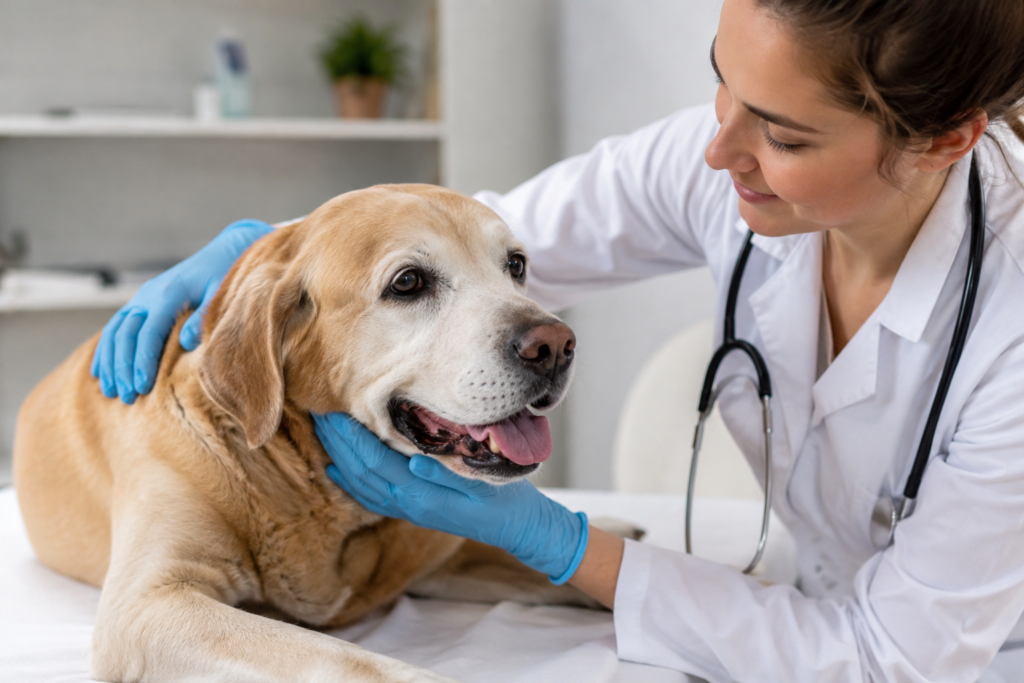
Another check-up successfully completed! Following the six tips for taking care of your senior dog makes all the difference for a healthy longevity.
Six Tips for Taking Care of Your Senior Dog
1. Bi-Annual Veterinary Visits and Preventive Medicine
Opening our six tips for taking care of your senior dog, preventive medical care is the top priority. In the senior stage, diseases often develop silently. Waiting for symptoms to appear before visiting the clinic reduces the chances of a successful treatment. Veterinary follow-ups should happen every six months, including blood tests (kidney and liver check-ups), electrocardiograms, and abdominal ultrasounds to identify any changes early on.
2. Conscious Management of Dewormers and Flea Control
Among the six tips for taking care of your senior dog, avoiding chemical overload is essential. Administering dewormers automatically strains internal organs unnecessarily. The correct approach is to request a routine fecal test (coproparasitological exam) and apply medication only if an infection is confirmed. For fleas and ticks, prioritize natural alternatives and non-toxic repellents for daily use, reserving oral or topical chemical insecticides—which require liver and kidney metabolization—strictly for real infestation moments under medical guidance.
3. Adapted Nutrition and Dietary Transition
Nutrition must match the slower metabolism of a senior dog:
- Senior Kibble: If you keep dry food, choose formulas created specifically for older dogs, which feature lower caloric density, highly digestible proteins, and joint protectants (such as chondroitin and glucosamine).
- Fresh / Natural Diet (AN): Due to nutrient loss during industrial heat processing and the presence of synthetic additives in commercial kibble, consult a veterinary nutritionist to evaluate transitioning to a balanced Natural Diet rich in fresh ingredients and higher moisture content.
4. Home Environment Adaptation and Accessibility
The house needs to adapt to the physical limitations of old age:
- Non-Slip Flooring: Muscle loss (sarcopenia) and arthritis make slick floors dangerous. Install runners and non-slip mats in high-traffic areas to prevent slips and falls.
- Orthopedic Beds and Access: Provide high-density orthopedic mats in areas protected from drafts and dampness. Use ramps or adapted stairs to prevent your dog from jumping off couches and beds.
- Night Lighting: Keep nightlights on near water bowls and pee pads to assist dogs dealing with cataracts or cognitive decline.
Want to know how we adapted our home? Out of curiosity for pet parents who always ask me, I left an example below of an orthopedic bed we used with Goe: https://amzn.to/4g5qgoz
5. Moistened Food, Hydration, and Dental Care
Senior dogs gradually lose their sense of thirst, raising the risk of kidney complications. Place multiple filtered water bowls throughout the house. If your dog eats dry kibble and experiences tooth sensitivity or wear, moisten the grains with warm water or unsalted homemade bone broth. Furthermore, severe periodontal disease in old age allows oral bacteria to enter the bloodstream, potentially affecting the heart and kidneys; maintain daily tooth brushing or use dental care products recommended by your vet.
6. Adapted Walks, Stimulation, and Respecting Rest
To wrap up our six tips for taking care of your senior dog, maintain a balance between activity and rest:
- Light Exercise: Short walks during cooler hours, contact with grass, and sensory stimulation are indispensable for preserving muscle mass, lubricating joints, and keeping the brain active.
- Uninterrupted Rest: Senior dogs sleep more hours and need long, undisturbed sleep periods to regain energy. Avoid approaching or touching your pet abruptly while they sleep, as progressive vision and hearing loss can cause them to startle and react defensively by reflex.
👉 If this topic piqued your interest, you might also like this article: https://logicalbark.com/what-is-vitamin-d-vitamin-dirt-for-senior-dogs-and-how-to-treat-your-senior-dog/
With our family dogs, we have always strived to put these tips into practice. In our family setting, we adapted the best guidance to the reality of each pet—just as we did with all the care and comfort Goe needed during his senior journey, and as we continue doing with Loli today. This dedication has always been extremely effective in guaranteeing them an excellent quality of life.

Loli enjoying an outdoor ride for environmental enrichment, taking advantage of all the cognitive stimuli and well-being that nature offers for healthy senior aging.
Disclaimer: This content is strictly educational and informational. Any changes to your senior dog’s diet, medication protocol, or exercise routine should be evaluated and supervised by a trusted veterinarian.
You may also like


Lusiane Costa is a digital writer with degrees in Marketing and English Literature.
Creator of Latido Lógico and Logical Bark, she develops evidence-based content on canine aging, wellness, and senior-dog health.
The project was inspired by Goe — a senior dog whose longevity and resilience shaped a grounded, compassionate view on the challenges of aging in pets.
Each article reflects her commitment to transforming real experiences into accessible knowledge, helping owners understand, prevent, and care better for their animals at every stage of life.
Goe remains the heartbeat of this project.
[…] 👉 If this topic sparked your interest, you might also enjoy this related article: https://logicalbark.com/six-tips-for-taking-care-of-your-senior-dog-the-guide-to-senior-longevity-an… […]