A dog’s maturity brings a quiet and profound silence. When the body slows down, joints lose a bit of that youthful agility, and the fur around the muzzle takes on grayish tones, the rhythm of the entire house transforms. It is a transition into a new phase, revealing an unprecedented and delicate layer of responsibility in the coexistence between the animal and its guardian. More than simple routine companions or temporary inhabitants of the home, senior dogs become the true guardians of a story shared over the years, demanding from us a heightened level of attention, genuine empathy, and absolute respect for their accumulated physical and emotional vulnerability.
From the standpoint of canine ethology and neurobiology, the mental and physical well-being of an aging animal is deeply tied to non-negotiable pillars: social security, absolute environmental predictability, and rigorous respect for their declining biological limits. When we analyze the canine universe through a lens that unites the science of animal behavior with the sensitivity of daily affection, we realize that minor disruptions in routine, thoughtless attitudes, or poorly conducted interactions generate an invisible yet devastating stress in the dog’s life. In the twilight of a four-legged companion’s life, every detail matters to preserve their peace of mind.
Domestic invisibility and the pain of emotional vacuum
The dog is an eminently social animal, whose evolution went hand in hand with our capacity to form close bonds. However, it is common for busy guardians to end up ignoring the silent presence of the senior animal, spending hours immersed in screens, work, or chores without paying attention to discreet approaches, gentle nudges with the snout, or patient glances directed at us. For the dog, being repeatedly ignored within its own home is equivalent to a subtle but deeply lacerating rejection. From a biological standpoint, the chronic absence of active social interaction dangerously raises cortisol levels in the animal’s bloodstream, setting up a state of inner loneliness that erodes its immunity and joy of living. The solution to this silent wound is simple and transformative: rescuing the small daily rituals of presence, dedicating genuine moments of disinterested affection and a look in the eyes that assures the dog it remains an essential part of our world.
Harsh words, shouting, and the unbearable weight of scoldings
Unlike human beings, who possess the analytical capacity to decode complex grammar and sentence syntax, dogs are visceral readers of vocal tones, sound frequencies, and micro-facial expressions. The recurrent use of harsh words, strident shouts, or excessive physical and verbal punishments never fulfills a real pedagogical role; on the contrary, what it does is terrify the animal. In the senior dog, whose sensory faculties are naturally in decline and whose cognitive tolerance is reduced, a harsh scolding instantly destroys the sense of a safe haven that the home should represent. Aggressive correction must give absolute space to empathetic guidance, patience, and positive reinforcement, understanding that any mistake in old age usually reflects mental confusion, joint pain, or sensory failures, and never stubbornness or intentional malice.

Avoiding harsh scoldings is essential, because harsh words are among the things that break your senior dog’s heart.
The lack of time together and the weakening of regular affection
Human time is frantic, hurried, timed by clocks, goals, and strict deadlines. In contrast, canine time is anchored purely in the present, in the immediate instant of the now. When the senior dog realizes that its favorite human is permanently too busy to share the silence by its side or spare a few minutes of warmth on the living room rug, its heart slowly withers. Regular affection, loving physical touch, and constant proximity stimulate the release of oxytocin — the hormone of love and bonding — at both ends of the leash, shielding the organism against oxidative stress, delaying premature aging, and strengthening the animal’s immunity precisely at the stage when it most needs biological and emotional support.
Long goodbyes, drama, and the anguish of separation anxiety
Many guardians make the well-intentioned mistake of excessively humanizing the moment of departure, turning leaving the house into a true melodrama full of whining, prolonged hugs, apologies, and sad phrases spoken with sorrow. For the dog, this dramatic charge and the tragic tone of the guardian’s voice function as an infallible alarm of imminent danger, generating acute spikes of separation anxiety. The correct and healthy approach demands emotional maturity on the part of the caregiver: departures and arrivals must be rigorously neutral, calm, and natural. Treating absence as an everyday and perfectly safe event teaches the senior dog to relax, knowing with peace of mind that its human will always return home.
The deprivation of freedom and the elemental right to be a dog
Forcing a dog to live in an excessively sterile environment, where it is prevented from sniffing the ground, exploring the grass, interacting with natural textures, or simply expressing its most basic primary instincts, is equivalent to slowly and painfully suffocating its essence. Especially in old age, when physical mobility begins to wane, allowing the animal to decide its own pace during walks — pausing as long as necessary to thoroughly investigate an old scent on a wall or tree — is much more than a mere stroll: it is giving back the dignity of exploration and the genuine pleasure of interacting with the surrounding world through smell, its most powerful and comforting sense.
Routine unpredictability and the chaos of broken consistency
Inconsistency in daily rules — such as allowing the dog on the couch one day, but applying a severe scolding for the exact same act the next day — creates a constant and exhausting state of cognitive confusion and deep anxiety. In the daily routine of the Latido Lógico project, the continuous, attentive, and affectionate observation of senior dogs, exemplified by the companionship and striking sensitivity of dogs like Goe, made it surgically clear that environmental and routine unpredictability acts as an unrelenting source of chronic stress for them. Goe specifically demonstrated a visceral and non-negotiable need for structured predictability, manifested above all in the healthy rigidity of his activity schedules. When the routine suffered abrupt changes and unforeseen shifts in walking times, his levels of anxiety and apprehension visibly escalated. For this reason, religiously maintaining walking times always in the morning established an indispensable emotional safety anchor, proving in practice that routine consistency is the greatest and most faithful ally of canine mental health and emotional balance.
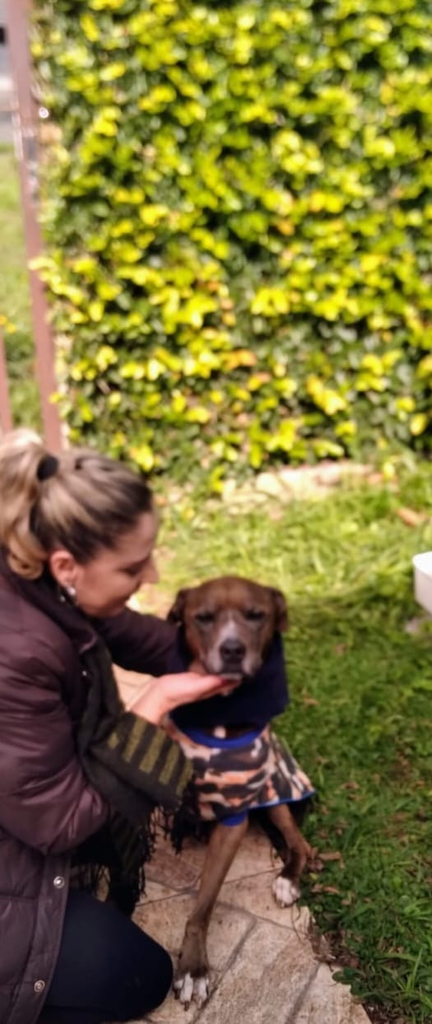
Taking advantage of the punctuality he loves so much, Goe and I are already in final preparations for our sacred walk.
The deficiency of mild cognitive stimulation and chronic boredom
Many guardians erroneously believe that because of advanced age and decreased physical stamina, it is enough to leave the dog lying down resting all day long. However, the senior dog dealing with severe mobility restrictions needs, more than ever, adequate and constant cognitive stimuli to keep its brain sharp. Introducing simple canine puzzles, food-search games hidden around the house, and light olfactory challenges adapted to its physical condition helps keep brain plasticity active, prevents the aggressive symptoms of canine cognitive dysfunction (the “Alzheimer’s” of dogs), and fills daily life with renewed purpose, interest, and joy.
The devastating impact of prolonged separation and loneliness
The dog builds its entire affective identity and sense of security around its reference social group, which is us, its human family. Leaving it isolated in distant backyards, confined in empty rooms for long daily hours, or, worse yet, ignoring the profound impact of losing a long-time human or animal companion, represents the absolute collapse of its entire secure universe. Canine grief is real, profound, measurable, and painful. Providing constant company, firm bonds, affectionate touch, and a truly integrative environment inside the house is the ethical and moral minimum we owe to those who devote pure and eternal devotion to us until the end of their days.
Here is a resource for environmental enrichment for dogs:
Conclusion: Toward a Safe Haven
Deeply understanding things that break your senior dog’s heart should never be treated as a guilty exercise of self-blame, but rather as an uncompromising and loving invitation to genuine empathy. Over the course of a dog’s life that has already given us its best, every conscious gesture of patience, every non-negotiable consistency in the morning routine, and every look full of presence and respect turn into the purest balm for its soul. After all, caring with devotion and loving a dog until its final golden days is the most sublime, beautiful, and true art of honoring a silent pact of unconditional love.
👉 This article can complement the information presented here: https://logicalbark.com/what-are-senior-dogs-most-afraid-of/
Editorial disclaimer: The content above reflects ethological, behavioral, and daily management practices developed affectionately within the scope of Latido Lógico, combining the empirical experience of dedicated guardians with specialized behavioral care. Each animal possesses unique biological individualities that must always be evaluated and accompanied by veterinary medicine professionals when necessary. Originally published at Latido Lógico • Reflections on behavior, affection, and the science of living with dogs.
You may also like


Lusiane Costa is a digital writer with degrees in Marketing and English Literature.
Creator of Latido Lógico and Logical Bark, she develops evidence-based content on canine aging, wellness, and senior-dog health.
The project was inspired by Goe — a senior dog whose longevity and resilience shaped a grounded, compassionate view on the challenges of aging in pets.
Each article reflects her commitment to transforming real experiences into accessible knowledge, helping owners understand, prevent, and care better for their animals at every stage of life.
Goe remains the heartbeat of this project.