June 12, 2026

LOLI enjoying the serenity of days shaped by care, balance, and natural dog food.
Initial disclaimer: This content is intended for informational and educational purposes only. The adoption of natural dog food should always take place under veterinary guidance, especially in situations involving specific clinical conditions, such as Inflammatory Bowel Disease (IBD).
Natural dog food: when experience deepens understanding
Natural dog food has attracted growing interest among guardians and veterinary professionals. More than a contemporary trend, it represents a nutritional management approach that seeks to respect the physiological needs of the body, considering aspects related to digestibility, ingredient quality, and the biological individuality of each dog.
However, understanding natural feeding only as a dietary choice would be an excessive simplification. In certain circumstances, especially when chronic clinical conditions are present, nutrition becomes part of a broader set of strategies aimed at physiological stability and quality of life.
This was precisely the understanding that LOLI’s trajectory helped build over the years.
Those who follow her story know that her path has been marked by constant observation, progressive adaptations, and numerous lessons related to the functioning of the body. Among these challenges, her coexistence with Inflammatory Bowel Disease (IBD) stood out, a condition that required a more careful reading of the signs presented over time.
What is natural dog food?
Natural dog food consists of a nutritional model based on the use of fresh ingredients, prepared specifically to meet the needs of the canine body.
Unlike improvised feeding, this model requires nutritional planning, adequate definition of nutrient proportions, and professional supervision.
Usually, the menus may include:
- High-quality protein sources;
- Selected vegetables;
- Appropriate sources of carbohydrates;
- Vitamins and minerals;
- Supplementation when necessary.
The goal is not simply to replace an industrialized food, but to build a nutritional management plan compatible with the individual needs of each organism.
How to feed a dog naturally?
One of the most frequent questions among guardians concerns the correct way to begin natural dog food.
The first step should always be a veterinary evaluation.
Each organism has particularities related to age, weight, body condition, level of physical activity, and clinical history.
In LOLI’s case, for example, her history of IBD required specific care and continuous observation of digestive responses.
Based on professional evaluation, it becomes possible to define which foods are most appropriate, which quantities should be used, and which adjustments need to be made throughout the follow-up process.
The individualization of nutritional management is one of the fundamental pillars of this process.
The importance of proper preparation
Throughout LOLI’s experience, it became evident that ingredient quality represents only one part of care.
The method of preparation also has significant relevance.
Proper cooking favors the digestibility of several foods and contributes to reducing possible gastrointestinal discomfort.
In addition, correct storage and respect for food preservation conditions are part of the nutritional management process itself.
Small details in the routine can produce important repercussions when observed continuously.
It was precisely this attention to detail that made it possible to better understand LOLI’s responses over time.
In many routines, especially when preparation is carried out in larger quantities, proper storage becomes part of the feeding management itself. Appropriate containers can contribute to better organization of portions and to the preservation of food during the storage period.
👉 If you are interested in seeing some storage container options, here is an example below: https://amzn.to/3Qkhpqq
Gradual transition is essential
Another frequently neglected aspect involves the speed of dietary change.
The introduction of natural dog food should not occur abruptly.
The body needs a period of adaptation to deal with new nutritional sources and different digestive characteristics.
Very rapid changes may favor gastrointestinal discomfort, changes in stool, and episodes of nausea.
For this reason, gradual transition usually represents the most prudent strategy, especially in organisms that already present greater digestive sensitivity.
What should not be part of natural feeding?
Although the proposal is based on fresh foods, several ingredients used in human nutrition should not be offered to dogs.
Among them are:
- Chocolate;
- Grapes and raisins;
- Star fruit;
- Macadamia nuts;
- Onion;
- Garlic;
- Artificial sweeteners;
- Excessively seasoned preparations;
- Foods rich in fat.
Seasonings used in human cooking should also not be part of menus intended for dogs.
Food safety must remain a priority in any nutritional strategy.
Why are cooked bones not recommended?
Cooked bones deserve special attention.
During the cooking process, their structure may become more fragile and susceptible to fragmentation.
These fragments may cause injuries in different segments of the digestive tract.
For this reason, cooked bones are not considered a safe alternative within natural feeding.
Preventive care remains the most responsible approach.
👉 This subject is also related to the content presented in this article: https://logicalbark.com/bones-for-dogs-how-to-choose-safer-and-healthier-options-for-your-dog/
Home-prepared natural food or ready-made meals?
In recent years, the veterinary market has begun to offer specialized services in natural dog food, including frozen meals and personalized menus delivered directly to guardians.
These alternatives emerged to support families who wish to adopt this nutritional model but have limitations related to the time available for home preparation.
At certain moments, this possibility was also considered in LOLI’s trajectory.
However, the decision adopted was to keep the preparation done at home, respecting professional guidance and the needs observed throughout the follow-up process.
There is no single correct choice.
The decision depends on each family’s reality, the clinical needs involved, and the guidance provided by the responsible veterinary team.
What did LOLI’s trajectory teach us?
Perhaps LOLI’s greatest lesson was understanding that quality of life is rarely the result of a single intervention.
It emerges from the integration of different care strategies.
Over the years, natural dog food became part of this set.
Her coexistence with IBD required careful observation, progressive adjustments, and an increasingly broader reading of the responses presented by the body.
Recently, during a routine evaluation, the clinical stability observed drew positive attention, especially considering the inflammatory history that accompanied a significant part of her trajectory.
In this context, the nutritional management adopted was recognized as one of the elements that contributed to this stability.
Not as an isolated solution, but as part of a continuous construction involving veterinary follow-up, systematic observation, and adaptations made over time.
LOLI’s experience reinforced an important understanding: the body functions in an integrated way. Intestine, immune system, metabolism, physical disposition, and quality of life establish permanent relationships with one another.
When these connections are observed with attention, care stops being fragmented and becomes more coherent with the complexity of life itself.
Final considerations
Natural dog food should not be understood only as a choice of ingredients. It represents a form of care that requires knowledge, responsibility, continuous observation, and respect for individual needs.
LOLI’s trajectory demonstrated that nutritional management can integrate strategies aimed at clinical stability, physiological comfort, and the preservation of quality of life, especially in contexts that require permanent attention, as occurs with IBD.
Perhaps the most valuable lesson lies precisely in this perception: caring does not mean only responding to challenges when they arise. It means building, every day, conditions for the body to find balance, adaptation, and well-being.
And in this process, nature itself continues to offer extraordinary resources. In its silent wisdom, it provides nutrients, diversity, and possibilities that sustain life in its many forms. When used with knowledge, responsibility, and respect, these resources become part of a journey of care that goes beyond nutrition and reaches something even deeper: the preservation of quality of life for those who share with us the beauty of existence.
Final disclaimer: This content is intended exclusively for informational and educational purposes. It does not replace veterinary evaluation, diagnosis, or treatment. Dietary changes, supplementation, or modifications in nutritional management should be carried out under the guidance of a qualified professional, considering the specific needs of each organism.
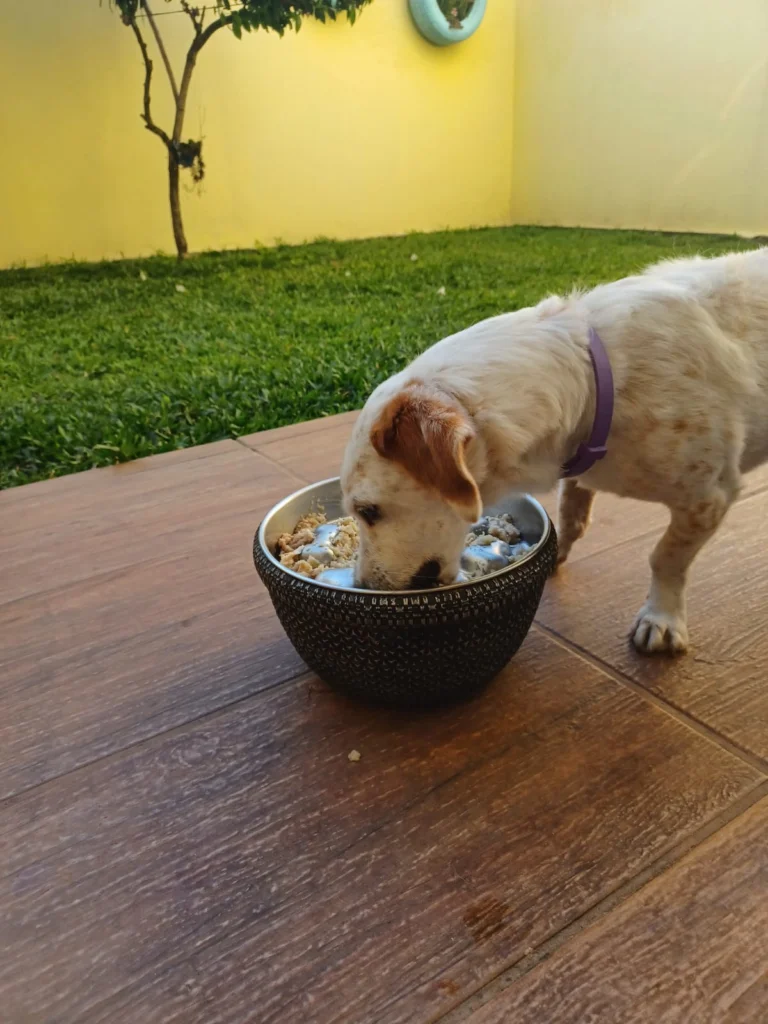
LOLI feeding naturally: reflections of good purposes that became part of her quality of life.
You may also like


Lusiane Costa is a digital writer with degrees in Marketing and English Literature.
Creator of Latido Lógico and Logical Bark, she develops evidence-based content on canine aging, wellness, and senior-dog health.
The project was inspired by Goe — a senior dog whose longevity and resilience shaped a grounded, compassionate view on the challenges of aging in pets.
Each article reflects her commitment to transforming real experiences into accessible knowledge, helping owners understand, prevent, and care better for their animals at every stage of life.
Goe remains the heartbeat of this project.
[…] 👉 This content can help broaden your understanding of the topic: https://logicalbark.com/natural-dog-food-and-ibd-what-lolis-journey-taught-us-about-quality-of-life/ […]