As our senior companions enter their golden years, it is common for owners to focus exclusively on medical treatments and soft diets, neglecting one of the most primitive behavioral needs of the canine species: the act of chewing. Old age brings a series of physical transformations, but the neurological and physiological benefits of chewing remain vital until the animal’s very last day of life.
However, the lack of technical information on the subject creates two dangerous extremes: owners who completely deprive their senior dogs of this stimulus out of fear of injury, and owners who continue to offer the same rigid items from their youth, resulting in severe dental fractures. To demystify this management and guide you on a safe path, I share in this article my practical experience with my senior dog, Goe, showing how I successfully adapted chew-based environmental enrichment to the reality of old age and highlighting options that senior dogs can chew.
The connection between aging, joint problems, and the need to chew
To understand why the act of chewing is so beneficial in the senior years, we first need to understand what happens to an older dog’s body. Just like us, dogs experience natural wear and tear of cartilage structures over the years. Osteoarthritis and degenerative arthritis are the most frequent joint pathologies in geriatric patients. They occur due to the loss of collagen and synovial fluid (which lubricates the joints), generating direct bone-on-bone friction. This process causes chronic inflammation, morning stiffness, and, consequently, constant pain.
When a dog experiences chronic joint pain, they enter a cycle of sedentary behavior. By moving less to avoid discomfort in their legs and spine, the animal loses muscle mass rapidly (sarcopenia) and begins to suffer from boredom and anxiety. This is exactly where chew enrichment comes in as a powerful integrative therapeutic tool and an excellent guide for what senior dogs can chew safely:
- Relief of chronic pain through cognitive distraction: Focusing on a pleasant chewing activity acts on the central nervous system, reducing the perception of chronic joint pain. While the dog is concentrated on chewing, painful stimuli are temporarily pushed to the background. This is a “focus-switching” mechanism widely studied in integrative veterinary medicine.
- Release of well-being hormones: When we carefully choose items that senior dogs can chew appropriately, the dog’s brain releases endorphins and dopamine. These neurotransmitters are the body’s natural painkillers. They combat cortisol (the stress hormone accumulated from pain) and promote deep muscle relaxation, reducing the tension generated by the compensatory posture the dog adopts to avoid straining an inflamed joint.
- Combating Cognitive Decline (Canine Alzheimer’s): Older dogs with joint pain tend to interact less with their environment. The mental effort and fine motor coordination required to hold a chew with their paws and gnaw on it work as an excellent brain workout, keeping synaptic connections active and fighting senior cognitive dysfunction.
The importance of chewing for general physiological health
In addition to psychological support and indirect joint pain management, knowing exactly which products or new bones senior dogs can chew with the correct stimulation plays crucial physiological roles that prevent complications in other systems of the geriatric animal’s body:
- Maintenance of oral health and prevention of systemic infections: Senior dogs accumulate plaque and dental calculus (tartar) much faster due to changes in saliva composition and local immunity. The controlled mechanical friction of safe chews helps mechanically remove food residues, preventing the progression of periodontal disease. It is worth remembering that bacteria from a dog’s mouth can migrate through the bloodstream and cause serious infections in the heart (endocarditis), kidneys, and liver.
- Stimulation of the jaw musculature: Chewing helps fight facial and mandibular muscle atrophy, a natural process of aging that, if not stimulated, makes it difficult for the dog to grip and break down food during regular meals. By keeping this musculature active, we ensure the dog can feed well for longer.
My experience with Goe: The transition to senior chew management
Many owners wrongly believe that older dogs should be deprived of the habit of chewing due to their frailties. My experience with Goe showed exactly the opposite: with the choice of the right items and modifications to material hardness, it was perfectly possible to maintain his well-being and environmental enrichment without compromising his physical integrity. In his youth, Goe could process denser chews, but the arrival of his senior years demanded a meticulous reevaluation of his oral health to understand what senior dogs can chew without risk.
Observing Goe’s gradual loss of jaw strength and the natural oral sensitivity that accompanies the wear of dental structures, I knew I had to intervene. Most natural bones that are excessively rigid at this stage could result in tooth crown fractures, root canal exposure, and severe abscesses. Therefore, I replaced traditional, hard, and heavy bones (such as raw beef femurs or hooves and horns) with significantly more pliable, elastic, and easily digestible alternatives. I offered these specific items to Goe with the clear goal of ensuring teeth cleanliness, reducing the common anxiety in older dogs, and, above to all, maintaining joy in his daily routine. The result proved to me that senior dogs can chew, provided the owner creates a much more comfortable, stimulated senior life free from oral pain caused by chewing accidents.
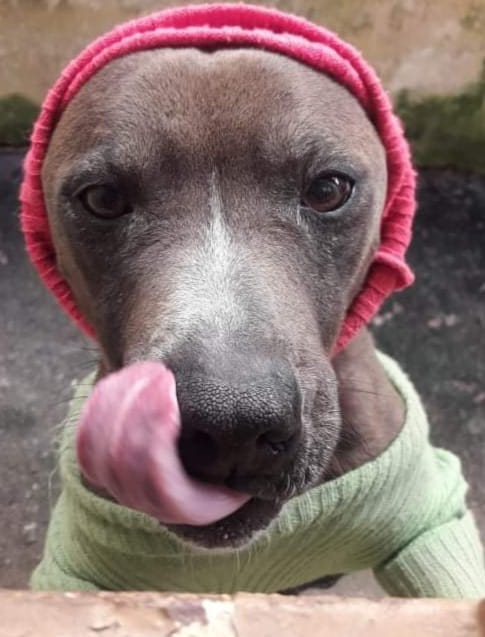
Goe happy after chew stimulation, demonstrating in practice how senior dogs can chew safely and healthily.
Three safe chew options that senior dogs can chew
Choosing the ideal chew for a senior dog requires meeting a fundamental technical requirement: the material must yield slightly under the pressure of the animal’s tooth. If you try to press the surface of the item with your own fingernail and it shows no elasticity or indentation, it is too rigid for a senior jaw. Based on the careful management that worked perfectly with Goe, I highlight three excellent alternatives of chews and items that senior dogs can chew with maximum safety:
1. Thin or porous dehydrated chews (pig/rabbit ears and soft meat strips)
Unlike beef hooves or horns, which have a mineral density identical to or higher than canine teeth, thin and porous natural dehydrated chews offer a texture that progressively softens upon contact with the dog’s saliva. Rabbit ears (with or without fur) or pig ears undergo dehydration processes that preserve elastic collagen. As the senior dog chews, the tissue breaks down into soft layers, massaging inflamed gums and cleaning the gingival sulcus line without requiring excessive force or structural impact on senior teeth.
2. Specially stuffed and frozen soft rubber toys
This is one of the most versatile and safest alternatives to traditional hard bones for dogs in their senior years. Using non-toxic rubber toys developed specifically for senior lines (which have a softer and more flexible consistency than conventional toys) allows you to create a controlled chewing activity. The secret lies in stuffing the inside of the toy with therapeutic pates, moist natural food, or bone broth rich in collagen, and then freezing it. The act of licking and chewing the frozen toy promotes prolonged relaxation, and the cold temperature acts as a natural analgesic and anti-inflammatory for sensitive gums or those affected by mild gingivitis.
3. Functional pressed gelatin or hydrolyzed collagen bones
The pet food market has evolved significantly and now offers so-called “functional chew bones” made from beef collagen or dense pressed gelatin, completely free of rawhide (which is highly indigestible and dangerous). These chews have a firm structure upon first impact, satisfying the dog’s psychological need to chew, but they dissolve gradually as they come into contact with the enzymes in canine saliva. This completely eliminates the risk of fragmentation into sharp pieces or cutting splinters that could puncture the geriatric patient’s gastrointestinal tract.
To illustrate and help with your choice, I leave below a practical example of an item highly rated by owners: https://amzn.to/44X7Mln
Identifying hidden oral problems in old age
For chew management to be pleasurable, the owner needs to be sure that the dog is not feeling latent pain in their mouth. Often, a senior dog stops chewing or starts rejecting food not out of a lack of interest, but because they have root resorption, loose teeth, or hidden root fractures beneath the gumline. Stay alert for the following clinical warning signs:
- Dropping the chew repeatedly from the mouth during the activity.
- Chewing using only one side of the mouth.
- Excessive salivation (sialorrhea) accompanied by traces of blood on the toy or chew.
- Rubbing their paws against their muzzle or constantly licking their lips after trying to chew.
- Social isolation or irritability when the head area is touched.
If you notice any of these symptoms in your senior companion, immediately suspend the offering of any chew items and schedule an evaluation with a veterinary dentist. Treating periodontal pain is the first step so they can go back to enjoying the benefits of chewing healthily.
Indispensable care and safety rules in senior management
Regardless of the high safety of the chosen chew item, active and continuous supervision by the owner is an unnegotiable golden rule in the senior years. Geriatric dogs may exhibit a slower swallowing speed due to mild neurological dysfunctions or rapid muscle fatigue. Furthermore, the lack of some posterior teeth can cause the dog to try to swallow larger pieces of the chew at once because they cannot grind them properly, increasing the risk of choking or esophageal obstructions.
Ensuring that the moment of mental energy expenditure is 100% safe involves rigorously monitoring the object’s level of wear. As soon as the dehydrated chew or gelatin bone reaches a small enough size to fit entirely inside the animal’s mouth, it must be removed from circulation and replaced with a new large piece. Adapting the diameter and resistance of the object to the dog’s current size and motor capacity ensures that the chewing activity perfectly fulfills its integrative therapeutic role, without leaving room for emergency medical complications.
LOLI: NATURAL DIET AS A SHIELD AND THE ROLE OF HEALTHY BONES
In our family context, we also closely follow the reality of our beloved Loli, who has a complex history of treatments and has faced several health challenges, including episodes of IBD (Inflammatory Bowel Disease). Although she undergoes constant care due to her clinical condition, Loli maintains a natural diet as her true shield against all her health problems, staying strong and healthy. Given this, and strictly respecting her metabolic particularities, from time to time we opt for the strategic insertion of healthy bones and specific chews into her routine, ensuring she enjoys all the benefits of this stimulus without unbalancing her sensitive organism.
👉 This content can help broaden your understanding of the topic: https://logicalbark.com/natural-dog-food-and-ibd-what-lolis-journey-taught-us-about-quality-of-life/
Conclusion
Keeping environmental enrichment active through adapted chews is a decisive pillar in maintaining the mental and cognitive health of dogs in their golden years. Understanding material density criteria and knowing how to select which items senior dogs can chew safely allows owners to offer comfort, relief, and well-being in the phase when they most need support. Looking at the individual needs of your senior friend, just as I did with Goe, transforms a simple habit into a powerful tool for a happy longevity.
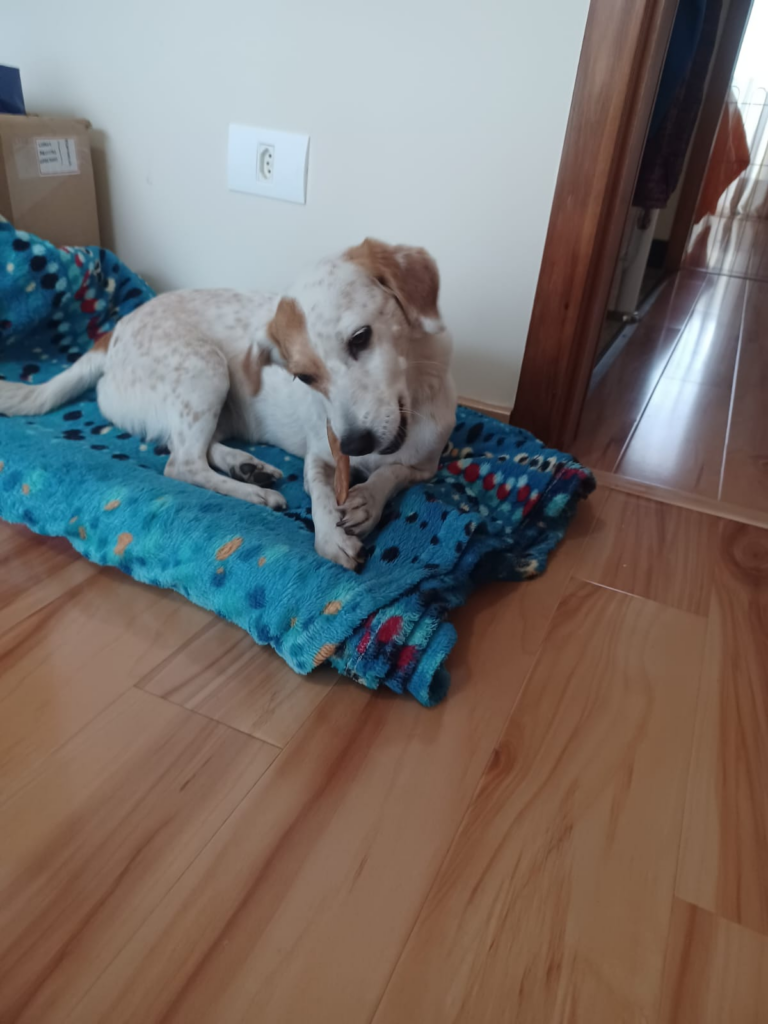
Our beloved Loli also satisfied with the chewing process of healthy bones.
Disclaimer: This article is exclusively for informational and educational purposes, based on management evidence and veterinary literature. It does not replace, under any circumstances, clinical consultation, diagnosis, periodontal evaluation, or direct guidance from a specialized veterinarian. Always consult your animal’s trusted professional before introducing new chewing or dietary routines into the geriatric patient’s diet.
You may also lke

Lusiane Costa is a digital writer with degrees in Marketing and English Literature.
Creator of Latido Lógico and Logical Bark, she develops evidence-based content on canine aging, wellness, and senior-dog health.
The project was inspired by Goe — a senior dog whose longevity and resilience shaped a grounded, compassionate view on the challenges of aging in pets.
Each article reflects her commitment to transforming real experiences into accessible knowledge, helping owners understand, prevent, and care better for their animals at every stage of life.
Goe remains the heartbeat of this project.