
November 2, 2026
Witnessing your lifelong companion freeze in front of a small staircase or step is a moment of great apprehension. That friend who used to leap onto the sofa in a single bound or run through the rooms of the house suddenly stops at the edge of the stairs, shakes their paws, and pulls back with a desolate look.
This sudden freeze is not stubbornness or laziness. Understanding why does the older dog hesitate on the step? is essential to identifying silent orthopedic pain and neurological changes, and to adapting the home environment before a severe fall happens.
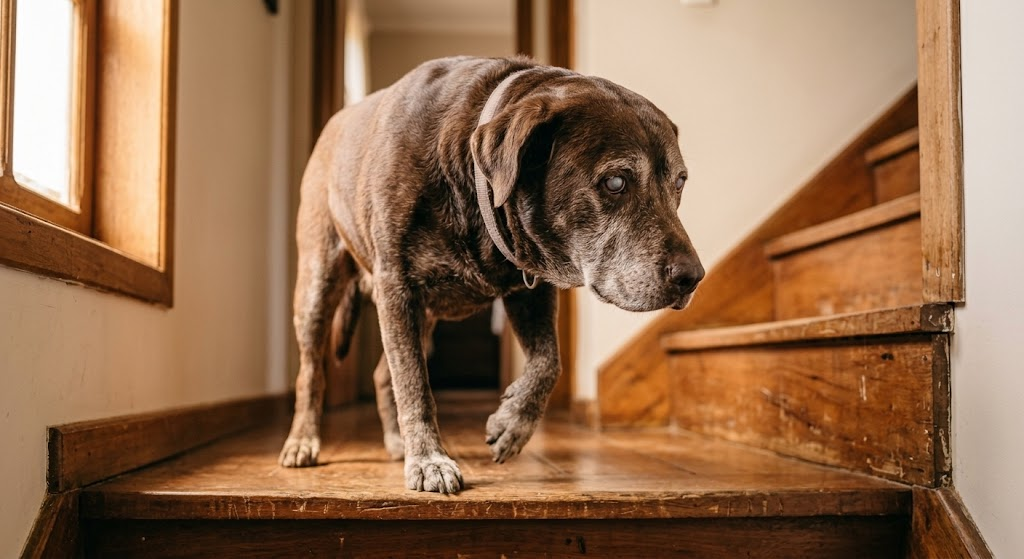
In normal daily routines and activities inside the home, we realize how delicate a moment this is, in which we understand why does the older dog hesitate on the step, demanding an attentive and analytical look from the pet parent to observe the signs and adopt measures that minimize this impact.
What causes this block in front of steps?
The mechanics of going up or down a step require strong propulsion from the hind legs, support from the front legs, flexion of the spine, and depth perception through vision. When one of these systems fails, the pet freezes because their brain associates the movement with a spike of pain or the imminent fear of losing balance and falling.
The most frequent clinical causes for this block involve:
- Arthrosis and Osteoarthritis: The gradual wear of cartilage causes direct friction between the bones during the flexion of the knee, hip, or elbow, generating acute and paralyzing pain.
- Loss of Muscle Mass (Geriatric Sarcopenia): With aging, the hind legs lose the muscle tone needed to propel the body’s weight upward or to cushion the impact on the descent.
- Reduction in Visual Acuity: Frequent conditions in senior dogs, such as cataracts or nuclear sclerosis, distort depth perception, making the step look like a hole or a precipice to the animal.
- Spinal Wear and Herniated Discs: Compressive injuries in the cervical or lumbar region cause numbness, decreased reflexes, and involuntary tremors when the dog tries to articulate its limbs.
- Cognitive Dysfunction Syndrome (Canine Dementia): Senile neurological changes can make the pet forget how to execute complex movements or become disoriented when facing changes in floor level.
What you can do when you notice these first signs?
When your companion starts to hesitate, the first step must be medical investigation accompanied by immediate adaptations in the environment. Do not wait for the condition to progress to a fall.
- Schedule an orthopedic and neurological consultation: Only the veterinarian can diagnose the exact cause through imaging exams (X-ray or ultrasound) and prescribe the correct pain relief protocol.
- Block access to dangerous stairs: Use child safety gates at the top and base of indoor stairs to prevent unsupervised attempts.
- Add traction to slippery floors: Place rubber-backed runners or non-slip rugs in the paths most used by the dog, ensuring firmness in the steps leading up to the steps.
- Adapt the height of furniture: If hesitation occurs when climbing onto the sofa or bed, position soft wooden ramps or high-density foam ramps in the area.
The invisible danger on walks: the challenge from curb to asphalt
Although most pet parents focus on indoor stairs, the greatest risks of accidents occur outside the home. On walks through residential neighborhoods, the continuous transition between the sidewalk and the street represents a critical obstacle.
In our daily and intimate experience of caring for Goe, this was one of the stages that demanded the most vigilance. As we walked through the residential neighborhood, I clearly noticed the enormous difficulty and the freeze he presented precisely at the moment of descending the curb toward the asphalt.
The transition from the sidewalk to the street is an extremely delicate moment in the routine. A piece of pet parent advice that I give, and that I exemplify with great zeal and affection to other pet parents based on my own experience, is to act with absolute prevention and attention at this time. If you do not have an attentive look and firm support on the leash at the exact second of descending the curb, the older dog can lose footing, stumble, and fall awkwardly onto the asphalt, which can cause severe joint injuries or spinal trauma.
When walking with your senior pet, reduce your walking speed, anticipate the descent from the sidewalk, and serve as physical support to ensure a smooth and safe transition.
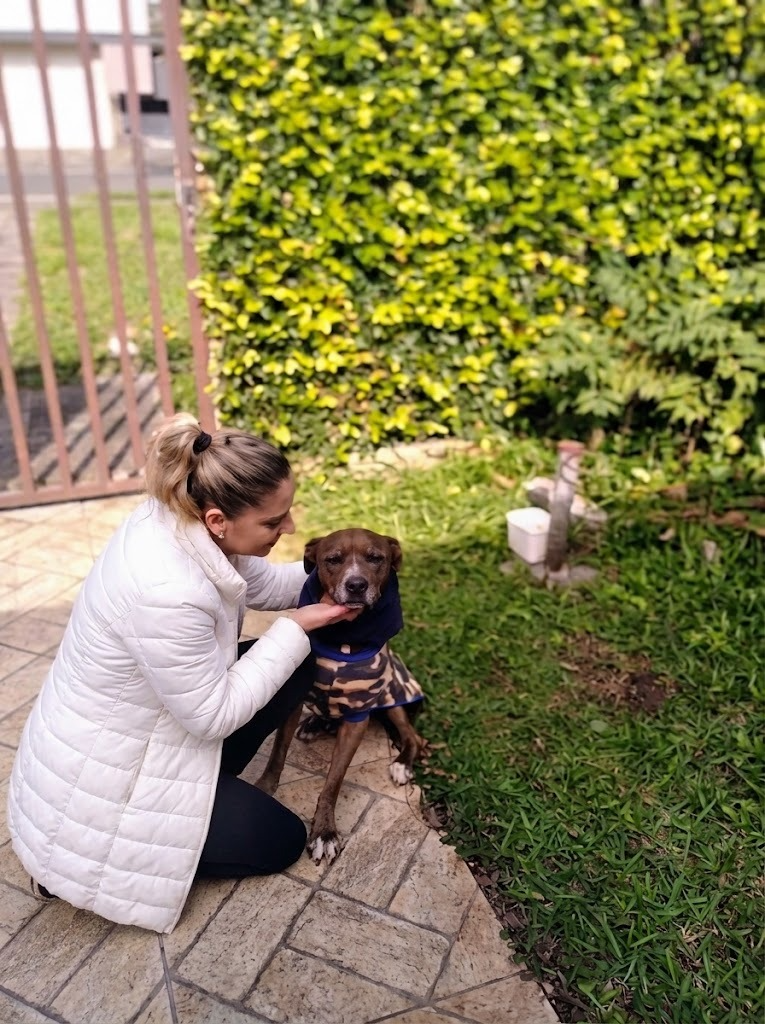
When looking at the garden and remembering every step alongside my Goe upon returning from our walks, I deeply understand why the older dog hesitates on the step, reminding me of the redoubled care we must have at every moment, to protect the perennial memories of our dogs’ senior phase.
How to help the senior dog overcome pain and prevent falls?
Decreasing the impact on joints requires simple and continuous changes in daily management:
- Installation of Access Ramps: Replace steps to beds and sofas with soft ramps covered with non-slip material. (Example: Non-Slip Foldable Pet Ramp)
- Protection of Slippery Floors: The use of rubberized runners or non-slip socks prevents paws from slipping during the propulsion phase. (Example: Non-Slip Socks for Older Dogs)
- Orthopedic Supplementation: Chondroprotectants (such as chondroitin, glucosamine, and Omega-3) prescribed by the veterinarian help protect remaining cartilage.
- Low-Impact Exercises: Veterinary physical therapy and hydrotherapy strengthen musculature without overloading painful joints.
Some pet parents in places that make this adaptation viable use foldable pet ramps, helping to avoid impact on the joints. To complement, you can check a practical example: https://link.amazon/B0bCYbeyt
Conclusion
Understanding why does the older dog hesitate on the step? transforms the pet parent’s doubt into an active posture of prevention and care. Hesitation on stairs or the street curb is a silent cry for help. By adapting the home environment, reinforcing safety during walks, and seeking veterinary orthopedic support, you give your companion back the confidence and well-being they deserve in their senior phase.
👉 If this topic sparked your interest, you might also like this article: https://logicalbark.com/senior-dog-walking-in-circles-and-restless-at-night/
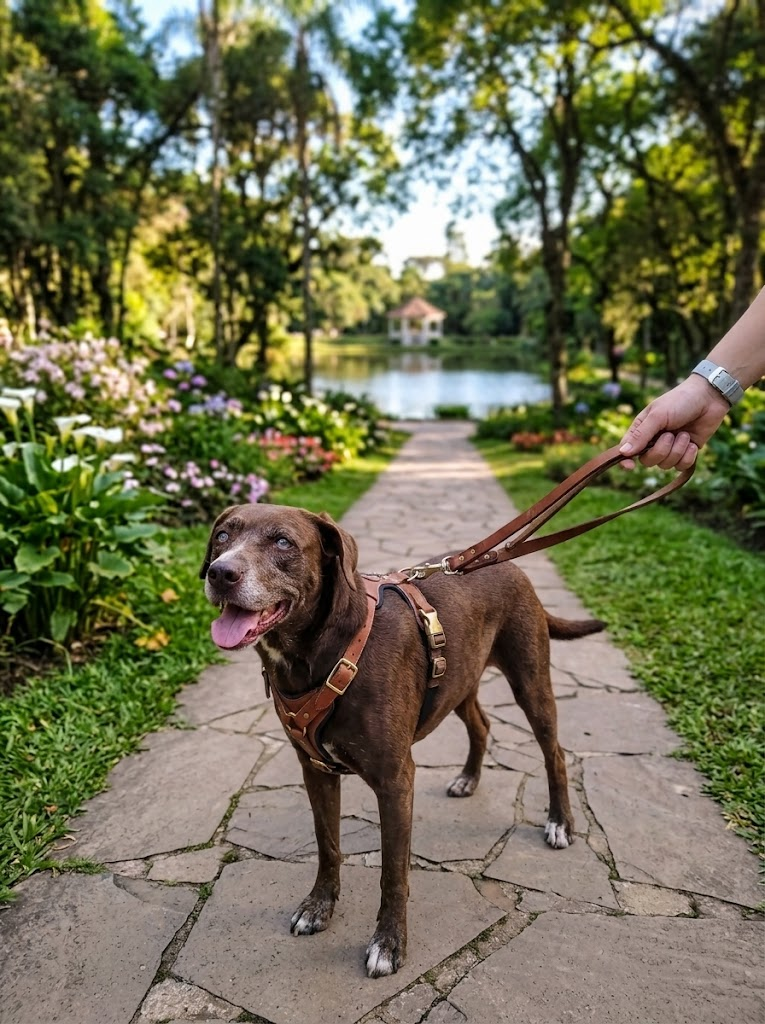
Prioritizing flat locations free of obstacles on walks with your senior dog is an essential act of care that perfectly understands why the older dog hesitates on the step.
You may also like

Lusiane Costa is a digital writer with degrees in Marketing and English Literature.
Creator of Latido Lógico and Logical Bark, she develops evidence-based content on canine aging, wellness, and senior-dog health.
The project was inspired by Goe — a senior dog whose longevity and resilience shaped a grounded, compassionate view on the challenges of aging in pets.
Each article reflects her commitment to transforming real experiences into accessible knowledge, helping owners understand, prevent, and care better for their animals at every stage of life.
Goe remains the heartbeat of this project.