
October 15, 2026
Watching a four-legged companion grow old is a journey filled with affection, but it also confronts us with unexpected and distressing behaviors. When late night comes and the house goes silent, noticing your senior dog walking in circles and restless at night can cause an immediate wave of concern. They walk aimlessly down the hallway, seem unable to find a comfortable position in bed, or wander around as if lost in the very environment where they have lived their whole life.
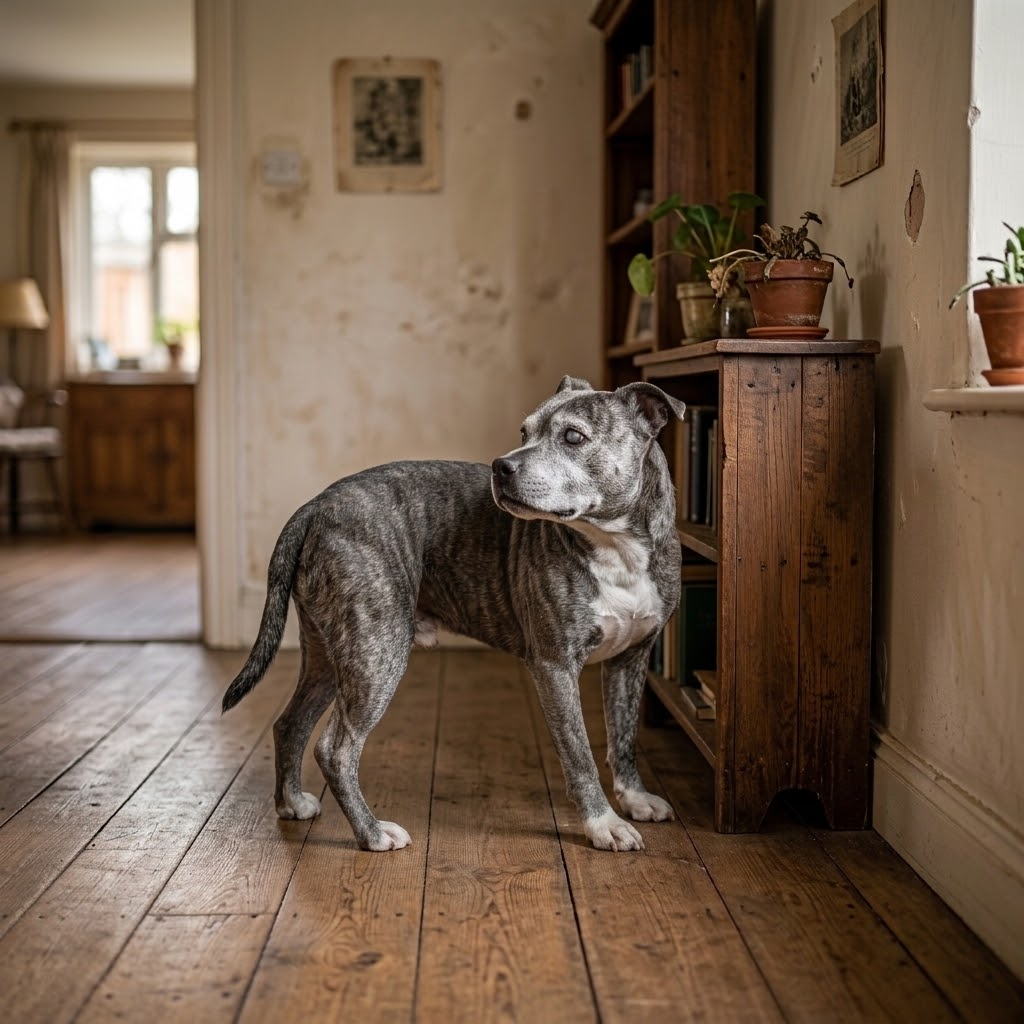
Noticing a senior dog walking in circles and restless at night requires sensitivity from the owner to reorganize the space and bring more safety to the environment.
If you are experiencing this scenario in your home today, know that you are not alone and that your pet is not acting this way out of stubbornness. Nighttime restlessness and compulsive walking in circles are clear signals from the canine body asking for help. Understanding what lies behind this behavior is the first step toward restoring peace to your senior dog’s nights and to your family’s routine.
Why is the senior dog walking in circles and restless at night?
Unlike young dogs, who usually burn energy during the day and sleep deeply at night, a senior dog’s body undergoes physical, neurological, and metabolic changes. The phenomenon of nighttime restlessness occurs because dimming lights and the silence of the house can heighten feelings of disorientation or pain.
Below are the main factors that lead to your senior dog walking in circles and restless at night:
1. Canine Cognitive Dysfunction Syndrome (CCD)
Cognitive Dysfunction is a degenerative neurological disorder often compared to Alzheimer’s disease in humans. It affects the animal’s memory, learning, perception, and sleep cycle. Affected dogs often reverse their routine: they spend the day sleeping and stay awake, disoriented, and wandering aimlessly during the night.
2. Joint Pain and Physical Discomforts
Conditions such as osteoarthritis, spondylosis (“bone spurs”), and spinal pain make lying down and getting up a painful task. When trying to rest, the dog cannot find a comfortable position. Chronic pain creates anxiety, and anxiety causes them to get up and start walking again to try to relieve body stiffness.
3. Gradual Loss of Senses (Vision and Hearing)
Cataracts, glaucoma, and age-related deafness drastically reduce the pet’s ability to interpret the environment around them. In the dark of night, the lack of visual and auditory cues intensifies fear and feelings of helplessness, leading the senior dog to walk in circles in an attempt to reorient themselves in space.
Beyond walking in circles: Other silent warning signs
Disorientation does not always manifest only through continuous pacing. Often, a senior dog’s mind experiences small “short circuits” that go unnoticed in the early stages.
Pay close attention if your pet shows any of these complementary behaviors:
- Stopping and staring at walls or furniture: The dog remains motionless looking into space, at a corner of the room, or trapped behind doors without knowing how to back out.
- Day-night reversal: Deep, continuous sleep throughout the afternoon, followed by restlessness, whining, soft howling, or heavy panting as soon as the lights go out.
- Forgetting basic routines: Forgetting where the water bowl is, missing the potty pad location, or failing to recognize simple commands they had always mastered.
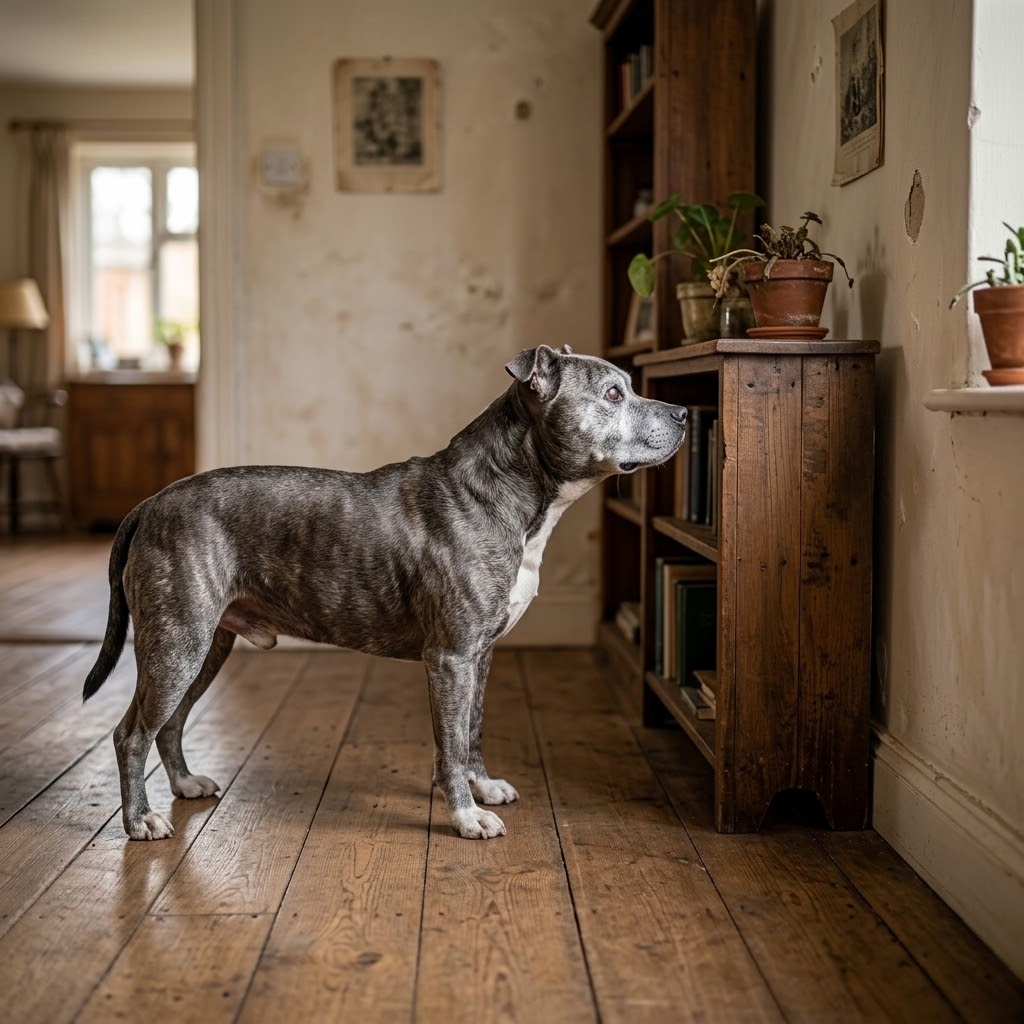
Noticing a senior dog walking in circles and restless at night — or standing still staring at furniture — is a clear sign that disorientation and invisible pain require medical investigation.
Our real experience: The search for answers for Goe and the use of gabapentin
At Latido Lógico, theory comes to life through our own journey alongside Goe, our 16-and-a-half-year-old senior dog. We know firsthand the pain and helplessness of facing these moments in the middle of the night.
Goe started showing signs that put us on high alert: he would walk a bit in circles and suddenly stop in the middle of the room, staring fixedly at a piece of furniture, as if hypnotized or trying to figure out where he was. Seeing that distant look from someone who was always so attentive to our surroundings broke our hearts.
We knew we couldn’t just write it off as “just old age” and sit back. We immediately began an intensive veterinary investigation. It took weeks of consultations, careful exams, and a thorough evaluation of his neurological and joint health.
During this diagnostic process, we discovered that a significant portion of that nighttime restlessness and the freezing episodes while staring at furniture stemmed not just from mental disorientation, but from chronic neuropathic and joint pain that intensified when his body cooled down at night.
As part of the individualized treatment plan proposed by the veterinary team, Goe was prescribed gabapentin — a medication frequently recommended for managing neuropathic pain and chronic discomfort in senior dogs.
The impact on his quality of life was extraordinary:
- Relief from invisible pain: Gabapentin acted directly on modulating chronic pain, finally allowing his body to relax.
- Drastic reduction in anxiety: Without the constant trigger of pain, compulsive walking and episodes of staring blankly at furniture decreased significantly.
- Restful nights of sleep: Goe was able to settle into his bed again and enjoy peaceful nights of deep sleep.
Our experience brings a valuable lesson that we make a point of sharing with every owner: it is absolutely remarkable how much difference an early diagnosis and medical help can make. Silenced pain often disguises itself as restlessness and disorientation. Seeking specialized veterinary care at the first signs of a senior dog walking in circles and restless at night is not just a medical choice — it is an act of care that saves your pet from months of unnecessary suffering.
👉 To complement your reading, check out the suggested content below: https://logicalbark.com/gabapentin-for-senior-dogs-experience-with-goe-and-essential-information/
What you can do at home to help your senior dog today
While you schedule the appointment with your veterinarian, a few home adaptations can immediately reduce your dog’s stress levels at night:
- Create a wind-down routine: Avoid rough play in the late afternoon. Keep the environment calm, with soft lighting and reduced noise as night approaches.
- Leave nightlights on: Plug-in nightlights at floor level help senior dogs with reduced vision navigate hallways or rooms without panicking.
- Orthopedic beds and non-slip rugs: Invest in a bed with high-density foam (memory foam) and place non-slip rugs along the paths where your dog usually walks.
- Keep furniture in the same place: Do not change the layout of sofas, tables, or food bowls. Spatial memory is a dog’s greatest ally when dealing with cognitive or visual decline.
Here is a highly rated example by dog owners: https://amzn.to/3Wu16tC
Conclusion: Old age is not a disease, it is a stage that requires nurturing
Seeing your senior dog walking in circles and restless at night is an invitation to slow down alongside them. Aging brings limitations, but with dedicated veterinary investigation, proper treatments like the one we experienced with Goe, and small adjustments to your home routine, it is entirely possible to restore the comfort, peaceful sleep, and dignity that your best friend deserves.
Do not wait for the condition to worsen before seeking help. Investigate, care for, and embrace this stage with all the patience and love they dedicated to you throughout their life.
Transparency Note: Reports and information shared on Latido Lógico stem from real-life experiences and dedicated research into the pet universe, serving as support for dog owners. The use of medications such as gabapentin must be done exclusively under the prescription and supervision of a veterinarian.
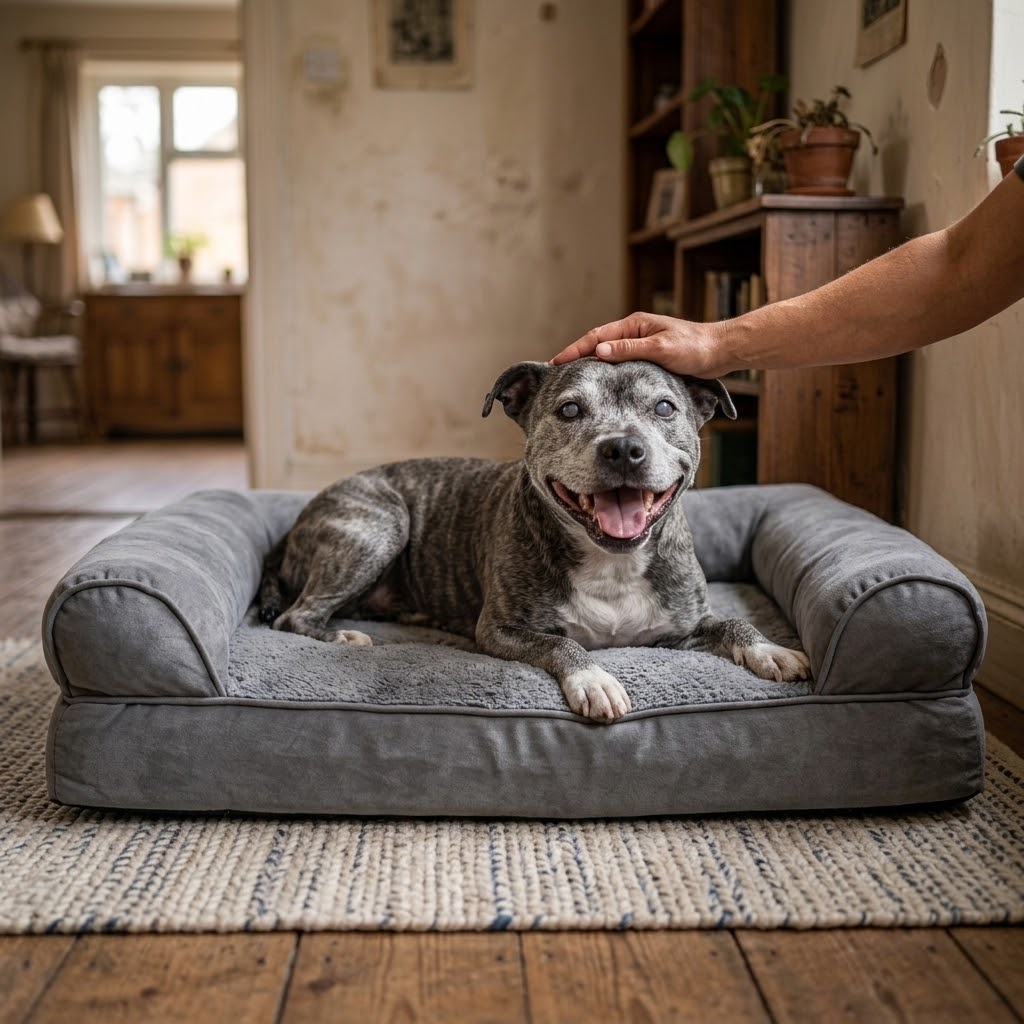
Identifying the signs early and adapting the environment is the path to transforming the senior stage into a period of peace, comfort, and dignity.
You may also like
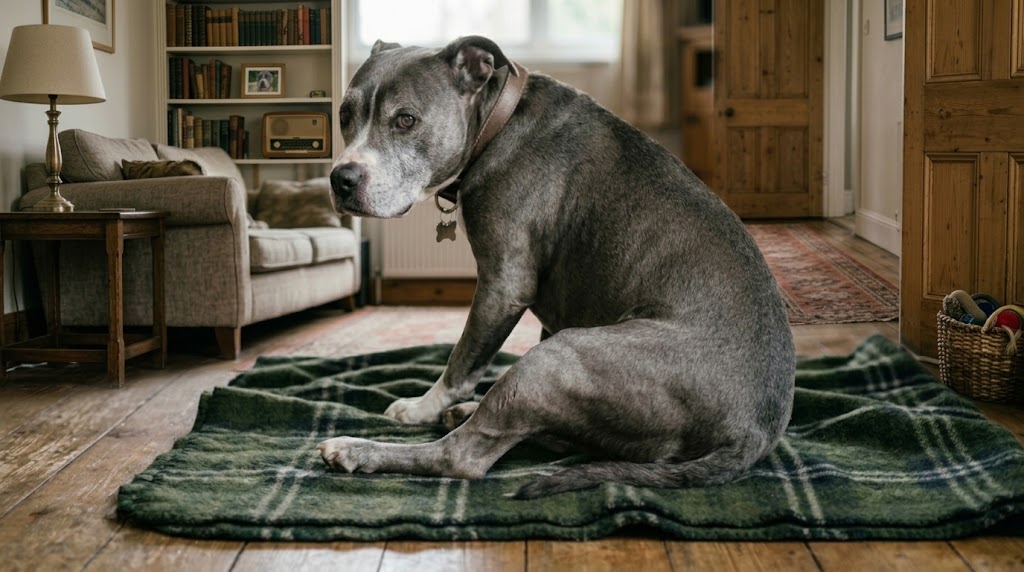

Lusiane Costa is a digital writer with degrees in Marketing and English Literature.
Creator of Latido Lógico and Logical Bark, she develops evidence-based content on canine aging, wellness, and senior-dog health.
The project was inspired by Goe — a senior dog whose longevity and resilience shaped a grounded, compassionate view on the challenges of aging in pets.
Each article reflects her commitment to transforming real experiences into accessible knowledge, helping owners understand, prevent, and care better for their animals at every stage of life.
Goe remains the heartbeat of this project.