
October 11, 2026
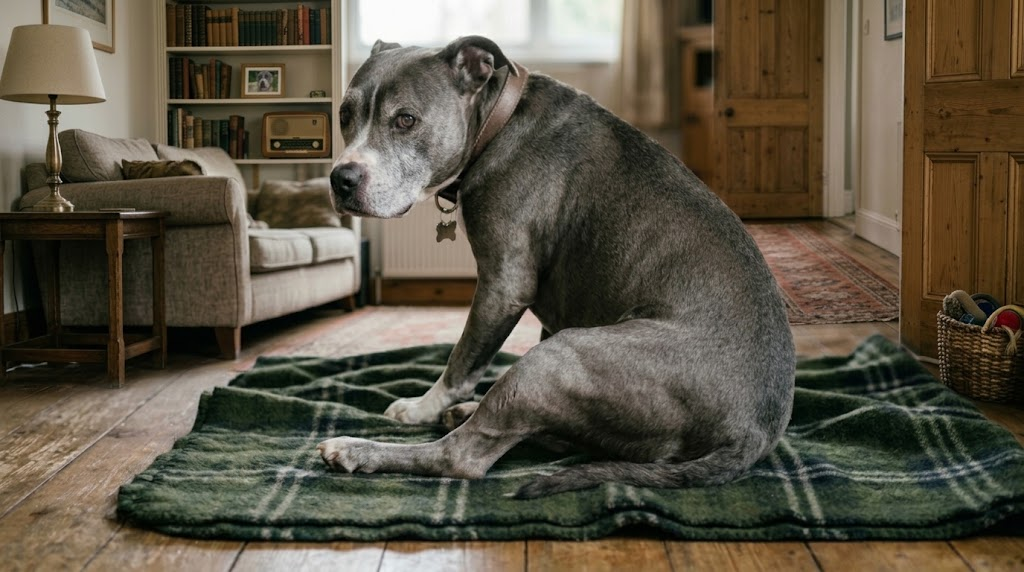
Subtle signs of hind leg weakness in senior dogs: do not ignore excessive rest
. Accompanying our four-legged companions as they grow older is a journey of deep affection, but also of constant observation. As the years advance, small details in the animal’s behavior and mobility begin to give subtle signals that their senior body no longer responds with the same vigor as before. Among the greatest concerns for guardians of older dogs is hind leg weakness in senior dogs.
If you have noticed that your dog has trouble getting up from their bed, displays a wobbly gait, crosses their back legs when walking, or simply loses their balance easily, know that this lack of strength should not be viewed as a simple “inevitable” consequence of age. This article was prepared to clarify the main causes of motor strength loss, which diseases affect the hind limbs, what causes sudden weakness, and how my practical experience with Goe taught us that every sign needs to be investigated without delay.
Important Notice (Disclaimer): This content is strictly informative and educational in nature and does not, under any circumstances, replace the diagnosis, clinical evaluation, or prescription of a veterinarian. At the first sign of weakness, mobility changes, or pain in your dog, consult a qualified professional immediately.
What Is Hind Leg Weakness in Senior Dogs?
The loss of strength in the hind limbs — clinically associated with conditions of paresis (partial weakness) or ataxia (loss of motor coordination) — is characterized by the animal’s inability to properly support its own weight on its back legs.
This alteration in biomechanical stability can manifest gradually and imperceptibly at first, or appear suddenly. The dog may hesitate before climbing stairs, slip on smooth floors, drag the tips of their nails on the ground while walking, or show leg tremors after standing for brief periods.
Main Diseases Affecting a Senior Dog’s Legs
Hind leg weakness in senior dogs is a symptom resulting from underlying pathologies that affect the animal’s bone, joint, or neurological structure:
- Chronic Osteoarthritis and Hip Dysplasia: Degenerative wear of the joint cartilage causes continuous pain and stiffness. The animal avoids using the hind limbs, resulting in rapid muscle atrophy and loss of support.
- Intervertebral Disc Diseases (Slipped Disc / Herniated Disc): Degeneration or herniation of the spinal discs puts pressure on the spinal cord, blocking the transmission of nerve impulses to the hind limbs.
- Degenerative Myelopathy: A progressive and painless neurological disease that causes a gradual loss of spatial awareness (proprioception) and motor strength in the back legs.
- Spondylosis Deformans (“Bone Spurs”): Formation of bone bridges along the spine that limit mobility and compress peripheral nerves.
- Cushing’s Syndrome (Hyperadrenocorticism) and Other Endocrinopathies: Excess cortisol or metabolic imbalances cause severe loss of muscle mass (sarcopenia) and generalized weakness.
What Causes Sudden Hind Leg Weakness in Dogs?
Unlike progressive wear, sudden weakness occurs when the dog suddenly loses strength or the ability to walk from one moment to the next. This situation constitutes a veterinary emergency and can be caused by:
- Acute Herniated Disc (Disc Extrusions): Sudden rupture of an intervertebral disc resulting in severe and immediate compression of the spinal cord.
- Trauma and Spinal Injuries: Falls, collisions, or sudden movements that cause fractures, dislocations, or severe nerve strains.
- Fibrocartilaginous Embolism (FCE): A “stroke” or infarction in the spinal cord caused by a cartilage fragment blocking local blood flow, generating sudden, painless paralysis or weakness.
- Toxins and Poisoning: Ingestion of toxic substances, venomous tick bites, or poisons that compromise neuromuscular transmission.
- Vascular or Cardiac Crises: Circulation issues (such as thrombosis) or episodes of systemic weakness due to arrhythmias and acute heart failure.
What to Give or Do When a Dog Has Leg Weakness?
Many guardians ask what to give their pet to relieve weakness. It is crucial to understand that no medication should ever be given without professional guidance. However, under veterinary direction and prescription, therapeutic support typically involves:
- Veterinary Pain Relievers and Anti-inflammatories: To manage chronic pain and reduce inflammation in the joints or spine.
- Supplements and Neutraceuticals: Chondroprotectants (such as chondroitin, glucosamine, type II collagen) for joint integrity, alongside fatty acids (Omega-3) for natural anti-inflammatory action.
- Neuro-muscular Support and Protectors: B-complex vitamins and specific antioxidants for peripheral nerve health.
- Physical Therapy and Acupuncture: Fundamental therapies for preserving muscle mass, pain management, and neurological rehabilitation.
- Home Management and Adaptations: Use of support harnesses/slings, installation of non-slip mats, and elevating food and water bowls.
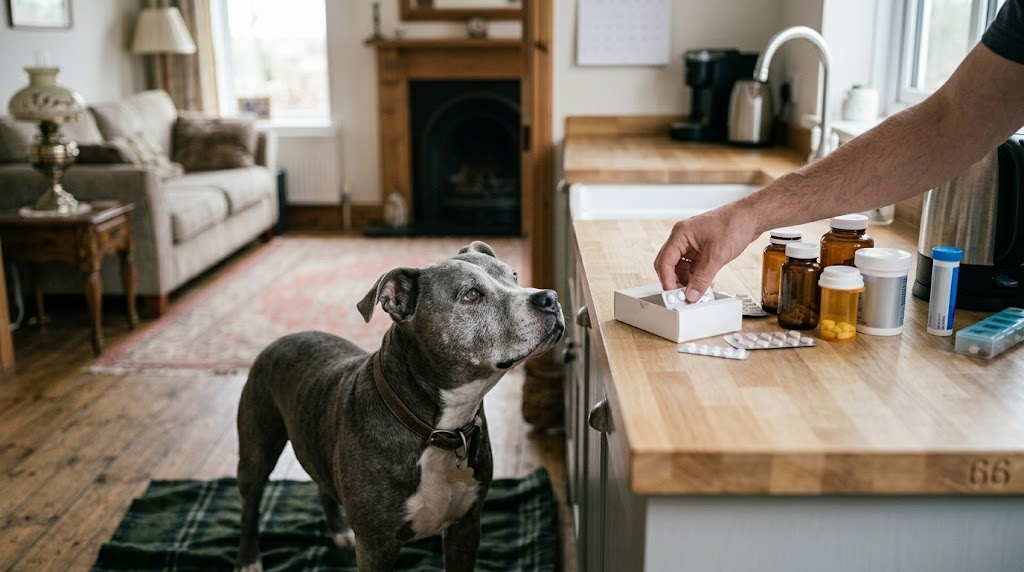
Strategic supplementation: an ally in combating hind leg weakness in senior dogs.
Support Harness: My Experience with Goe
In our routine with Goe and his hind leg issues, one of the biggest challenges was adapting the house so he could continue enjoying the place he loved most: the garden. To assist with mobility and allow him to move safely without straining his spine and joints, the support harness was an indispensable tool.
For the purpose of complementing this article, below is an example of the model we used to assist us daily: https://amzn.to/3TvZvCP
⚠️ Remember: Every dog has unique biomechanical and health needs. Always consult your veterinarian before purchasing or using any support equipment on your pet!
My Experience: The Journey with Goe and the Start of the Investigation
My practical experience with hind leg weakness in senior dogs began subtly and seemingly inconsequentially with my dog, Goe. It all started with a slight change in how he placed weight on one of his back legs. At first, it appeared to be just an ordinary limp — a mild claudication that gave the false impression of temporary tiredness due to age or the result of getting up awkwardly from his bed.
However, that apparent lack of firmness in his back leg was the starting point of a long and delicate investigation process. As time went on, what seemed like an isolated discomfort began to evolve, showing that the biomechanical change was merely the tip of a much more complex iceberg.
The definitive diagnosis was far from simple or immediate. It took months of intense searching, successive evaluations, and daily monitoring to understand the true etiology of the problem. To obtain an accurate diagnosis and ensure Goe received the proper treatment, we had to turn to a specialized veterinary hospital, where he was accompanied by a highly qualified multidisciplinary team.
During this hospital journey, Goe underwent a thorough battery of imaging tests and specific diagnostic procedures — including fluid sampling and cellular evaluation —, which allowed the specialists to precisely map what was happening in his leg tissues and joints.
This experience taught me a fundamental lesson about canine old age: any prior sign of weakness in a back leg, no matter how small it seems, is an explicit cry for help from the body. If I can offer one piece of advice grounded in everything I lived alongside Goe, it is that a guardian’s very first reaction to the slightest lack of strength or limping should be to notify and seek a veterinarian immediately. Waiting to see if it improves on its own only makes the diagnostic path longer and more painful.
Conclusion: Early Diagnosis and Quality of Life
Hind leg weakness in senior dogs is a serious clinical manifestation that requires responsibility, sensitivity, and excellent technical care. Although aging brings inevitable transformations to our dogs’ mobility, pain and the loss of independence should never be accepted as normal.
Investigating every sign of weakness from its earliest indications is what enables effective therapeutic interventions — whether through pain management, physical therapy support, acupuncture, environmental adaptations, or proper supplementation. With an early diagnosis and the guidance of a trusted veterinary team, we can provide our senior dogs with the comfort, stability, and dignity they deserve at every stage of life.
👉 To complement your reading, also check out our recommended article: https://logicalbark.com/what-can-cause-paw-pain-in-older-dogs/
With rigorous medical supervision and proper home management, it is possible to restore confidence to your senior dog’s steps, ensuring a life filled with well-being and quality moments!
After all, these are real accounts of care routines that require a human perspective that automated answers simply cannot replicate.
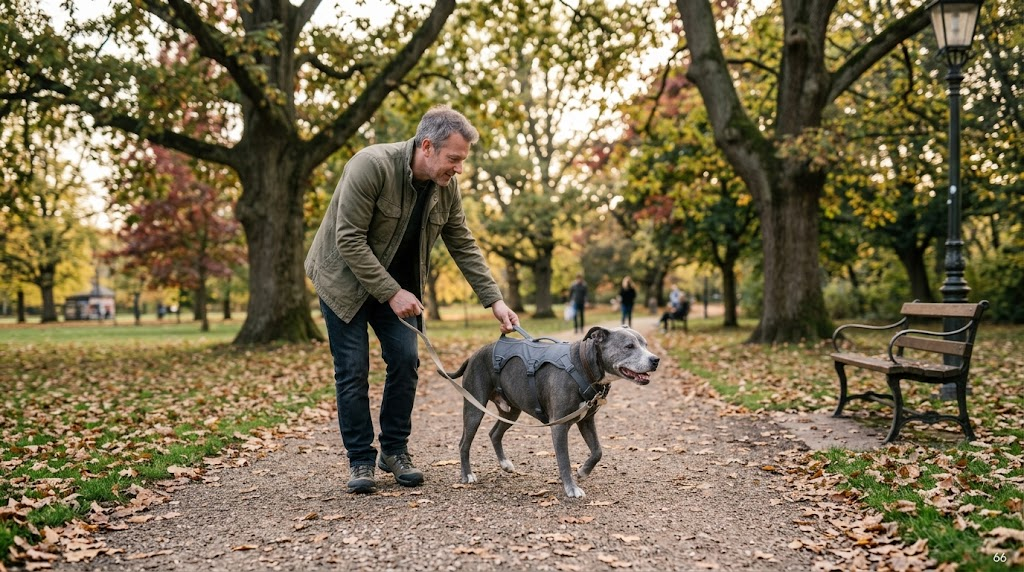
New tools, old memories. Unconditional partnership transforms challenges into opportunities for connection
You may also like

Lusiane Costa is a digital writer with degrees in Marketing and English Literature.
Creator of Latido Lógico and Logical Bark, she develops evidence-based content on canine aging, wellness, and senior-dog health.
The project was inspired by Goe — a senior dog whose longevity and resilience shaped a grounded, compassionate view on the challenges of aging in pets.
Each article reflects her commitment to transforming real experiences into accessible knowledge, helping owners understand, prevent, and care better for their animals at every stage of life.
Goe remains the heartbeat of this project.