
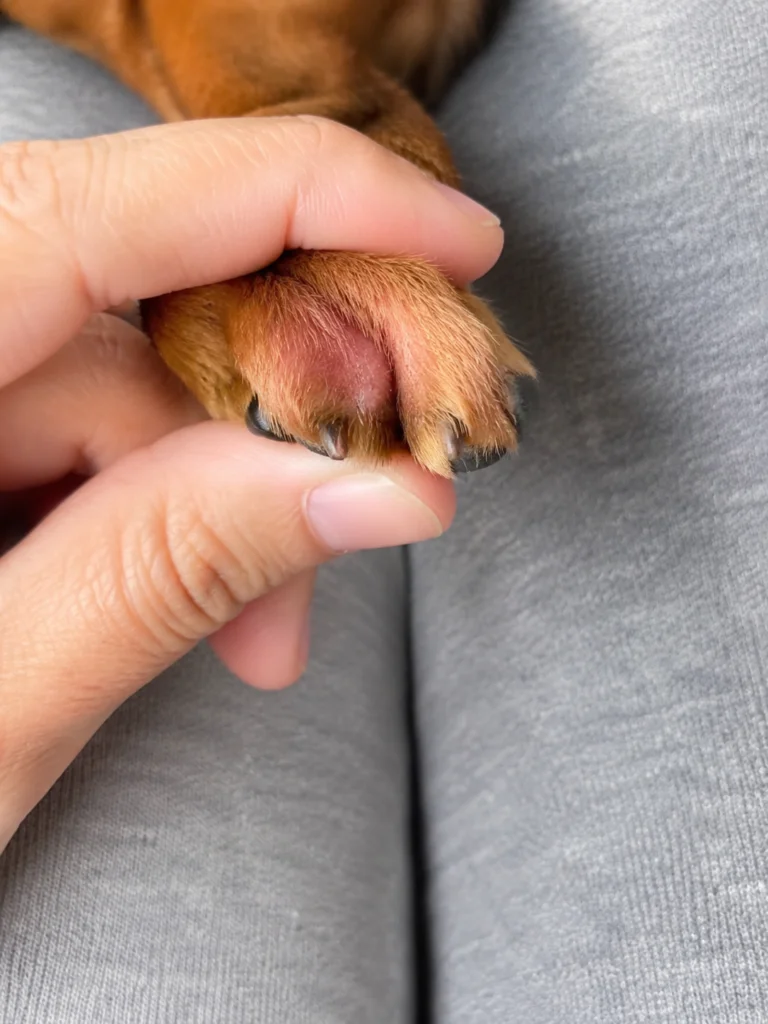
The itching in your senior dog’s paws is not just a nuisance. Discover how to turn care into a moment of relief and quality of life.
When we look at our dogs, we do not see just a pet; we see a lifetime of walks, shared stories, loyalty, and a complexity that transcends time. Aging is a testament to resilience. However, with maturity come specific challenges that require a more attentive and caring approach. One of the issues that causes the most discomfort and anxiety during this stage is persistent itchy paws in senior dogs. If your faithful companion is frequently licking or biting their paws, it is essential to understand that this is not simply a “habit,” but rather a cry for help that demands immediate attention.
Understanding Itchy Paws in Senior Dogs
Aging brings profound physiological changes. The skin becomes thinner, the skin barrier loses efficiency, and the ability for cellular regeneration decreases. When a young dog feels a mild irritation, they often ignore it; when itchy paws occur in senior dogs, the animal is often unable to express what they feel beyond the compulsive act of licking.
Many pet owners believe it is simply an “allergy,” but the situation is more complex. Excessive licking may be an attempt to relieve intense itching, but it can also be a neurological or physical response to pain. When a dog feels a sharp joint pain, they may begin licking the surrounding area as a form of self-soothing.
Common Causes Beyond Allergies
To treat itchy paws in senior dogs, we need to identify what is happening:
Atopic and Contact Dermatitis: As the immune system ages, it may react excessively to dust mites, grass, or cleaning products.
Secondary Infections: Moisture trapped between the toes creates an ideal environment for yeast and bacteria.
Joint Pain (Osteoarthritis): The dog may lick the toe joints in an attempt to “massage” the pain.
Metabolic Problems: Endocrine diseases such as hypothyroidism can cause chronic itching.
Practical Guide: How to Relieve Itchy Paws in Senior Dogs
Clinical management should be monitored by a veterinarian, but there are home-care measures that can greatly improve your pet’s daily life.
Post-Walk Routine
The outdoors is a dog’s greatest source of contact with allergens. When returning home, make it a habit to clean your dog’s paws. Moisture is a major contributor to itchy paws in senior dogs, so always dry thoroughly between the toes.
Paw Pad Hydration
Senior dogs lose the natural lubrication of their paw pads. Use healing and moisturizing balms specifically designed for dogs, avoiding products intended for humans.
Based on the path I have traveled, I learned that prevention is the best approach. In addition to hygiene, many pet owners ask me about products that help with daily care. If you are curious to see an example that other pet owners often recommend for the well-being of senior dogs, I will leave a suggestion here that receives very positive reviews: https://amzn.to/3QHCB9T
Smart Supplementation
Skin health starts from the inside out. The use of fatty acids such as Omega-3 provides a systemic anti-inflammatory effect.
Nutrition is a great ally. During Goe’s treatment process, we always used Omega-3 under veterinary guidance, which greatly helped maintain his skin health. If you are interested in seeing an example of the product we used, I will leave below a suggestion that is highly recommended by other pet owners. But remember: always consult your veterinarian before introducing any supplement: https://amzn.to/4uUIyyi
The Role of the Environment
If your dog suffers from itchy paws in senior dogs, evaluate the flooring in your home. Very cold or heavily waxed floors can irritate the skin or place extra strain on the muscles.
MY EXPERIENCE WITH GOE: PUTTING CARE INTO PRACTICE
Throughout Goe’s life, I learned that small daily actions are what truly ensure a senior dog’s quality of life. One recommendation I always followed—and strongly recommend—is paying close attention to walking schedules. Strong sunlight is a silent enemy: asphalt retains heat much longer than we imagine. For this reason, we always avoided peak hours and preferred walks when the ground was cool, protecting his paw pads from minor burns.
After every walk, our ritual was sacred: careful cleaning while always checking the condition of his paws. This observation routine allowed us to identify any redness or changes early, preventing a simple discomfort from becoming something more serious. More than hygiene, it was a moment of connection, during which I always made sure he was walking safely and without pain.
👉 To learn about other aspects related to canine aging, visit the article below: https://logicalbark.com/what-is-the-best-dog-walking-leash-understand-why-walks-are-one-of-the-most-important-moments-of-your-dogs-day/
Legal Disclaimer
This content is intended for informational and educational purposes only. It does not replace consultation, diagnosis, or specialized treatment provided by a veterinarian. Self-medication or the use of topical products without professional guidance may worsen dermatological conditions. Always consult your pet’s trusted veterinarian.
Conclusion
Itchy paws in senior dogs are a symptom that may conceal underlying conditions, but they are also an invitation for us to be more present in the lives of our best friends. By paying attention to these small signs, we are giving our companions the peace of a well-deserved rest. They gave us a lifetime of memories; now it is our turn to care for every detail of their journey.
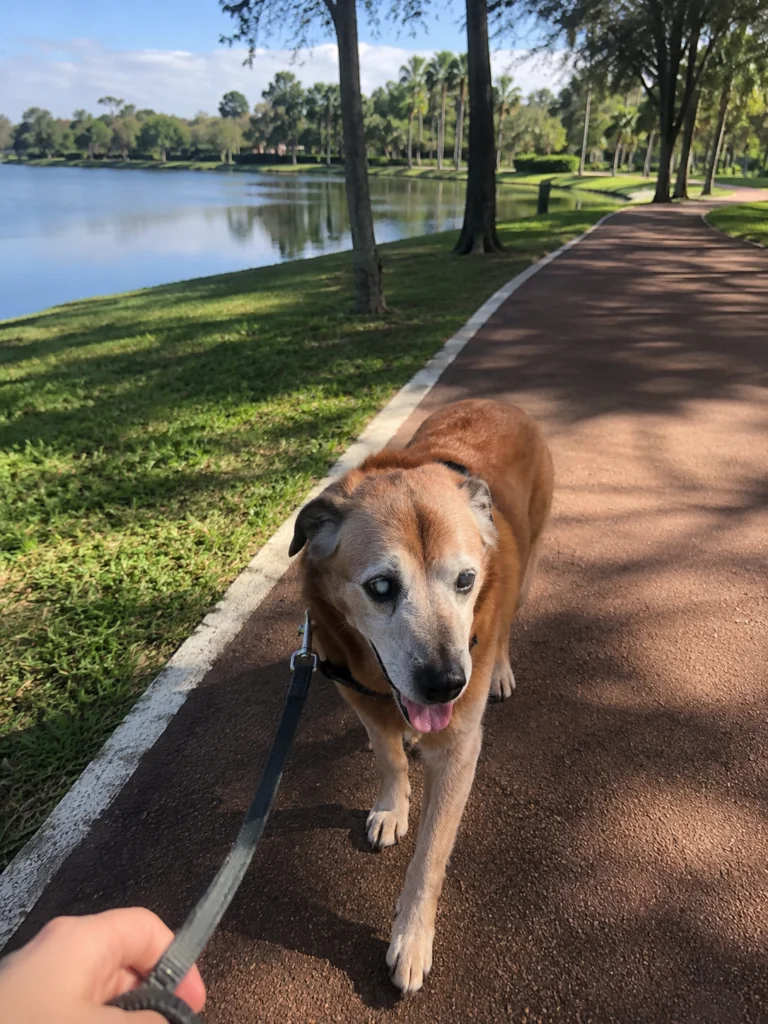
For senior dogs, like the one we see in the photo, a calm and unhurried walk, respecting their pace and limitations, is essential.
You may also like


Lusiane Costa is a digital writer with degrees in Marketing and English Literature.
Creator of Latido Lógico and Logical Bark, she develops evidence-based content on canine aging, wellness, and senior-dog health.
The project was inspired by Goe — a senior dog whose longevity and resilience shaped a grounded, compassionate view on the challenges of aging in pets.
Each article reflects her commitment to transforming real experiences into accessible knowledge, helping owners understand, prevent, and care better for their animals at every stage of life.
Goe remains the heartbeat of this project.
[…] 👉 To learn about other aspects related to canine aging, check out the article below: https://logicalbark.com/itchy-paws-in-senior-dogs-how-to-ensure-comfort-and-quality-of-life-in-their… […]