
October 9, 2026
Caring for a dog that has reached advanced maturity is an experience full of meaning, but it requires rigorous attention to the subtle signs of daily life. As the years advance, our companion’s pace undergoes natural changes, and any modification in their movement dynamics triggers an important alert. Among the most frequent and delicate complaints in the routine of senior dog guardians is paw pain in older dogs.
If you have noticed that your dog shows episodes of lameness, persistent licking on one of the limbs, or reluctance to bear body weight when walking, this article will cover the most likely causes for this condition, the importance of prompt action, and how the experience with Goe taught us fundamental lessons about canine aging.
Important Notice (Disclaimer): This content is strictly informative and educational in nature, and in no way replaces the diagnosis, clinical evaluation, or prescription of a veterinarian. In the event of any sign of discomfort or change in your dog’s mobility, consult a qualified professional immediately.
What Can Cause Paw Pain in Older Dogs?
The manifestation of paw pain in older dogs rarely stems from an isolated factor. The aging process promotes progressive wear and tear across different organic structures, encompassing bones, joints, musculature, nails, and paw pads. Understanding the origin of this sensitivity is essential for planning appropriate therapeutic management. Below are the primary etiologies associated with this condition:
- Osteoarthritis (Chronic Arthritis): This refers to the degenerative wear of articular cartilage. Extremely common in older animals, it causes stiffness after resting periods and significant pain during locomotion.
- Joint and Orthopedic Conditions: Conditions such as partial ligament tears, worsening of pre-existing dysplasias, or structural degenerative changes in the knees, hips, and elbows.
- Nail and Pad Alterations: Excessive nail growth with the risk of inward curvature and penetration into the skin, cracks in the paw pads resulting from extreme temperature variations, as well as local trauma and abrasions.
- Inflammatory and Infectious Processes: Interdigital skin infections (dermatitis), onychomycosis, inflamed nails, injuries resulting from insect stings, or the penetration of foreign bodies such as thorns and splinters.
- Bone or Tissue Alterations: Senior dogs present a higher vulnerability to the development of masses or deep tissue and bone alterations. A small, persistent swelling or bulge on the paw can constitute a warning sign that requires thorough investigation.
- Neurological Impairment: Afflictions located in the spinal cord, such as chronic disc herniations or degenerative myelopathy, compromise the conduction of peripheral nerve impulses, resulting in limb dragging or incorrect biomechanical support, which generates overload and secondary pain.
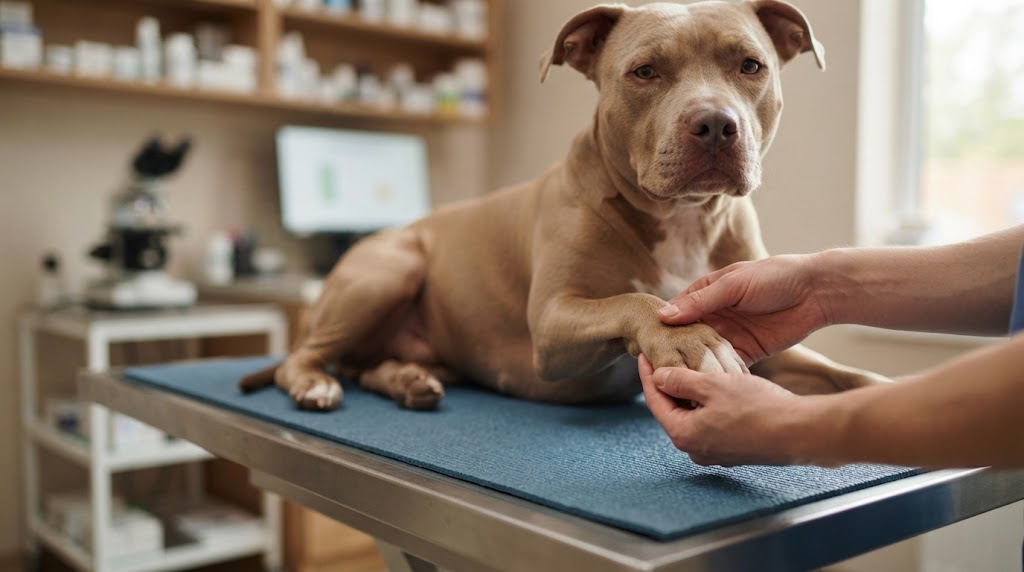
Careful handling and thorough joint evaluation are essential to identify the origin of paw pain in older dogs, ensuring an accurate diagnosis and the start of appropriate treatment to restore comfort and quality of life to your companion.
What to Do When Identifying Paw Pain in Your Dog
Faced with a case of paw pain in older dogs, prudent and methodical handling replaces impulse with despair, helping to preserve the animal’s well-being:
- Perform a Thorough Inspection: In a well-lit environment and with extreme caution—avoiding stress or worsening the painful condition—examine the interdigital spaces, the condition of the nails, and look for signs of hyperemia, edema, wounds, or thorns.
- Refrain from Any Self-Medication: Never administer human analgesic or anti-inflammatory drugs (such as ibuprofen, paracetamol, or dipyrone without express veterinary indication). Various substances common in human pharmacies present high toxicity to canines, potentially triggering organ failure or severe hemorrhages.
- Promote Spatiotemporal Adaptations at Home: Facilitate your senior dog’s mobility by installing non-slip surfaces on smooth floors to mitigate the risk of falls, prevent the animal from jumping off sofas or beds without the support of proper ramps, and position food and water bowls in easily accessible spots.
- Consult a Veterinarian Immediately: An assertive diagnosis is founded on a complete clinical evaluation associated with complementary investigation methods.
Home Care
With Goe, I specifically monitored the entire house with non-slip rugs, but some guardians also prefer the assistance of other guidelines, such as a ramp. I will leave a few examples as a complement to the article: https://amzn.to/3WgQvCg
The Relevance of Early Diagnosis and Imaging Exams
It is common for guardians to minimize initial symptoms, attributing subtle lameness or motor slowness to mere reflections of advanced age. However, paw pain in older dogs translates to a state of continuous discomfort that drains energy reserves and compromises the body’s immune response.
The swift execution of diagnostic investigations, through radiographic exams and comprehensive laboratory evaluations, proves indispensable. The earlier the cause is identified by the veterinarian, the more effective the therapeutic conduct will become—which may encompass safe analgesia protocols, physical therapy support, acupuncture, or nutraceutical supplementation directed at joint integrity.
My Experience: The Journey with Goe and the Initial Milestone
My experience with paw pain in older dogs began in a subtle and silent manner, constituting a profound milestone in my journey as a guardian. It was the first unequivocal indicator of my dog Goe’s aging. Initially, the etiology of the problem remained obscure; the condition seemed like mere passing fatigue resulting from a longer walk or a transient stiffness upon getting up from his bed.
However, that paw pain was studied for months on end until a definitive diagnosis was reached. The process demanded patience, successive evaluations, and constant monitoring. The clinical picture manifested initially through mild and almost imperceptible lameness. As time passed, the condition evolved gradually until the paw presented evident swelling.
To investigate the exact origin of the problem and seek proper treatment for what he presented in his leg, Goe was accompanied by a highly qualified veterinary team at a specialized hospital. Under the integrated care of several professionals working together, we performed a complete battery of tests and diagnostic procedures—including a puncture for fluid analysis and cellular evaluation, alongside imaging exams. This multidisciplinary clinical support made it possible to map the evolution of the condition and conduct medical monitoring safely.
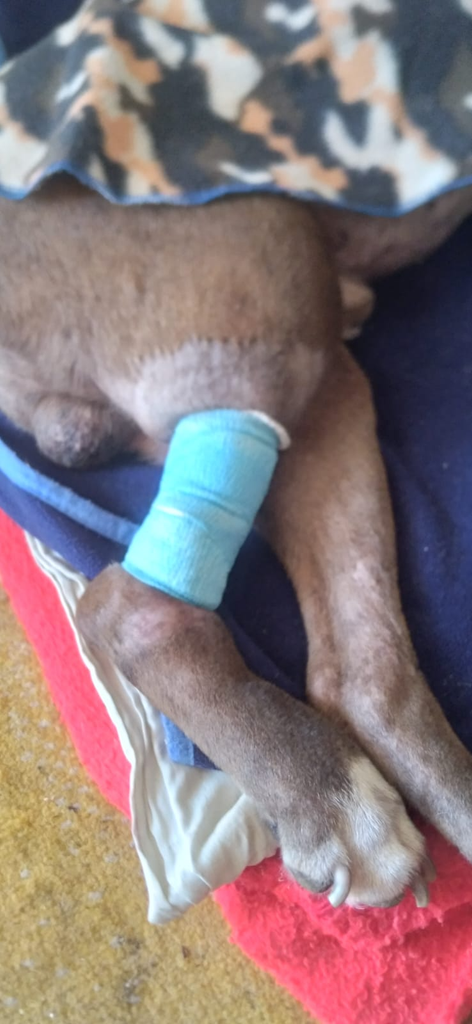
Investigation in a hospital setting during Goe’s treatment. Dealing with paw pain in older dogs requires professional support of excellence and rigorous evaluations from the very first symptoms.
This trajectory made it possible to understand that any alteration in the gait biomechanics of a senior dog represents an evident sign that demands immediate attention. If I may pass along advice grounded in this experience, I recommend that upon noting the slightest sign of locomotor discomfort or lameness, the action should be immediate: consult the veterinarian, perform exams, and evaluate all variables in advance. Early diagnosis remains the most valuable tool to ensure that your companion’s mature years unfold with dignity, comfort, and freedom from pain.
Conclusion: Care and Excellence That Transform Canine Longevity
Ensuring a dignified and pain-free old age for our senior dogs is an inseparable commitment to the love we dedicate to them. Faced with manifestations such as paw pain in older dogs, we understand that the animal’s quality of life lies at the harmonious intersection between the attentive discernment of the guardian and the solidity of a professional structure of absolute trust.
Investigating each sign rigorously—whether resulting from a simple affliction or a complex process—is an act of profound responsibility. Along my path beside Goe, I witnessed firsthand the importance of this alignment: the exceptional professionalism of the medical team, allied with welcoming care and daily observation at home, made all the difference in managing the treatment. May we therefore perceive in every faltering step a call to action, providing our elderly companions with the technical support and affection they deserve in their most precious phase.
👉 To complement your reading, check out the content indicated below: https://logicalbark.com/7-curiosities-about-dog-paws-and-how-to-care-for-them-properly/
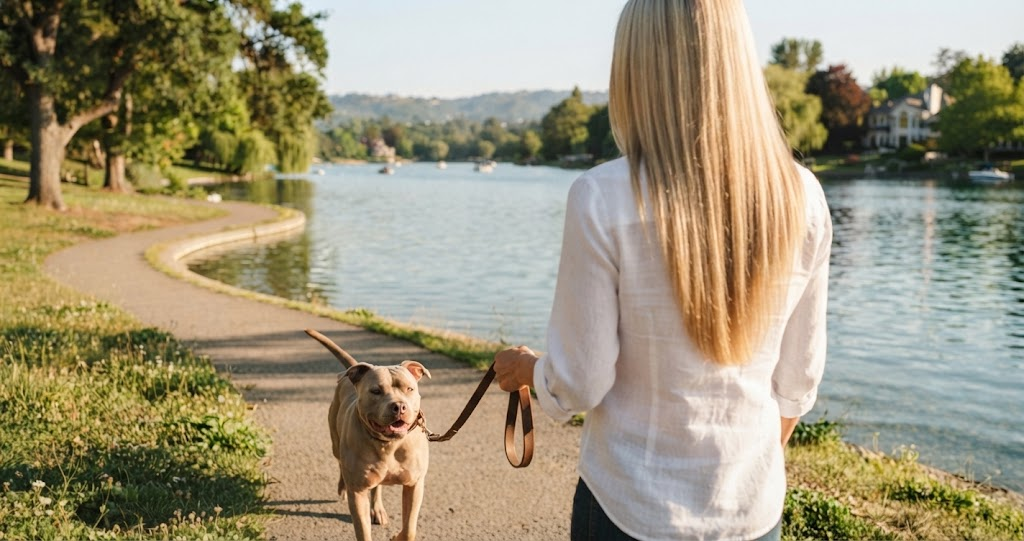
With precise diagnosis and excellent veterinary monitoring, it is possible to provide the dog with a great quality of life, allowing them to continue enjoying walks and moments of joy.
You may also like

Lusiane Costa is a digital writer with degrees in Marketing and English Literature.
Creator of Latido Lógico and Logical Bark, she develops evidence-based content on canine aging, wellness, and senior-dog health.
The project was inspired by Goe — a senior dog whose longevity and resilience shaped a grounded, compassionate view on the challenges of aging in pets.
Each article reflects her commitment to transforming real experiences into accessible knowledge, helping owners understand, prevent, and care better for their animals at every stage of life.
Goe remains the heartbeat of this project.