
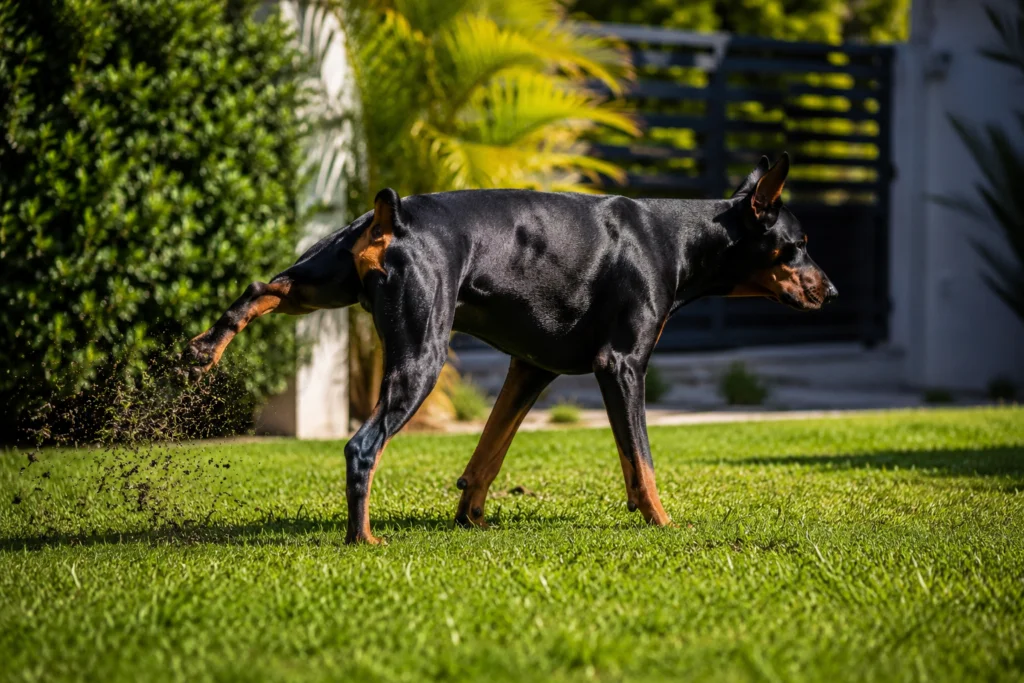
Dog marking territory and spreading scent signals throughout the environment
Seeing a dog marking territory during walks is very common, especially when the dog urinates on poles, walls, trees, grassy areas, or specific corners of the street. However, many pet owners also notice another curious behavior: after urinating or defecating, the dog begins scratching the ground with its back paws, spreading dirt, grass, or leaves around.
This behavior, known as paw marking or ground scratching, is not usually just an attempt to clean the paws. In most cases, it is a form of canine communication. The dog leaves signals in the environment through scent, visual markings, and body movement itself.
For people who live with dogs, understanding this behavior helps improve interpretation of canine body language, reduce tension during walks, and manage situations in which territorial marking begins happening inside the house.
Why Do Dogs Mark Territory?
A dog marking territory is, in a way, leaving information in the environment. Urine carries important chemical signals capable of communicating identity, sex, reproductive condition, security, excitement, and spatial recognition.
In addition to urine, dogs also have scent glands in their paws. When they scratch the ground after urinating or defecating, they may spread odors produced by these glands, reinforcing the message left in that location. At the same time, the marks left on the ground work as a visual signal.
That is why, when a dog scratches grass, dirt, or flooring after relieving itself, it may be increasing the reach of that marking. It is almost as if the dog were registering its presence in that environment.
Territorial Marking and Ancestral Communication
This behavior is related to the behavioral inheritance of canids. Wolves and other canids use scent, urine, feces, ground markings, and body language to define areas, communicate movement, and signal information to the pack or outside individuals.
In domestic dogs, this behavioral repertoire remained in an adapted form. Even living in houses, apartments, and urban environments, many dogs preserve instinctive behaviors linked to territorial communication.
Because of this, a dog marking territory with its paws is not necessarily being stubborn, disobedient, or trying to provoke the owner. The dog is expressing a natural form of communication.
Why Do Male Dogs Mark Territory More Often?
Male dogs tend to mark territory more frequently, especially when they are not neutered. This happens because urine marking is associated with hormones, sexual communication, environmental recognition, and symbolic space competition.
However, that does not mean only males do this. Female dogs may also mark territory, especially during situations involving insecurity, environmental changes, the presence of other dogs, hormonal changes, or the need to reaffirm control over a space.
In routines observed with GOE, territorial marking was part of the walk itself. He would sniff, choose specific spots, and often scratch the ground afterward. Allowing him to complete this small ritual, when the location was appropriate, made the walk calmer. This does not mean allowing everything without limits, but understanding that walking is also a sensory experience for dogs, not just a guided activity with a leash.
Dog Marking Territory Inside the House: When to Pay Closer Attention
Outside, territorial marking is usually expected. Inside the house, however, it deserves attention. A dog marking territory on couches, furniture, curtains, rugs, or wall corners may be reacting to environmental changes, insecurity, or lack of an adequate routine.
Some of the most common causes include moving houses, the arrival of another dog, frequent visitors, routine changes, anxiety, lack of regular walks, space disputes, poorly removed urine odors, and the absence of clear guidance regarding appropriate locations.
It is also important to differentiate territorial marking from urinary problems. When a dog urinates excessively, feels pain, presents blood in the urine, excessively licks the genital area, or suddenly changes urinary patterns, veterinary evaluation becomes necessary.
Avoid Cleaning Aggressively in Front of the Dog
When territorial marking happens indoors, many owners immediately clean the area while speaking loudly, demonstrating frustration, or moving the cloth aggressively. Although this reaction is understandable, it may increase the dog’s tension and turn the situation into an emotionally charged moment.
In some cases, the dog starts associating the cleaning process, the cloth, the bucket, or the owner’s reaction with conflict. This does not clearly teach where the dog should urinate; it only increases confusion and may reinforce anxiety.
The ideal approach is to remain calm. When possible, remove the dog from the area for a few minutes and clean the location without turning the situation into a fight. Then reorganize the routine so the dog has clearer access to the correct location and appropriate opportunities to mark outside the house.
Can Floor Cloths Worsen Territorial Marking?
Common floor cloths do not always completely remove the odor left by urine. The owner may no longer smell it, but the dog’s sense of smell continues identifying residues in that spot. When this happens, the dog may return to the same place to reinforce the marking.
If there is curiosity about some products used in this type of management, certain enzymatic cleaners evaluated by pet owners may help with odor control and cleaning routines. → https://amzn.to/4dxYDEI
How to Manage Territorial Marking Outside
Outside, the first step is understanding that sniffing and marking are part of a dog’s natural behavioral repertoire. Walks need structure, but also some room for exploration.
Allowing controlled pauses for sniffing, avoiding constant leash pulling, not scolding when the dog scratches the ground, and calmly redirecting when the location is inappropriate are attitudes that make walks more balanced.
When dogs have proper opportunities to sniff, urinate, and recognize the outdoor environment, the need to mark inside the house may decrease. Regular walks help organize this behavior more predictably.
How to Reduce Territorial Marking Indoors
To help a dog marking territory inside the house, it is important to act with patience and consistency. The first step is properly cleaning already marked areas. After that, it may help to temporarily block access to the most critical spots, reorganize walking routines, and reinforce the use of appropriate places for urination.
It also helps to observe when the marking happens. Does the dog mark when visitors arrive? When another dog passes by the gate? When left alone? When something changes inside the house? These clues help identify the cause.
Intense correction rarely solves the issue. In many cases, it increases anxiety and makes the behavior more persistent. Management tends to be more effective when it combines routine, proper cleaning, predictability, environmental enrichment, and calm guidance.
What Can Be Done to Stop Territorial Marking?
The goal is not always to completely prevent territorial marking, especially when it happens outdoors and in appropriate places. In many situations, the most important thing is teaching context: where the dog can mark, where it should not, and how it should be guided.
Inside the house, owners can establish more regular walking schedules, offer positive reinforcement when the dog urinates in the correct place, avoid free access to marking spots, and maintain proper cleaning routines. In non-neutered male dogs, neutering may reduce marking in some cases, but it should not be viewed as the only solution.
When marking is associated with anxiety, insecurity, or recent changes, the dog needs predictability. Routine, rest, properly conducted walks, and an organized environment help far more than constant scolding.
When to Seek Professional Help
If territorial marking becomes excessive, sudden, or accompanied by physical changes, the best option is seeking veterinary guidance. When urinary health is preserved, a canine behavior professional may help organize more specific strategies.
A dog marking territory is not simply a matter of inappropriate behavior. It is also a manifestation of communication, security, instinct, and adaptation to the environment. When owners understand this, they can intervene with greater awareness, appropriate care, and better results.
To further explore canine behavior, communication, and emotional routines, this complementary article may also help: https://logicalbark.com/separation-anxiety-in-dogs-causes-and-effective-strategies/
This content is for informational purposes only and does not replace guidance from a veterinarian.

Well-guided walks help dogs express natural behaviors in a more balanced way.
You may also like
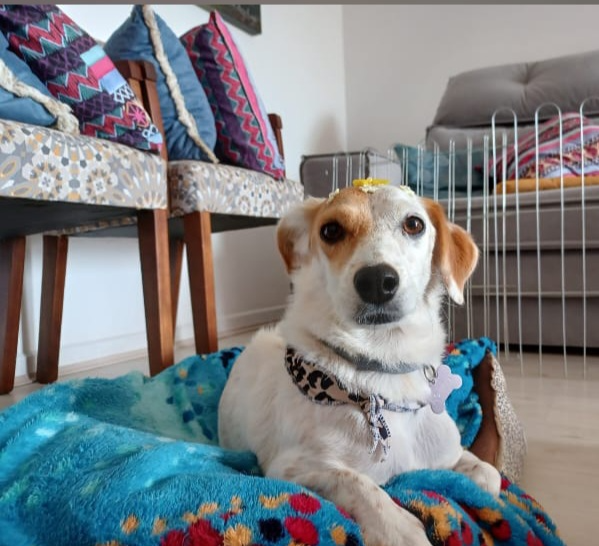

Lusiane Costa is a digital writer with degrees in Marketing and English Literature.
Creator of Latido Lógico and Logical Bark, she develops evidence-based content on canine aging, wellness, and senior-dog health.
The project was inspired by Goe — a senior dog whose longevity and resilience shaped a grounded, compassionate view on the challenges of aging in pets.
Each article reflects her commitment to transforming real experiences into accessible knowledge, helping owners understand, prevent, and care better for their animals at every stage of life.
Goe remains the heartbeat of this project.