Realizing that your companion wakes up with their paws or body wet in their own bed—or finding the clean and welcoming home environment suddenly marked by small puddles of urine—is an experience that brings perplexity and concern. That friend who for years maintained an impeccable hygiene routine suddenly begins to leak urine involuntarily.
The immediate reaction of many tutors is doubt: could this be sudden disobedience, a lack of attention, or anxiety? The direct and categorical answer is no. Understanding what urinary incontinence is in elderly dogs is the first step to pushing away any mistaken judgment and adopting a posture of support, protection, and care for the health of your senior pet.
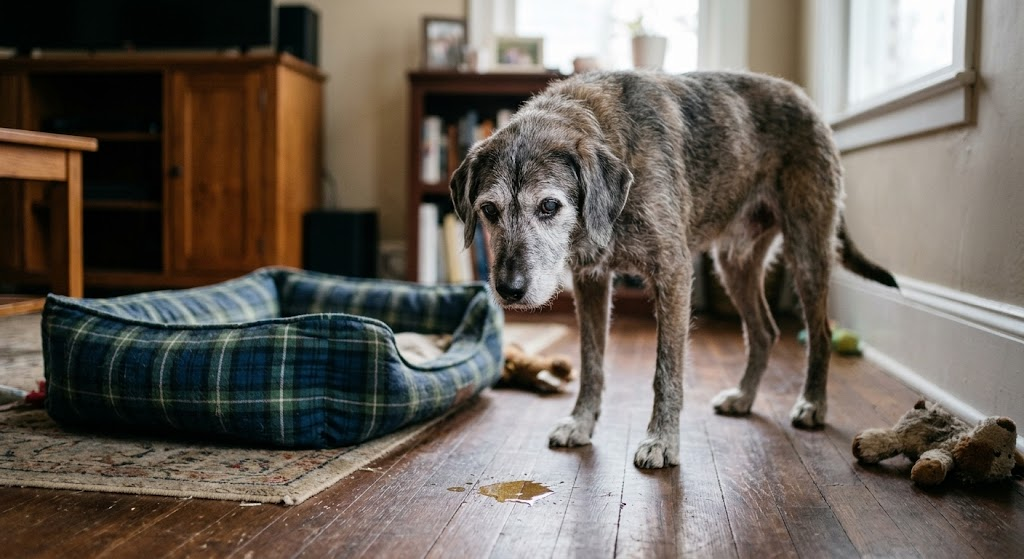
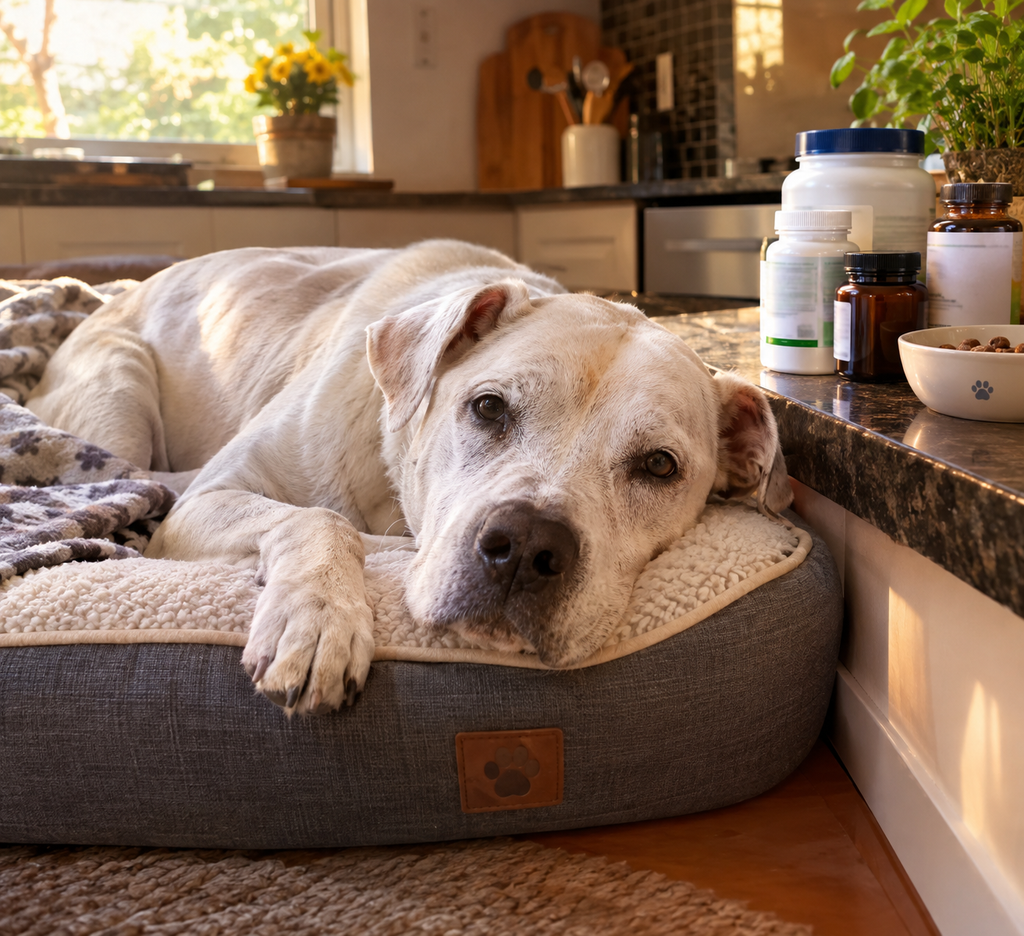
Even in the face of small accidents and the perplexity of what urinary incontinence is in elderly dogs, the attentive and understanding gaze of the tutor continues to be the greatest safe harbor for your senior dog.
What is urinary incontinence in elderly dogs?
To answer objectively, urinary incontinence is the involuntary and unconscious loss of the ability to retain urine. Unlike the conscious act of marking territory or urinating due to urgency, the elderly dog affected by physical incontinence simply does not realize that urine is leaking.
As the organism ages, the urinary system undergoes structural transformations. The urethral sphincter—the muscle responsible for keeping the bladder “closed” until the appropriate time to empty it—loses its natural tonicity and elasticity. With this weakened musculature, the internal pressure of the bladder overcomes the resistance of the sphincter, causing urine to passivity escape, especially when the animal is relaxed, lying down, or sleeping deeply.
Understanding this mechanism is vital: the dog does not choose to pee in its bed or on the living room floor. They wake up surprised and, often, embarrassed or uncomfortable with their own situation.
Physical Urinary Incontinence vs. Loss of Habits Due to Canine Dementia It is very common to confuse mechanical loss of bladder control with behavioral changes caused by cerebral aging. Knowing exactly what urinary incontinence is in elderly dogs makes it easier to differentiate this condition from other common frameworks in the senior phase:
- Physical (Mechanical) Urinary Incontinence:
- The behavior: The leak occurs without the dog adopting the typical posture for urinating (they do not lower their hind legs or lift a leg).
- The dog’s perception: They only notice they have urinated after the fact, upon feeling wet fur or when getting up from the bed.
- Critical moments: During deep sleep, when getting up after a long period of rest, or when making small physical efforts.
- Loss of Learning Due to Cognitive Dysfunction Syndrome (Canine Dementia):
- The behavior: The dog walks to a corner of the house, adopts the normal posture to urinate, and empties the bladder consciously, but in a totally inappropriate place.
- The dog’s perception: The animal knows it is urinating, but neurological degeneration causes them to forget where the correct bathroom location is or lose a sense of routine.
- Restriction Due to Orthopedic Pain (Osteoarthritis and Sarcopenia):
- The behavior: The dog feels the normal desire to go to the yard or the pee pad, but acute pain in the joints or loss of muscle strength in the hind legs prevents them from getting up in time.
Main Clinical Causes for the Onset of Incontinence Sphincter muscle weakness is the primary cause, but urinary incontinence in the senior dog can also be triggered or aggravated by underlying clinical conditions:
- Hormone-Dependent Urethral Sphincter Incompetence: Very common in advanced-age spayed female dogs, where a reduction in estrogen levels reduces the muscle tone of the urinary tract.
- Prostatitis and Prostate Alterations: In unneutered elderly males, an enlarged prostate can pressure the urethra and interfere with normal flow.
- Kidney Disease and Diabetes: Conditions that drastically increase the volume of urine produced by the body (polyuria), overloading a bladder that already has a reduced capacity for retention.
- Spinal Cord Compressions and Neuropathies: Lesions in the spinal column or wear in the intervertebral discs that interrupt the correct transmission of nerve signals between the brain and the bladder.
Practical Guide: How to Adapt Your Routine and Maintain the Dignity of Your Senior Dog Knowing what urinary incontinence is in elderly dogs requires the tutor to immediately transition to a preventive management plan. The main objective is to keep the animal’s skin dry, avoid rashes from prolonged contact with urine, and protect the home environment.
- Floor and Bed Management
- Waterproof covers: Lining the dog’s bed with washable waterproof covers is essential to protect the internal padding.
- Hygienic pads under resting areas: Positioning high-grammage absorbent pads right beneath the spot where the dog usually sleeps guarantees rapid absorption of the urine that leaks during the night.
- Conscious Use of Veterinary Diapers
- Disposable or washable diapers made specifically for dogs are valuable allies for specific moments. However, it is essential to change them with high frequency to avoid stagnant moisture, which can cause severe dermatitis and bacterial skin infections.
- Adjustment to the Routine of Walks and Outings
- Increasing the frequency of short trips to the yard or walking area decreases the volume accumulated in the bladder, reducing internal pressure and drastically lowering episodes of passive leakage.
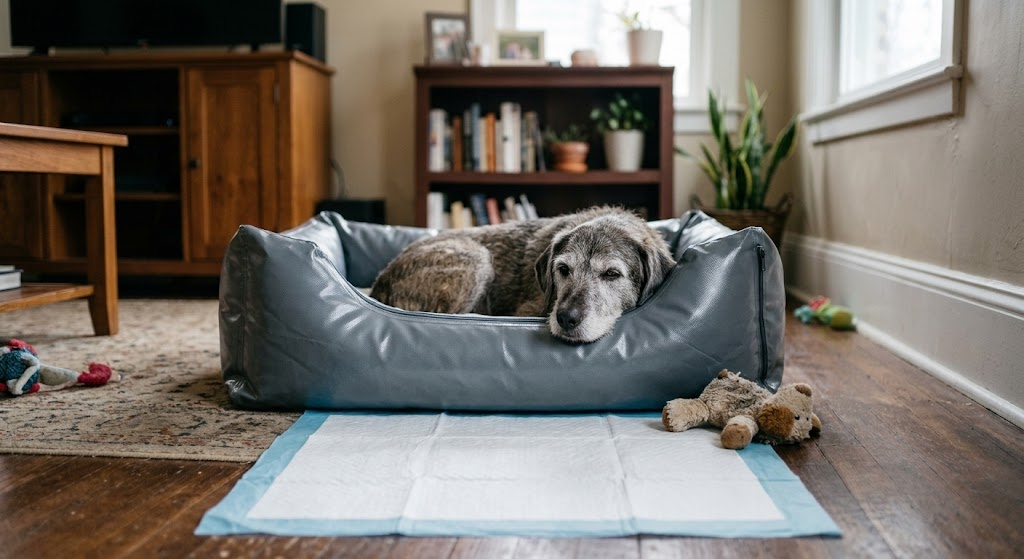
The combination of a waterproof bed and a strategic pad goes far beyond cleanliness: it is the minimum efficient management to keep your dog’s skin dry, prevent dermatitis, and preserve their quality of life with dignity in the senior phase.
To complement the article, here are the items most sought after and used by tutors in daily life to guarantee efficient management: https://link.amazon/B0bbMgoiu
The Importance of Veterinary Investigation Confirmation of what urinary incontinence is in elderly dogs for your specific pet must always come from a professional consultation. Imaging exams (such as abdominal ultrasound), urinalysis, and blood tests are essential to rule out simple urinary tract infections or metabolic diseases. In many cases, the veterinarian may prescribe specific medications that restore the tone of the urethral sphincter or supportive supplements, restoring control and comfort to the animal.
Conclusion Truly understanding what urinary incontinence is in elderly dogs transforms panic and frustration into a continuous act of welcoming and respect. Incontinence does not represent the end of quality of life, but rather a new stage that demands practical adjustments, an analytical gaze, and sensitivity. By adapting the space, maintaining impeccable hygiene, and seeking appropriate veterinary follow-up, you ensure that your great friend crosses the senior phase with the dignity, safety, and affection that has always been the foundation of this eternal connection.
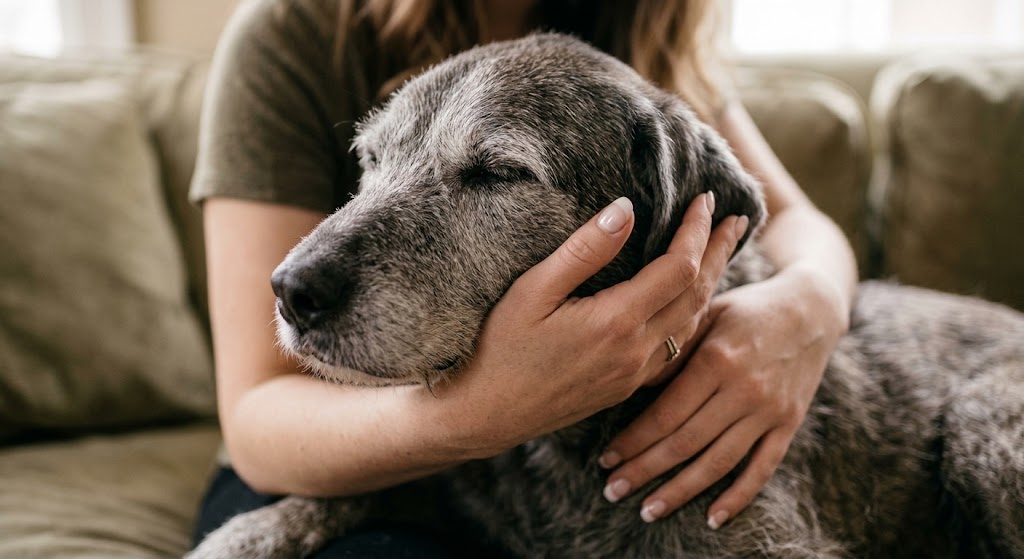
In the senior phase, hugging and embracing your dog goes far beyond affection: it is offering the correct care and daily management that guarantee comfort, safety, and the preservation of this profound connection precisely at the moment when they need you most.
Disclaimer: The content of this blog is exclusively informative and educational. The guidance on management and care in the senior phase does not replace, under any circumstances, professional medical-veterinary evaluation, diagnosis, and monitoring.
👉 If you want to deepen your knowledge of essential health care for older dogs, also check out this article: https://logicalbark.com/hind-leg-weakness-in-senior-dogs/
You may also like

Lusiane Costa is a digital writer with degrees in Marketing and English Literature.
Creator of Latido Lógico and Logical Bark, she develops evidence-based content on canine aging, wellness, and senior-dog health.
The project was inspired by Goe — a senior dog whose longevity and resilience shaped a grounded, compassionate view on the challenges of aging in pets.
Each article reflects her commitment to transforming real experiences into accessible knowledge, helping owners understand, prevent, and care better for their animals at every stage of life.
Goe remains the heartbeat of this project.