The arrival of advanced age in a dog’s life demands a series of structural and environmental adaptations, requiring pet parents to maintain heightened clinical and preventive vigilance. Among the most neglected environmental factors, yet one with a profound impact on veterinary geriatrics, stands out what causes moisture in your senior dog, considering the prolonged accumulation of water on walls, inside cabinets, and within the animals’ living quarters, creating the perfect microclimate for the proliferation of fungi and molds. For a senior dog — whose immune system and respiratory capacity are already operating at a pace of physiological decline — this scenario represents a multifaceted threat that goes far beyond simple thermal discomfort.
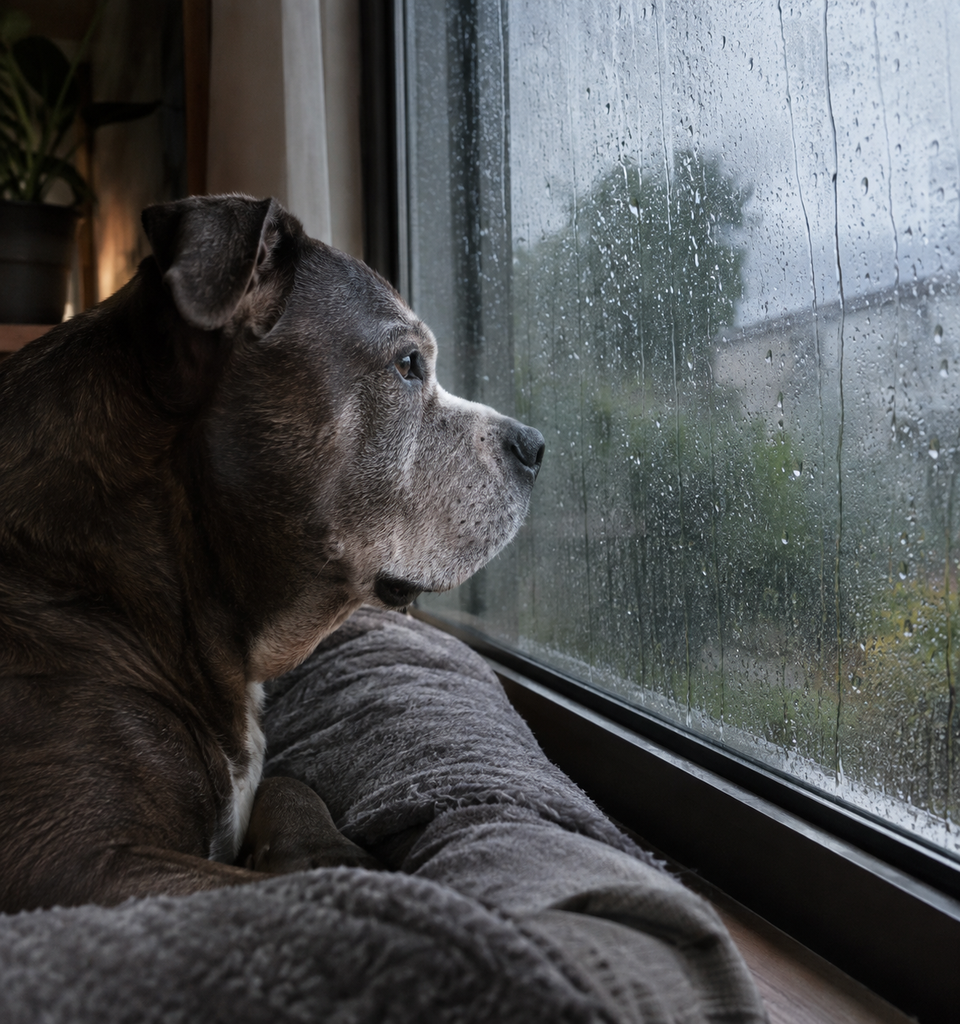
The air humidity is high, and your best friend feels the effects. Discover what causes moisture in your senior dog and the dangers of fungi to their health.
The systemic impact of moisture and fungi in canine seniorhood
When the air remains saturated with moisture for long periods, fungal colonies find the ideal substrate to develop on porous surfaces, wall linings, and even the animals’ utensils. During climatic transition phases, when the weather alternates between rainy periods and sudden dry spells, these microorganisms release an exponential amount of spores into the atmosphere.
In a senior dog’s organism, the constant inhalation of these fungal spores acts as a potent irritant and allergen. The upper airways and pulmonary alveoli, already worn down by the years, respond with chronic inflammation. This triggers or worsens conditions of rhinitis, allergic bronchitis, and exacerbates the symptoms of pre-existing chronic respiratory diseases.
Furthermore, understanding what causes moisture in your senior dog involves analyzing the toxicity of certain fungal strains that proliferate in humid environments, capable of compromising the animal’s systemic health. Toxins released in the domestic environment are absorbed by the canine organism, overloading excretory organs such as the liver and kidneys. In senior animals, whose glomerular filtration rate and metabolic efficiency are already reduced, this environmental toxic load accelerates organic degeneration and drastically diminishes their quality of life.
Understanding the deep systemic impact on the senior dog’s organism
The organic vulnerability of the senior dog facing excessive moisture and environmental molds is not restricted merely to passing irritations or skin discomforts; it triggers a chain reaction of physiological wear that affects multiple vital systems. Biologically, natural aging reduces the functional reserve capacity of organs, making the animal an easy target for the establishment of chronic degenerative processes when exposed to continuous environmental stress factors.
When investigating what causes moisture in your senior dog, one realizes that the main manifestations of the systemic impact provoked by accumulated water and associated fungal agents include:
- Respiratory toxicity and low-grade systemic inflammation: The constant aspiration of spores and volatile organic compounds released by fungi present on walls and cabinets generates a picture of continuous irritation in the bronchial tree. This local aggression stimulates the release of inflammatory cytokines that enter the bloodstream, provoking a subclinical systemic inflammation that accelerates the general cellular aging of the animal.
- Hepatic and renal toxicity (Metabolic Overload): The liver and kidneys are the main organs responsible for metabolizing and excreting environmental toxins and inhaled or ingested fungal metabolites. In senior dogs, whose nephrons and hepatocytes are already present in lower numbers or with reduced efficiency, the continuous presence of toxins originating from moisture generates a severe oxidative stress picture, potentially precipitating organ failure or worsening pre-existing renal and hepatic insufficiencies.
- Immunological toxicity and immunosenescence: The senior dog’s immune system suffers from a phenomenon known as immunosenescence, characterized by a weakened response to new pathogens and an exaggerated reaction to common allergens. Fungal antigens present in humid air further confuse and exhaust defense cells, opening doors for opportunistic secondary infections, difficult-to-heal skin infections, and recurrent otitis.
- Neurological toxicity and behavioral disorders: Prolonged exposure to environmental fungal toxins and food mycotoxins can directly affect the central nervous system. Senior dogs under this type of toxic stress frequently present subtle behavioral changes, profound apathy, mental confusion disproportionate to age, sleep cycle disturbances, and an acute drop in their willingness to interact with the environment.
👉 This subject is also related to the content we present in this article: https://logicalbark.com/the-invisible-poison-in-the-air-for-your-senior-dog/
Food preservation and the invisible danger in containers
Another critical vector associated with humid environments — which connects directly to the risks of intoxication — is the way the animal’s food is stored. The initial comment regarding the risks of inadequate diets gains a most severe layer of complexity when we evaluate what causes moisture in your senior dog from the perspective of water contact with improperly stored grains and dry foods.
Commercial kibble, rich in carbohydrates and nutrients, becomes a primary target for fungal contamination when exposed to variations in moisture and heat. Fungi that develop in poorly stored kibble produce mycotoxins, highly toxic and heat-resistant substances capable of provoking acute or chronic intoxications. Even without the visible presence of mold, grains kept in open bags or inappropriate containers in humid environments suffer nutritional degradation and accumulate dangerous fungal metabolites harmful to the liver and central nervous system of the senior dog.
Practical strategies and experience in geriatric routine
Facing this complex panorama of climatic instability, fungal proliferation, and nutritional preservation, adopting physical barriers and rigorous management routines becomes indispensable. Protecting the senior dog requires rigorous home environmental control — fighting water leaks, keeping rooms ventilated, and using dehumidifiers where necessary — alongside meticulous care regarding the food provided.
Based on my practical experience with my senior dog and by direct suggestion from the veterinarian responsible for his monitoring, I adopted a simple yet undeniably effective procedure to shield the nutrition against moisture and contamination: I would separate a small portion of kibble from the main package, remove the excess from daily contact with the air, and store it strictly in airtight containers with sealed closures.
To complement the article, here is an example for reference: https://amzn.to/46Fkzto
This practice prevents the remaining food from undergoing premature oxidation and absorbing air moisture with each opening of the main container, keeping organoleptic and nutritional properties intact until consumption. Uniting residential moisture control with the protection of food supplies is the safest path to ensure that your faithful companion’s old age is lived with dignity, comfort, and far from the invisible dangers of mold.
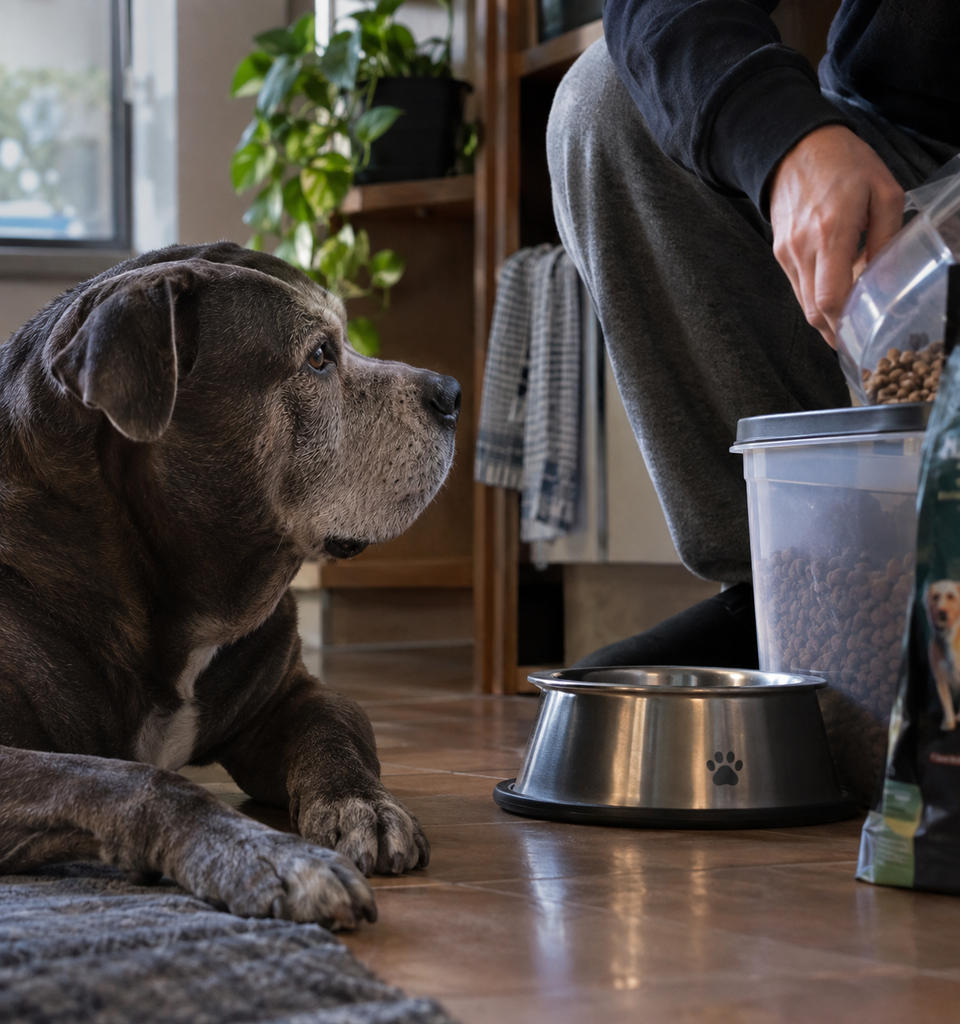
Teaching with patience and protecting health: The pet parent stores kibble in an airtight container to prevent fungi. This preventive management is part of what causes moisture in your senior dog and how we must act to avoid it.
Disclaimer: This article is strictly informational and educational in character. It does not substitute in any way for the diagnosis, recommendation, or monitoring of a veterinary doctor. Each animal possesses metabolic and clinical individualities, making it fundamental to consult a specialized professional before making any changes to your dog’s routine, environment
You may also like

Lusiane Costa is a digital writer with degrees in Marketing and English Literature.
Creator of Latido Lógico and Logical Bark, she develops evidence-based content on canine aging, wellness, and senior-dog health.
The project was inspired by Goe — a senior dog whose longevity and resilience shaped a grounded, compassionate view on the challenges of aging in pets.
Each article reflects her commitment to transforming real experiences into accessible knowledge, helping owners understand, prevent, and care better for their animals at every stage of life.
Goe remains the heartbeat of this project.