
August 6, 2026 | By Lusiane Costa
The pet care routine undergoes profound transformations as they age. For years, the traditional model of veterinary health established systematic annual revaccination as the sole form of protection. However, advances in veterinary immunology show that blind revaccination is not always the safest path for an aging body. It is in this scenario that vaccine titer testing for senior dogs emerges as an indispensable diagnostic tool.
Many owners believe that vaccine titer testing for senior dogs serves exclusively to avoid unnecessary vaccine applications. While this is one of its great virtues, the test performs an opposite and equally crucial analytical function: identifying dogs that, despite having been vaccinated in the past, lost or never converted the expected immune response.
The Two Poles of Vaccine Titer Testing
Understanding vaccine titer testing for senior dogs requires looking at both sides of the immunological coin. The test measures the quantity of circulating antibodies in the animal’s blood against vital viruses — such as Distemper, Parvovirus, and Adenovirus (Infectious Canine Hepatitis).
- Pole A (Active Protection): Identifies dogs that maintain high levels of protective antibodies (long-term immunological memory). In these cases, vaccine titer testing for senior dogs confirms that administering a new vaccine dose generates no further protection; on the contrary, it merely overloads the body with unnecessary adjuvants and antigens.
- Pole B (Conversion Failure or Vulnerability): Reveals dogs that received the vaccine dose but were unable to generate antibodies at protective levels. These animals remain vulnerable to serious pathogens, giving the owner the false sense that the pet is protected.
Understanding this immune conversion failure in the elderly dog through vaccine titer testing for senior dogs is the turning point for conscious longevity management.
Why Don’t Senior Dogs Convert Immunity?
When a vaccinated senior dog presents a negative or insufficient vaccine titer testing for senior dogs result, the cause is rarely the vaccine itself, but rather the metabolic and immunological state in which that body finds itself. Physiological aging brings clinical conditions that hinder cellular signaling and antigen processing:
- Immune Aging (Immunosenescence)
The natural aging of the immune system reduces the response capacity of T and B cells. The body’s antibody factory becomes slower and less efficient in responding to new stimuli, directly impacting the result of vaccine titer testing for senior dogs. - Inflamaging and Intestinal Dysbiosis
Inflamaging refers to the chronic, systemic, and subclinical state of inflammation characteristic of old age. Dogs with intestinal dysbiosis (microbiota imbalance) sustain a chronically inflamed intestinal wall. Since about 80% of the entire immune system resides in the gastrointestinal tract — within the structure known as GALT (Gut-Associated Lymphoid Tissue) —, a diseased intestine collapses the animal’s immunization capacity. Neglected everyday symptoms, such as sporadic vomiting, frequent soft stools, or occasional diarrhea, are signs of a compromised GALT that prevents a good response in vaccine titer testing for senior dogs. - Metabolic and Hormonal Disorders
Conditions such as insulin resistance, body weight changes, thyroid dysfunction (such as hypothyroidism), and adrenal alterations impose a constant biological stress load. In an environment of hormonal and metabolic disruption, the immune system prioritizes containing internal damage and fails to convert the vaccine into real protection, reflecting in a low vaccine titer testing for senior dogs result.
🔄 Decision and Management Scheme for Vaccine Titer Testing
- High Titer (Positive)
Do not apply a new vaccine. Immunological memory is preserved. Vaccine titer testing for senior dogs confirms protection and prevents overloading the body.
OR
- Low Titer (Negative)
Do NOT revaccinate immediately! Investigate the cellular and metabolic cause. Evaluate the GALT (gut) and hormones. Treat inflammation and redo the vaccine titer testing for senior dogs.
If the vaccine titer testing for senior dogs comes back low, the path is not simply to reapply the vaccine. If the organism did not convert the previous dose because it was inflamed, applying a new dose in the same biological environment will result in the same failure and more oxidative stress. The correct approach involves treating the gut, rebalancing hormones, and reducing inflammation in the dog before any attempt at immunization.
The Family Experience with Loli
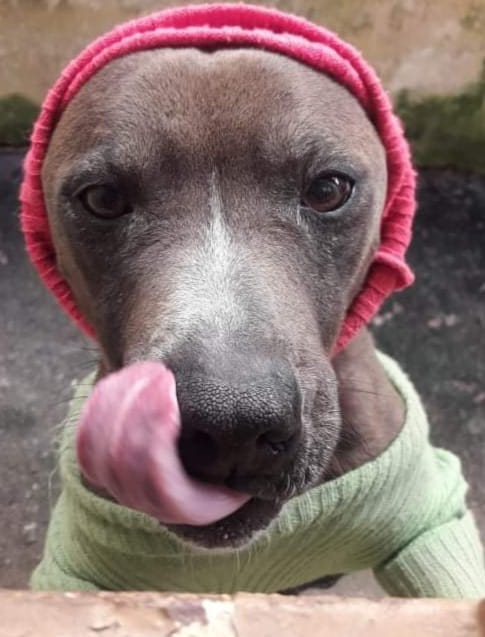
In Loli’s care routine, vaccine titer testing for senior dogs is a consolidated and indispensable practice. For 5 years, antibody titer testing has been performed periodically on Loli, and throughout this entire period, it has not been necessary to revaccinate her even once.
Thanks to nutritional and metabolic monitoring focused on the health of her digestive tract, tests for vaccine titer testing for senior dogs consistently demonstrate that she maintains high and fully protective antibody levels. With the technical backing of exams and integrative veterinary medicine, we have spared her body from receiving unnecessary vaccine doses for half a decade, preserving her immunological integrity and ensuring her longevity with quality of life.
👉 This article can complement the information presented here: https://logicalbark.com/food-for-dogs-with-a-sensitive-gut-when-fewer-ingredients-make-a-bigger-difference-lolis-experience/
Thanks to regular tests for vaccine titer testing for senior dogs and nutritional and metabolic monitoring focused on the health of her digestive tract, Loli’s exams consistently demonstrate that she maintains high and fully protective antibody levels. With the technical backing of exams and integrative veterinary medicine, we have spared her body from receiving unnecessary vaccine doses year after year, preserving her immunological integrity and ensuring her longevity with quality of life.

Loli protected for 5 years with vaccine titer testing for senior dogs, attesting to her immunity without the need for revaccination.
Final Considerations and Conscious Longevity
Investing in vaccine titer testing for senior dogs means migrating from reactive veterinary medicine to precision preventive medicine. The test not only avoids hyperimmunization in dogs that are already protected — as is the case with Loli —, but it also functions as a powerful marker of hidden health.
A null vaccine titer testing for senior dogs result in a previously vaccinated senior dog is a warning from the body: there is intestinal inflammation, dysbiosis, or hormonal disorders draining the animal’s vitality. Taking care of gut health, managing weight, treating hormonal imbalances, and respecting the pet’s biological individuality are the true pillars to ensure that your companion’s senior phase is vibrant, healthy, and full.
Legal Notice / Disclaimer:
This content is strictly educational, informative, and preventive, based on management literature and practical reports. Any change in the vaccination protocol, administration of supplements, or intervention in your dog’s health must be evaluated, recommended, and monitored by your trusted veterinarian. The information contained herein does not replace specialized professional consultation or diagnosis.
You may also like

Lusiane Costa is a digital writer with degrees in Marketing and English Literature.
Creator of Latido Lógico and Logical Bark, she develops evidence-based content on canine aging, wellness, and senior-dog health.
The project was inspired by Goe — a senior dog whose longevity and resilience shaped a grounded, compassionate view on the challenges of aging in pets.
Each article reflects her commitment to transforming real experiences into accessible knowledge, helping owners understand, prevent, and care better for their animals at every stage of life.
Goe remains the heartbeat of this project.
Excellent content!