
June 10, 2026
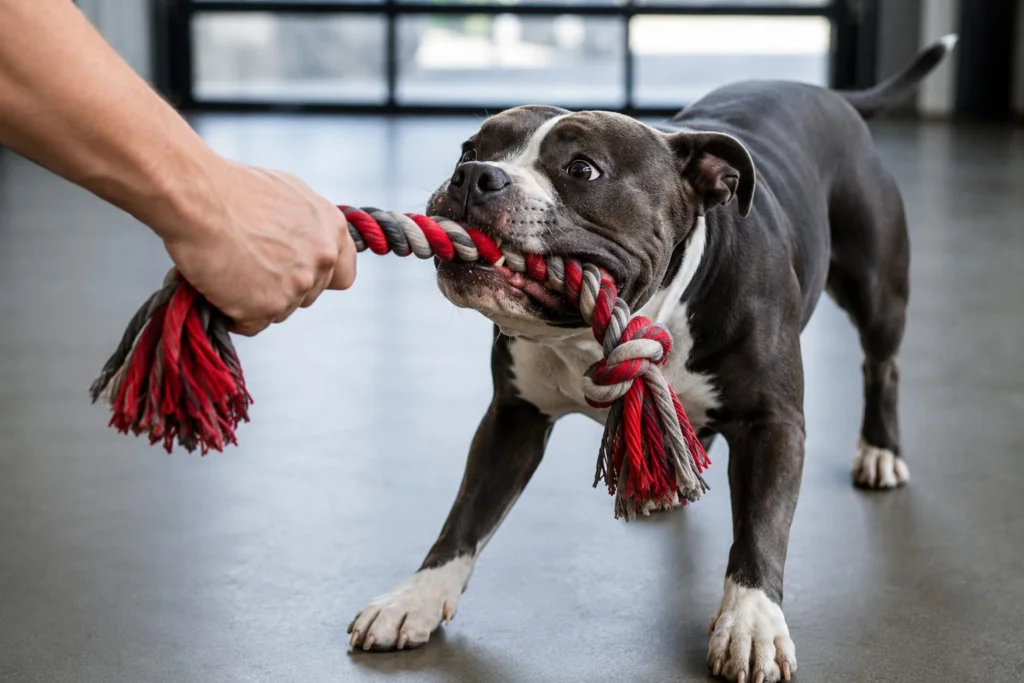
Tug of War for Dogs can strengthen the bond between dogs and their owners, but when done incorrectly it may put excessive strain on the neck and spine.
Tug of War for Dogs is one of the most beloved games among dogs. Many dogs show happiness, excitement, and enthusiasm when holding a rope, chew toy, or tug toy while interacting with their owners. Although fun and mentally enriching, this activity needs to be done properly to avoid physical problems, pain, and even cervical spine injuries.
What many people do not realize is that the problem is not necessarily the tug game itself, but rather the way it is performed.
For years, I avoided this type of game with GOE, my pitbull. He was extremely strong, intense, and became very tense during tug sessions. Because I have always closely observed the physical structure and behavior of senior dogs and strong breeds, I began to notice that some ways of playing could create unnecessary stress on the neck and muscles.
And the truth is that everything involving canine health must be approached thoughtfully.
Today, many veterinary behaviorists and animal biomechanics specialists warn about the risks of repetitive movements and excessive vertical tension during seemingly harmless games.
Can tug of war be good for dogs?
Yes. When done correctly, Tug of War for Dogs can provide several physical and emotional benefits.
- physical exercise;
- bond strengthening with the owner;
- mental stimulation;
- environmental enrichment;
- increased confidence;
- reduced boredom;
- better focus and interaction.
In addition, many dogs use this type of play as a healthy outlet for natural biting and pulling instincts.
The problem begins when owners turn the game into an exaggerated force movement by pulling the toy upward, making abrupt motions, or creating vertical tension on the dog’s neck.
The mistake many people make during tug games
One of the most common mistakes during Tug of War for Dogs is pulling the toy upward while the dog holds it tightly.
This movement creates significant vertical tension on the:
- cervical spine;
- neck muscles;
- jaw;
- intervertebral discs;
- joints;
- shoulders.
In very strong dogs, such as pitbulls, American bullies, rottweilers, and emotionally intense dogs, this tension can become even greater.
When a dog becomes overly excited during play, it tends to contract the cervical and thoracic muscles intensely. If the owner starts pulling the toy vertically, the dog’s body absorbs repetitive impacts that may generate discomfort over time.
Can tug of war contribute to hernias in dogs?
In some cases, Tug of War for Dogs may contribute to excessive strain.
This does not mean the game alone directly causes a hernia, but it may:
- worsen predispositions;
- increase tension;
- aggravate existing problems;
- favor repetitive micro-injuries.
Especially in dogs that already have:
- joint wear;
- cervical changes;
- instability;
- genetic predisposition;
- advanced age;
- excess weight.
Cervical hernias in dogs may cause:
- intense pain;
- difficulty moving the neck;
- sensitivity;
- stiffness;
- crying when lowering the head;
- neurological changes;
- difficulty walking;
- weakness.
Additionally, repetitive and abrupt movements may trigger muscular inflammation and joint overload.
How to play tug safely with your dog
The good news is that Tug of War for Dogs can still exist in a healthy way.
The main recommendation is simple:
The toy should remain parallel to the ground.
In other words:
Avoid pulling upward.
The ideal movement is lateral and horizontal, respecting the dog’s natural biomechanics.
Avoid abrupt movements
Do not perform sudden or aggressive pulls.
Observe the dog’s excitement level
Highly intense dogs may exceed their own physical limits.
Choose appropriate toys
Use resistant chew and tug toys appropriate for the dog’s size.
Take breaks
Long play sessions increase muscular fatigue.
Let the dog “win”
This is extremely important emotionally.
Many dogs become frustrated when they never get to win during tug games. Allowing small victories increases:
- confidence;
- satisfaction;
- emotional balance;
- enjoyment during interaction.
In addition, letting the dog win reduces excessive tension and exaggerated competitiveness.
If you are interested in learning about toys highly rated by dog owners for safer tug sessions, here is one example that may help you better understand healthy Tug of War for Dogs practices: https://amzn.to/43t9zOd
Senior dogs require extra care
For senior dogs, extra caution is necessary during Tug of War for Dogs.
With aging, dogs experience:
- joint degeneration;
- muscle loss;
- spinal changes;
- reduced flexibility;
- higher inflammation risk.
Therefore, overly intense games may create pain that does not always appear immediately.
To learn more about this topic, check out this related article: https://logicalbark.com/4-active-ingredients-for-senior-dogs-supplements-that-may-support-joints-mobility-and-quality-of-life/
Many owners only notice problems days later when the dog:
- avoids climbing;
- shows stiffness;
- walks more slowly;
- or demonstrates cervical discomfort.
Not every healthy game needs to be intense
There is a mistaken belief that a happy dog must always be highly agitated.
But dogs also need:
- balance;
- safety;
- predictability;
- conscious play.
Healthy environmental enrichment is not based solely on physical intensity. Often, calmer cognitive activities provide greater physical and emotional benefits.
When to seek veterinary care
Seek veterinary evaluation if your dog shows:
- pain when moving the neck;
- difficulty lowering the head;
- crying;
- stiffness;
- walking changes;
- tremors;
- loss of strength;
- sensitivity to touch;
- refusal to play.
The earlier the evaluation occurs, the better the chances of preventing worsening conditions.
Conclusion
Tug of War for Dogs does not need to be forbidden. On the contrary, it can be an extremely positive activity when performed consciously and respectfully toward the dog’s body.
The most important thing is understanding that small changes in the way you play may help protect the spine, joints, and long-term quality of life of your dog.
Playing is also caring.
And many times, what appears to be simple fun actually involves biomechanics, muscular health, emotional balance, and prevention of future pain.
Disclaimer
This article is intended for informational and educational purposes only. None of the information replaces professional veterinary evaluation. Every dog has individual physical, behavioral, and clinical characteristics. In case of pain, movement changes, or suspected orthopedic or neurological issues, seek veterinary assistance.
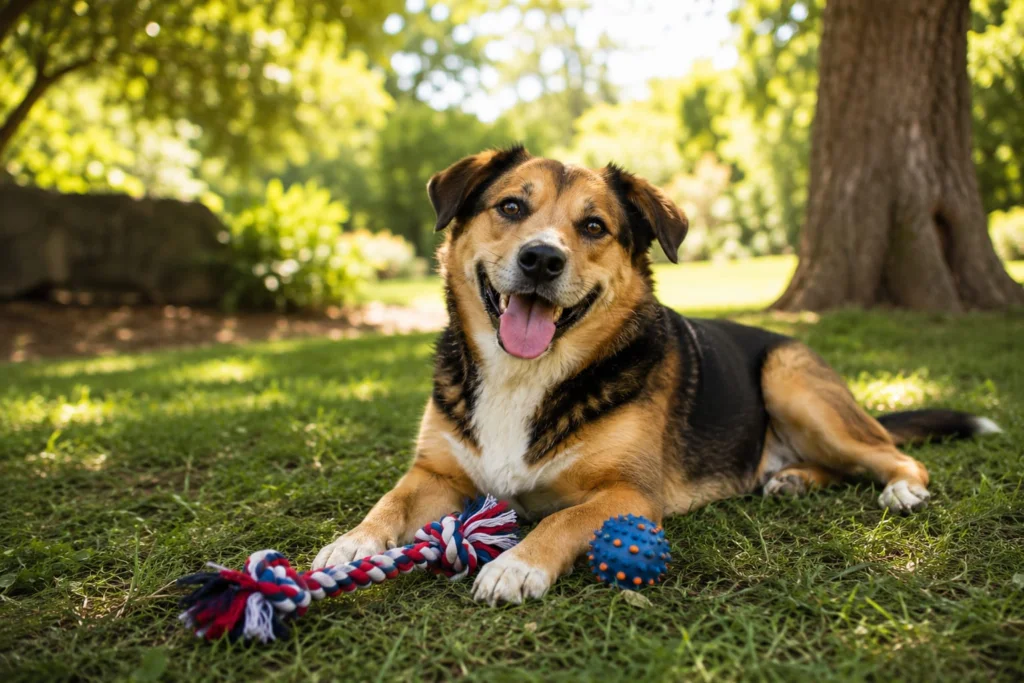
After healthy play sessions, dogs remain relaxed, emotionally balanced, and physically comfortable. The body recovers, the mind slows down, and well-being extends beyond the moment of play
You may also like

Lusiane Costa is a digital writer with degrees in Marketing and English Literature.
Creator of Latido Lógico and Logical Bark, she develops evidence-based content on canine aging, wellness, and senior-dog health.
The project was inspired by Goe — a senior dog whose longevity and resilience shaped a grounded, compassionate view on the challenges of aging in pets.
Each article reflects her commitment to transforming real experiences into accessible knowledge, helping owners understand, prevent, and care better for their animals at every stage of life.
Goe remains the heartbeat of this project.