August 23, 2026
Attentive observation of canine behavior reveals that small repetitive actions, often dismissed as mere quirks or harmless habits, usually carry significant clinical relevance. When a dog repeatedly projects their tongue without the presence of food or water, guardians tend to view the scene with confusion or curiosity. However, veterinary medicine and ethology issue a clear warning: the repetition of this pattern warrants investigation. After all, is your senior dog licking the air?
In their senior stage, a dog’s organism undergoes structural, gastroenterological, and neurological changes that alter their internal perception. Compulsive licking of the air or inanimate surfaces should not be labeled as a simple old-age habit, but rather investigated as a clinical sign equivalent to a silent plea for relief from underlying discomfort.
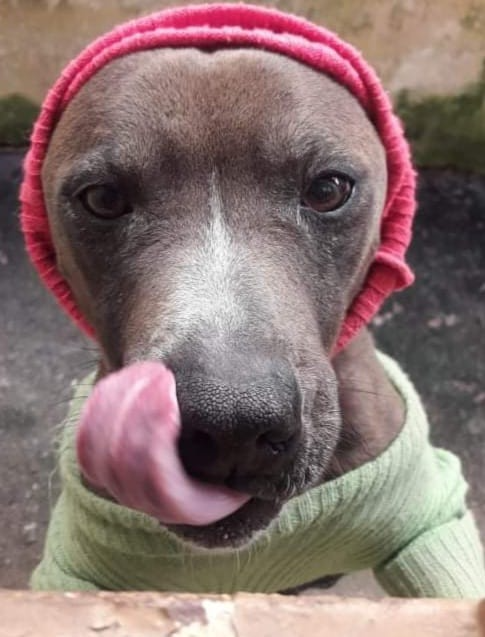
Is your senior dog licking the air? Records of Goe in his senior years. Observing and understanding our dog’s behavioral patterns was decisive in tailoring his management with the precision and respect that maturity demanded.
Categorization of Repetitive Oral Behaviors
Before analyzing the etiologies behind this symptom, it is necessary to accurately name the motor pattern presented by the animal. Scientific literature divides these behaviors into four main manifestations:
- Air Licking: The rhythmic and continuous projection of the tongue into empty space, without targeting a physical object.
- ELS (Excessive Licking of Surfaces): The compulsive action of obsessively licking floors, walls, rugs, or household furniture.
- Fly-biting: Rapid snapping movements at the air, as if the dog were attempting to catch invisible insects.
- Empty Chewing: Automatic jaw movements simulating chewing with nothing present in the oral cavity.
In senior dogs, it is quite common to observe the simultaneous or alternating occurrence of these manifestations.
👉 Continue reading with this related content: https://logicalbark.com/fly-snapping-in-dogs-what-it-is-its-possible-connection-with-the-gut-lolis-experience/
The Gastroenterological Connection: The Digestive Tract and Salivation Response
Contrary to popular assumption, the primary cause of compulsive air licking is rarely rooted in the dog’s head, but rather in their digestive system. Clinical studies in veterinary gastroenterology demonstrated that approximately 73% of dogs evaluated for surface and air licking behavior exhibited gastrointestinal abnormalities. Among the most diagnosed pathologies were inflammatory bowel disease, chronic pancreatitis, gastroesophageal reflux, and gastric foreign bodies.
The physiology behind this reaction is straightforward: when an animal experiences episodes of nausea or heartburn stemming from gastric acidity, the body responds with a reflex increase in saliva production. To manage excess salivary secretions and attempt to soothe esophageal burning, the dog swallows repeatedly. Air licking emerges as a motor expression of this swallowing reflex.
Furthermore, canine saliva is rich in bicarbonate. Instinctively, by licking the air and inducing salivation, the dog attempts to neutralize the acidic pH refluxing up the esophagus. Research confirms that treating the underlying digestive disorder clinically reduces or completely eliminates compulsive licking behavior in the vast majority of patients.
Neurological Etiology and Cognitive Dysfunction
When gastroenterological evaluations reveal no gastric or intestinal issues, medical focus shifts toward the Central Nervous System. Neurological factors represent a critical turning point in diagnosing senior dogs.
Focal seizures or partial epileptic fits can manifest without muscle rigidity or loss of consciousness. Under these conditions, electrical stress in the brain expresses itself through motor automatisms, such as a fixed, vacant stare for a few seconds accompanied by the rhythmic repetition of licking the air or snapping at nothing.
Another decisive factor in maturity is Canine Cognitive Dysfunction Syndrome (CCD). As the brain ages, neurological decline can trigger chronic anxiety states, sleep disturbances, and the onset of stereotypies — repetitive behaviors without an apparent function that the animal utilizes as an emotional self-regulation mechanism during periods of mental confusion.
Goe’s Journey: Meticulous Licking and Senior Care
In our journey with Goe during his senior years, we witnessed firsthand how neurological and cognitive changes interfere with daily habits. Goe developed the habit of licking his paws and muzzle frequently and meticulously. Far from being an unprovoked habit, this conduct was directly linked to his neurological condition and the natural cognitive decline of aging.
With altered sensory processing and advancing neurological fragility, the act of licking his paws served as a search for proprioceptive relief and grounding. Understanding that this repetitive behavior was not stubbornness or a daily quirk, but rather the visible symptom of an underlying neurocognitive condition, was crucial.
This insight directed us toward veterinary care focused on neuroprotective support, chronic pain management, and environmental adaptations that provided thermal and tactile comfort, preventing skin lesions and ensuring tranquility for his rest.
As part of Goe’s neuroprotective management, introducing supplementation focused on brain health — containing high concentrations of omega-3 (DHA) and antioxidants — was crucial to slowing cognitive decline.
For those interested, here is the neuroprotective supplement we used during his care: https://amzn.to/4qBiJD1
Important Notice: Supplementation recommendations and appropriate dosages vary for each pet and must be determined by your veterinarian.
Guardian’s Checklist: Step-by-Step Guide for Veterinary Diagnosis
Upon noticing that your senior dog is licking the air, the most appropriate course of action is not to abruptly interrupt or scold the dog, but rather to track the symptom to support a clinical consultation. Follow these strategic steps:
- Record Video Footage: Film episodes of the behavior at different times of the day. Audiovisual records are an indispensable tool for veterinarians and neurologists to determine whether the manifestation is focal or behavioral in origin.
- Map Timing and Meal Relations: Observe whether licking occurs immediately after eating (indicative of reflux or heartburn) or during rest and sleep transitions (more closely associated with neurological factors).
- Inspect the Oral Cavity: Carefully check for severe tartar, fractured teeth, gum inflammation, or foreign bodies (such as small pieces of wood or bones) lodged in the roof of the mouth.
- Assess Associated Signs: Note if air licking is accompanied by excessive drooling, eructation (frequent burping), jaw clicking, or episodes of staring into space and disorientation.
👉 Read also our complementary article on canine quality of life: https://logicalbark.com/microbiota-versus-microbiome-in-dogs-what-is-it/
Armed with this information, your veterinarian can recommend targeted diagnostic tests — such as abdominal ultrasounds, blood panels, or neurological assessments — to treat the primary cause precisely, restoring well-being and peace of mind to your senior companion.
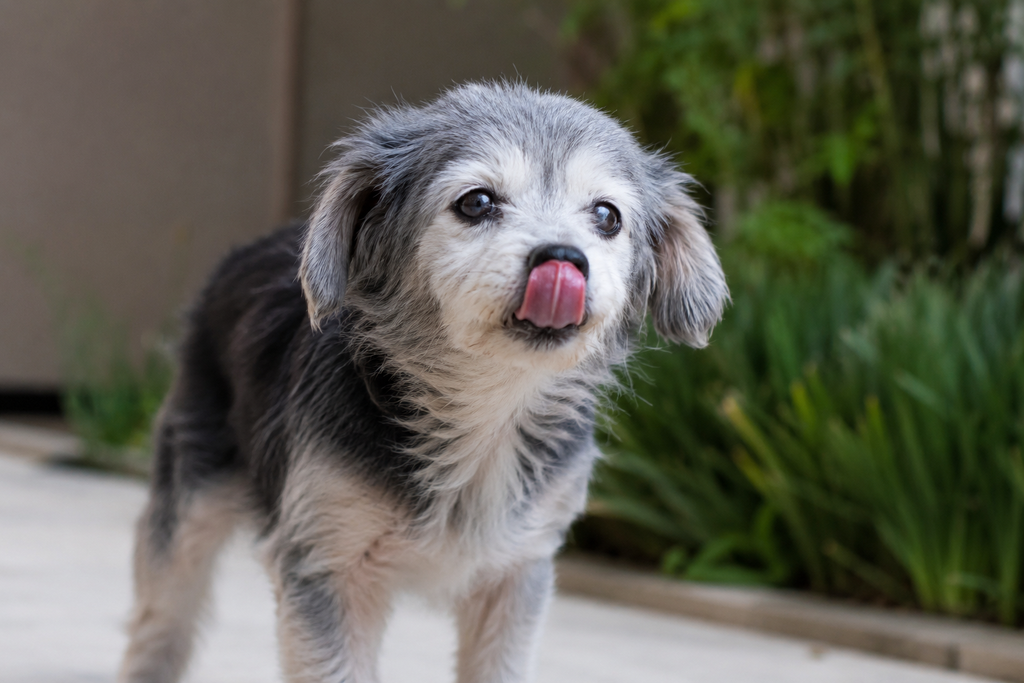
Identifying the true meaning behind seemingly simple gestures is the first step toward ensuring early intervention and preserving the well-being and longevity of your senior dog.
⚠️ IMPORTANT DISCLAIMER
This content is strictly educational and informational in nature. Compulsive licking of the air, surfaces, or paws in senior dogs can signal severe pain, gastrointestinal discomfort, or progressive neurological conditions. Never medicate your pet without professional guidance. Upon identifying this behavior, consult a qualified veterinarian to obtain an accurate diagnosis.
You may also like

Lusiane Costa is a digital writer with degrees in Marketing and English Literature.
Creator of Latido Lógico and Logical Bark, she develops evidence-based content on canine aging, wellness, and senior-dog health.
The project was inspired by Goe — a senior dog whose longevity and resilience shaped a grounded, compassionate view on the challenges of aging in pets.
Each article reflects her commitment to transforming real experiences into accessible knowledge, helping owners understand, prevent, and care better for their animals at every stage of life.
Goe remains the heartbeat of this project.