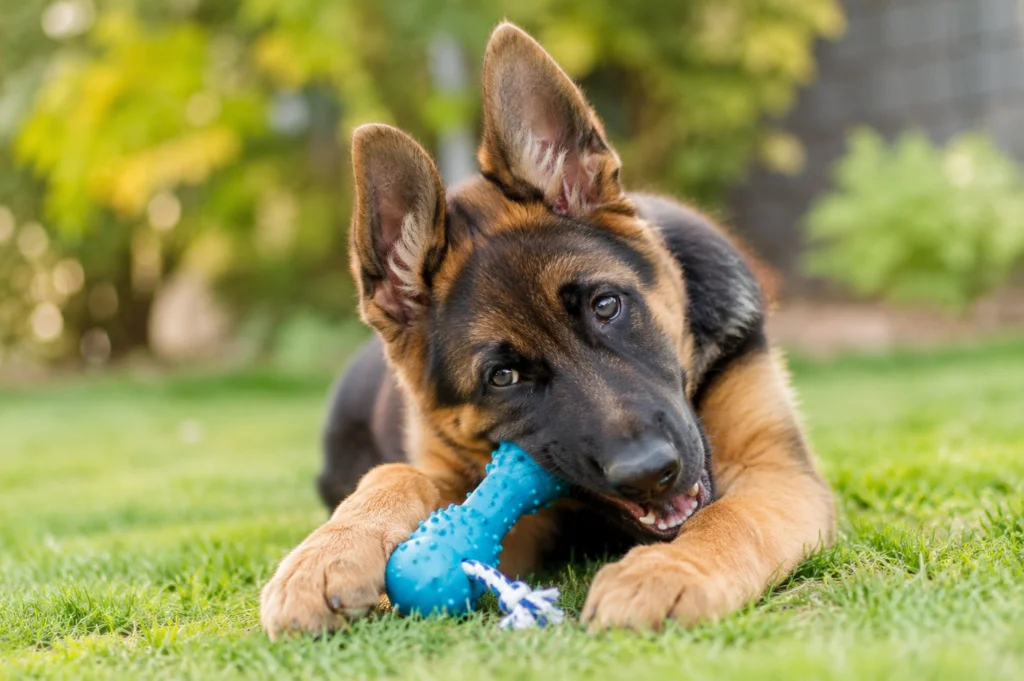
Dog biting while playing: redirecting the behavior to chew toys may help with bite control.
Dog biting while playing is an extremely common situation in life with dogs. Many owners become worried when the dog starts using its mouth during play, moments of excitement, or interaction with people in the house.
However, not every bite means aggression.
Dogs use their mouths to explore the environment, play, communicate emotions, relieve anxiety, and interact socially. The problem begins when the dog does not learn limits, intensity, and control of its own bite.
Perhaps one of the most important parts of living with dogs is understanding the difference between natural communication and risky behavior.
Is dog biting while playing normal?
Yes, in many cases it is a natural behavior.
Dogs, especially when young, use their mouths to:
- explore the environment;
- interact;
- play;
- show excitement;
- release energy;
- communicate emotions.
Light nibbles without the intention to hurt may be part of canine body language.
Dogs do not have hands like humans do. Because of this, much of their interaction happens through:
- the mouth;
- the muzzle;
- the body;
- movement.
The problem is not necessarily the dog using its mouth during play. The problem appears when the dog never learns the limit between playing and hurting.
Not every bite is aggression
Many dogs bite during play because of excessive excitement, accumulated energy, or difficulty with emotional self-control.
This is different from a truly aggressive bite.
During balanced play, the dog usually:
- releases quickly;
- does not apply intense pressure;
- maintains relaxed body language;
- can interrupt the play;
- responds to the owner.
In more concerning situations, however, the following may appear:
- body stiffness;
- intense growling;
- strong pressure;
- fixation;
- loss of control;
- painful bites;
- difficulty stopping.
Not every bite is aggression. Many times, it is simply a dog that never learned emotional control and bite inhibition.
Why do some dogs bite while playing?
Several factors may increase this behavior.
1. Excessive excitement
Some dogs become so agitated during play that they lose control of the intensity of their bite.
2. Anxiety
Anxious dogs may use their mouths as a way to relieve emotional tension.
In these cases, the dog may:
- bite objects;
- bite clothes;
- nip hands;
- become overstimulated.
3. Lack of limits during puppyhood
Many owners encourage strong biting when the dog is still small and normalize this behavior.
The problem is that the dog grows up believing that this level of intensity is part of playing.
4. Need for attention
Some dogs learn that biting quickly attracts attention.
Even scolding may reinforce the behavior if the dog associates it with interaction.
5. Hunting and chasing instinct
Fast hand movements, running through the house, or waving objects may activate natural instincts of pursuit and capture.
How to teach a dog bite control?
The goal is not simply to punish the dog for using its mouth. The most important thing is teaching self-control.
Interrupt play calmly
If the dog exaggerates the bite:
- stop immediately;
- reduce interaction;
- avoid yelling;
- do not turn it into a dispute.
The dog needs to understand that excessive intensity ends the play.
Redirect to toys
Instead of allowing constant biting on hands, offer appropriate chewing toys.
This helps the dog release energy in a more balanced way.
Some specific toys may help the dog release energy and redirect biting more appropriately. If you are interested in seeing some models well-rated by owners, I will leave a few examples below. → https://amzn.to/4nQnrLN
Avoid encouraging excessive agitation
Many people wave their hands, push the dog, or encourage extreme excitement during play.
This may further increase biting behavior.
Reinforce calm moments
Many dogs need to learn that calmness also generates attention and positive interaction.
Not every play session needs to happen in a state of hyperexcitement.
Which commands can help?
Some simple commands may help considerably with bite control:
- “drop it”;
- “calm”;
- “sit”;
- “stay”;
- “no”.
Nowadays, there are many courses, educational resources, and specialized professionals who can help owners in the process of behavioral education and canine bite control, both in person and through digital platforms.
But the most important thing is not simply repeating words. Dogs learn mainly through:
- repetition;
- consistency;
- emotional tone;
- predictability of the human reaction.
When does biting stop being play?
Some signs deserve attention:
- bites that hurt;
- bleeding;
- intense fixation;
- frequent growling;
- loss of control;
- increasing aggression;
- difficulty interrupting;
- dangerous reactions with children.
In these cases, evaluation by a canine behavior professional may be important.
Children and dogs biting while playing
Children require special attention.
Many times, they:
- run;
- shout;
- shake objects;
- hug excessively;
- invade the dog’s space.
This may increase excitement, anxiety, or reactivity.
For this reason, supervision and teaching limits are essential for both the dog and the child.
Dog biting while playing: understanding is different from normalizing
Dog biting while playing may be a natural communication and interaction behavior.
However, understanding this behavior does not mean ignoring limits.
Dogs need to learn:
- emotional control;
- intensity;
- interruption;
- safety during play.
Many canine behaviors develop through experiences, daily coexistence, taught limits, and the way the dog is emotionally guided from the beginning of life.
To further explore this topic, also check out this complementary post: https://logicalbark.com/mental-stimulation-for-dogs-how-to-stimulate-your-dogs-brain-in-everyday-life/
Dog biting while playing may still remain just play, as long as the dog learns limits and control throughout coexistence.
This content is for informational purposes only and does not replace professional guidance in cases of aggression or important behavioral changes.
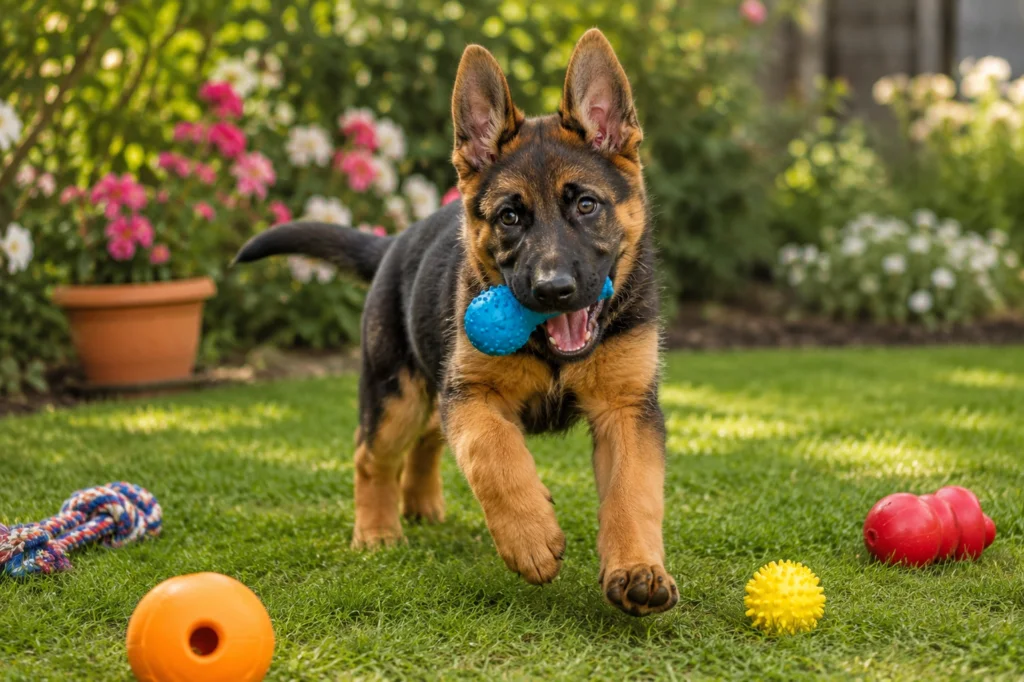
Mental stimulation, balanced play, and taught limits may help dogs develop healthier forms of interaction.
You may also like

Lusiane Costa is a digital writer with degrees in Marketing and English Literature.
Creator of Latido Lógico and Logical Bark, she develops evidence-based content on canine aging, wellness, and senior-dog health.
The project was inspired by Goe — a senior dog whose longevity and resilience shaped a grounded, compassionate view on the challenges of aging in pets.
Each article reflects her commitment to transforming real experiences into accessible knowledge, helping owners understand, prevent, and care better for their animals at every stage of life.
Goe remains the heartbeat of this project.