
As dogs reach their senior years, the balance of their metabolic functions and the efficiency of their elimination organs undergo deep physiological transformations. The slowing of intestinal transit and the gradual decrease in the renal filtration rate make the senior organism more vulnerable to the accumulation of metabolic byproducts. In this scenario, the use of activated charcoal for senior dogs, especially senior ones, emerges not only as an emergency resource against acute poisonings, but as a strategic biological support tool to release pharmacological, vaccine, and cellular stress.
Detoxification Strategy and Molecular Adsorption
To understand the effectiveness of this intervention, it is essential to differentiate between the biological concepts of absorption and adsorption. While absorption involves the assimilation of substances into the bloodstream, adsorption — a fundamental physical property of activated charcoal for senior dogs — consists of the adhesion of molecules, toxins, and chemical compounds to the porous surface of charcoal. It is an extremely vast microscopic network capable of trapping harmful agents along the gastrointestinal tract, preventing their reabsorption through the mucosa and promoting their safe elimination through the feces.
In senior dogs subjected to frequent therapeutic interventions — such as intense post-surgical antibiotic cycles, periodic vaccination protocols, or the continuous administration of antiparasitics and flea pills —, the organism often copes with residual metabolic overload. The activated charcoal for senior dogs acts as a cleansing catalyst for the enteric environment, helping to reduce this pharmacological stress and indirectly easing the metabolic workload of the liver and kidneys.
Management Protocol and Recommended Dosage
For a prophylactic and safe detoxification cycle following the use of medications, vaccines, or antiparasitics, management literature and clinical practice suggest the following application structure for activated charcoal for dogs:
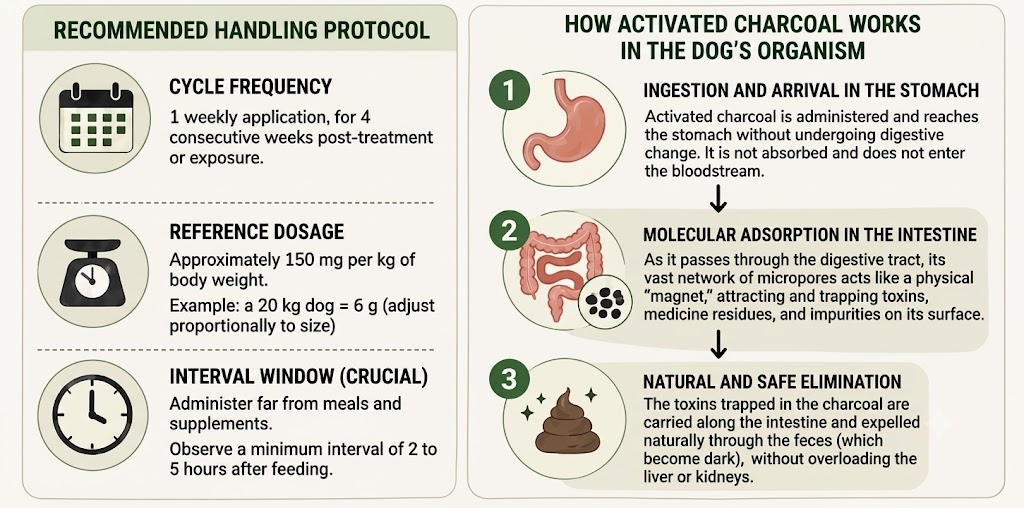
- Cycle Frequency: 1 weekly application, administered over 4 consecutive weeks post-treatment or exposure.
- Reference Dosage: The reference ratio for support is approximately 150 mg per kg of body weight (which equals about 6 g for a 20 kg dog, and should be adjusted proportionally to the size of the animal).
- Interval Window (Crucial): The activated charcoal for dogs has a high chemical affinity not only with toxins, but also with daily nutrients, vitamins, and other medications. Therefore, it must be administered strictly away from meals and supplements — respecting a minimum interval of 2 to 5 hours after feeding.
Legal Notice / Disclaimer:
This content is exclusively for informational, educational, and preventive purposes, based on management literature and practical reports. Any protocol, dosage, or health procedure must be mandatorily evaluated and prescribed by your trusted veterinarian. The information presented here does not replace professional diagnosis, consultation, or specialized follow-up.
💡 Expected Physiological Observation:
After administering the compound, it is completely normal and expected for the dog’s stool to appear dark or black. This is merely the visual result of the natural elimination of the charcoal impregnated with the waste expelled by the digestive tract, posing no health risk to the animal.
To make it easier to understand, we have created a diagram so you can see exactly how activated charcoal for dogs works in your dog’s stomach and gastrointestinal tract:
🔄 Mechanism of Action of Activated Charcoal for Dogs
1. Ingestation and Arrival in the Stomach
The activated charcoal for seniordogs is administered and reaches the stomach without undergoing digestive alteration. It is not absorbed and does not enter the bloodstream.
↓
2. Molecular Adsorption in the Intestines
As it passes through the digestive tract, its vast network of micropores acts as a physical “magnet”, attracting and binding toxins, medication residues, and impurities to its surface.
↓
3. Natural and Safe Elimination
The toxins trapped in the charcoal are carried along the intestine and expelled naturally through the feces (which turn dark), without overloading the liver or kidneys.
💡 Pro Tip: Since charcoal sweeps through the intestinal tract, remember to give it far away from food and supplements (2 to 5-hour interval).
The Family Experience with Loli
At home, our practical experience with Loli exemplifies the value and efficiency of this approach when properly guided. Under the recommendation and direct monitoring of her veterinary nutritionist, we used Alcohu Activated Charcoal for Dogs Cats, Pet Poison Emergency Kit, an excellent product that has established itself as an indispensable tool in our preventive care routine.In these scenarios, administering this activated charcoal acts as an immediate protective resource, neutralizing potential irritants, and restoring her comfort and vitality quickly and safely.

Loli serene and comfortable at home after the administration of activated charcoal for senior dogs.
If you want to check out the supplement out of curiosity, I will leave an example used with Loli under veterinary guidance and recommendation: https://amzn.to/45I8UcI
Final Considerations and the Impact on Senior Longevity
Taking care of the metabolic and gastrointestinal balance of a senior dog is an ongoing commitment that demands observation, sensitivity, and technical backing. The canine aging process reduces the organism’s margin of tolerance to external aggressions and toxic accumulations. For this reason, adopting intelligent detoxification strategies — such as the scheduled use of activated charcoal for senior dogs post-medication or vaccines — represents a fundamental pillar to mitigate biological stress and preserve the integrity of the intestinal mucosa.
When we understand the mechanics behind adsorption and respect the administration intervals relative to daily nutrition, we transform a simple compound into a powerful barrier supporting health. Preventive and conscious management does not merely seek to treat specific symptoms, but rather to provide the conditions for the senior dog’s body to function at its maximum capacity for homeostasis. In this way, we ensure that the natural slowdown of age does not compromise the well-being, willingness, and quality of life of our four-legged companion, providing them with a dignified, comfortable, and full aging process by our side.
Want to deepen your pet’s digestive care routine? Check out our article on feeding dogs with sensitive stomachs: https://logicalbark.com/food-for-dogs-with-a-sensitive-gut-when-fewer-ingredients-make-a-bigger-difference-lolis-experience/
Visual summary of the recommended protocol:
To make it easy for you to consult quickly in your daily routine, we have prepared a simplified diagram with the essential points of activated charcoal for senior dogs management:
Legal Notice: This content is purely informational and educational. Any administration of supplements, diet changes, or health protocols must be evaluated and prescribed individually by your trusted veterinarian.
You may also like


Lusiane Costa is a digital writer with degrees in Marketing and English Literature.
Creator of Latido Lógico and Logical Bark, she develops evidence-based content on canine aging, wellness, and senior-dog health.
The project was inspired by Goe — a senior dog whose longevity and resilience shaped a grounded, compassionate view on the challenges of aging in pets.
Each article reflects her commitment to transforming real experiences into accessible knowledge, helping owners understand, prevent, and care better for their animals at every stage of life.
Goe remains the heartbeat of this project.
[…] 👉 This content can help broaden your understanding of the topic: https://logicalbark.com/activated-charcoal-for-senior-dogs-complete-guide/ […]