September 3, 2026
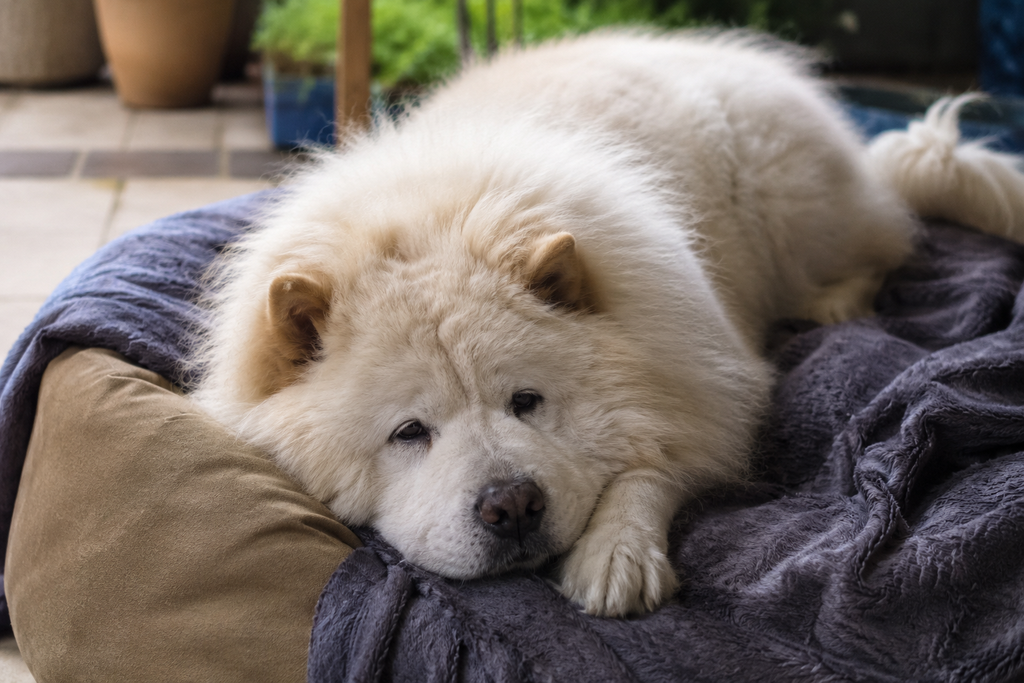
Protected rest and ideal thermal equilibrium consolidate healthy aging, directly reflecting what the temperature of an elderly dog is in its fullness.
Important Notice and Initial Disclaimer: The information contained in this article is strictly educational, orientational, and informational in nature. The health of an elderly dog is extremely delicate, and thermal fluctuations, fever, or hypothermia can be reflections of severe infections, organ failure, or systemic emergencies. Never administer human antipyretic medications or perform home treatments without the direct guidance of a veterinarian. In-person clinical evaluation is irreplaceable for proper diagnosis and for preserving your animal’s life.
The arrival of maturity in the lives of canines brings profound changes to the entire functioning of the organism. Among the most noticeable alterations that demand greater attention from pet parents are those related to thermoregulation. Understanding what the temperature of an elderly dog is goes far beyond simply touching the animal’s snout; it involves understanding how the senior metabolism deals with heat, cold, and the inflammatory processes inherent to advanced age.
In this technical and in-depth article, we will analyze in detail the thermal profile of the senior dog, covering normal temperature parameters, heart and respiratory rates, the impacts of aging on cold perception—including practical handling reports with our dog Goe—, fever as a warning sign, the discussion surrounding the use of antipyretics, and the importance of continuous veterinary monitoring.
What Is the Normal Temperature of a Senior Dog?
Unlike human beings, whose average body temperature hovers around 36.5°C to 37°C (97.7°F to 98.6°F), dogs have a naturally higher range of normality. For a healthy adult or senior dog, normal internal body temperature generally fluctuates between 38.3°C and 39.2°C (100.9°F to 102.6°F).
However, in the elderly dog, the stabilization of this thermal range can become less efficient. With the reduction of lean muscle mass, the decrease in basal metabolic rate, and alterations in the central nervous system (responsible for commanding the hypothalamus and controlling temperature), the senior animal’s body expends more energy to keep itself warm and has a lower cooling capacity in hot environments.
Values below 37.8°C (100.0°F) may already indicate an initial picture of hypothermia or circulatory sluggishness, while readings above 39.5°C (103.1°F) characterize hyperthermia or fever, demanding immediate clinical investigation. The only scientifically precise way to measure this temperature in a home setting—if the pet parent is instructed by the veterinarian—is through the use of a properly lubricated digital rectal thermometer, although any procedure must respect the animal’s tolerance and comfort to avoid unnecessary stress.
Heart and Respiratory Rates of Senior Dogs
To understand what the temperature of an elderly dog is systemically, it is essential to analyze the concomitant cardiorespiratory parameters. Thermoregulation is directly linked to blood flow and respiration (since dogs dissipate a large part of body heat through gas exchange and open-mouth breathing, as they have few active sweat glands located in their paw pads).
At rest, average reference parameters for medium to large-breed dogs typically present the following margins:
- Heart Rate: Usually varies between 60 and 120 beats per minute (bpm), depending on size and prior physical conditioning. In senior dogs, common degenerative cardiac alterations, such as mitral valve insufficiency, can subtly alter these beats.
- Respiratory Rate: Ranges around 15 to 30 breaths per minute at complete rest.
When the senior dog presents a fever, metabolism accelerates to try to combat pathogenic agents, which proportionally elevates both heart and respiratory rates. On the other hand, if respiration is excessively accelerated (tachypnea) without apparent environmental fever, this can indicate deep pain, thermal discomfort due to excessive heat, or typical cardiac and pulmonary problems of senescence. Cross-monitoring between body temperature and respiration is a precious screening tool for the attentive pet parent.
When Is Fever Concerning and Why Avoid Dipyrone Without Veterinary Evaluation?
Fever in dogs is not a disease in itself, but rather an organic defense mechanism against bacterial, viral, fungal infections, neoplastic processes, or immune-mediated inflammations. In the senior dog, any thermal elevation above 39.5°C (103.1°F) must be treated as a cause for strong concern and immediate investigation.
A very common question among pet parents faced with fever is: if fever helps fight infection, is it wrong to give dipyrone? The answer is that it depends, and there are deep technical reasons worth understanding. On one hand, fever has documented immune functions; abruptly suppressing fever with an antipyretic can reduce part of that natural pathogen-fighting advantage. On the other hand, the animal’s body also pays a very high cost to maintain a fever, suffering from:
- Greater energy expenditure and accelerated loss of muscle mass.
- Rapid dehydration.
- Intense discomfort that drastically reduces water and food intake.
- Risks to vital organs due to systemic stress.
It is precisely for this reason that the administration of medications like dipyrone or any other antipyretic should never be done autonomously at home. As veterinarians reinforce, masking a fever without diagnosing the root cause can delay the treatment of a severe infection or mask organ failures. Furthermore, improper dosage of human medications can cause severe drug intoxication, alongside severe hepatic and renal lesions. Fulfilling any suspicion of fever, the golden rule is clear: always seek in-person veterinary evaluation so that the professional can determine safe conduct, adjusted to the weight, advanced age, and real clinical condition of the pet.
Among the main causes of concerning fever in canine old age are urinary tract infections, severe dental inflammatory processes, hidden infections, and oncological diseases. If the fever persists for more than a few hours, accompanied by profound apathy, an urgent trip to a veterinary clinic is indispensable.
👉 If you wish to expand your knowledge on the subject, check out this complementary content: https://logicalbark.com/dog-with-fever-how-to-identify-it-what-to-do-and-when-to-seek-veterinary-help/
When Does the Senior Dog Feel Colder? (The Experience with Goe and Handling)
Beyond fever episodes, the other side of thermoregulation that challenges pet parents is the senior dog’s tendency to feel cold much more easily. With age, the loss of subcutaneous fat, the weakening of the peripheral circulatory system, and lower efficiency in energy metabolism make these animals more vulnerable to low temperatures.
Observing daily living practices with dogs in our family environment, I clearly noticed that starting from 15 years of age of my dog, Goe, his thermal profile changed visibly. In these early and striking scenarios, Goe began actively seeking warmer locations, lying close to heat sources or near strips of sunlight, and presenting mild muscle tremors even inside indoor environments that felt comfortable for humans.
Taking our Goe as an example—who possesses specific short-coat physical characteristics—the absence of a dense coat combined with a lower capacity to generate body heat demands constant preventive support handling. In these situations, the proper use of cozy blankets spread around the house and the employment of comfortable, easy-to-dress sweaters make all the difference in preserving body temperature and ensuring joint comfort (including relieving pain resulting from osteoarthritis and dysplasias common in old age).
However, it is essential to emphasize that the need for thermal protection accessories depends entirely on each dog, its breed, coat type, health conditions, and environmental context. Excess clothing on muggy days can cause overheating, while a lack of protection on cold days aggravates rheumatic pain. Common sense and daily observation are the pet parent’s best guides.
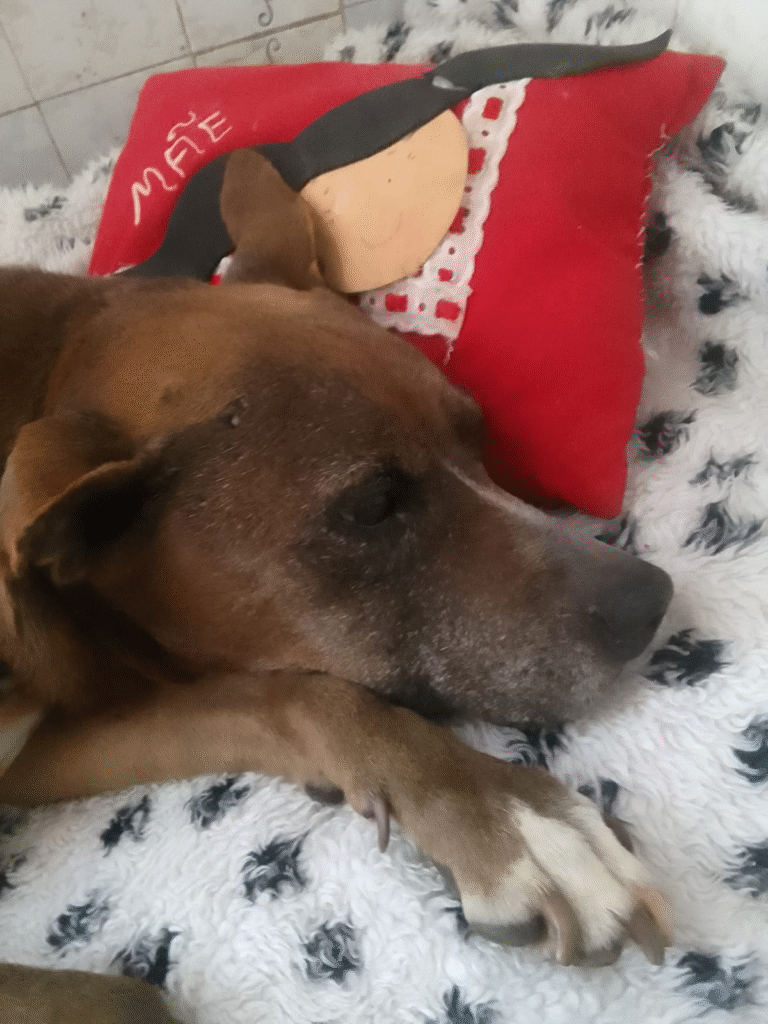
Snuggle-wrapped and protected in his favorite cozy blanket, Goe rests protected and warmed, showing precisely how proper thermal regulation and comfort are fundamental to understanding what the temperature of an elderly dog is.
Practical Example of Thermal Management and Senior Comfort
The adoption of appropriate accessories makes all the difference in an elderly dog’s routine. The use of a high-quality memory foam orthopedic bed—such as models that offer therapeutic support and a waterproof base—prevents direct contact of the animal with floor chill and cushions the impact on joints affected by wear. Combining this structure with a lightweight microfiber blanket ensures that the pet maintains its stable body temperature without the risk of overheating, uniting preventive care with quality of life in old age.
For the complement of the article, here is an example for your knowledge: https://amzn.to/4gAaQub
Temporal Temperature and Other Evaluation Methods
Historically, veterinary thermal evaluation has always depended on skin touch or rectal thermometry. In recent years, with technological evolution aimed at veterinary medicine, the use of complementary methods has been discussed, such as temperature measurement through proximity sensors or specific zones of superficial blood perfusion (often associated with thermographic cameras or clinical temporal/ear temperature readers).
Although temporal or cutaneous surface temperature readers can indicate external thermal variations quickly, they possess important limitations in the canine universe. Coat density, the presence of skin folds, and peripheral vasodilation variation cause the dog’s skin temperature or temporal regions to reflect the external environment much more intensely than the actual internal temperature (body core). For this reason, in daily clinical practice, such methods serve only as a rapid preliminary screening, with internal measurement or complete clinical evaluation conducted by the veterinarian being the only safe parameters for therapeutic decision-making.
Final Considerations
Understanding what the temperature of an elderly dog is represents an act of profound respect and care for the most vulnerable phase of your four-legged companion’s life. Maintaining the animal’s thermal equilibrium—whether protecting it against excessive cold with appropriate blankets and clothing (as we do with Goe), or closely monitoring any sign of fever without resorting to dangerous self-medication—guarantees not only physical comfort, but the preservation of quality of life in old age. The daily partnership between the pet parent’s attentive observation and the professional guidance of the veterinarian is the definitive pillar for the dog to enjoy a safe, healthy longevity surrounded by well-being.
The reflection of good care, uniting temperature control and the dog’s entire system, elevates quality of life and healthy canine aging with harmony and zeal.
You may also like


Lusiane Costa is a digital writer with degrees in Marketing and English Literature.
Creator of Latido Lógico and Logical Bark, she develops evidence-based content on canine aging, wellness, and senior-dog health.
The project was inspired by Goe — a senior dog whose longevity and resilience shaped a grounded, compassionate view on the challenges of aging in pets.
Each article reflects her commitment to transforming real experiences into accessible knowledge, helping owners understand, prevent, and care better for their animals at every stage of life.
Goe remains the heartbeat of this project.