
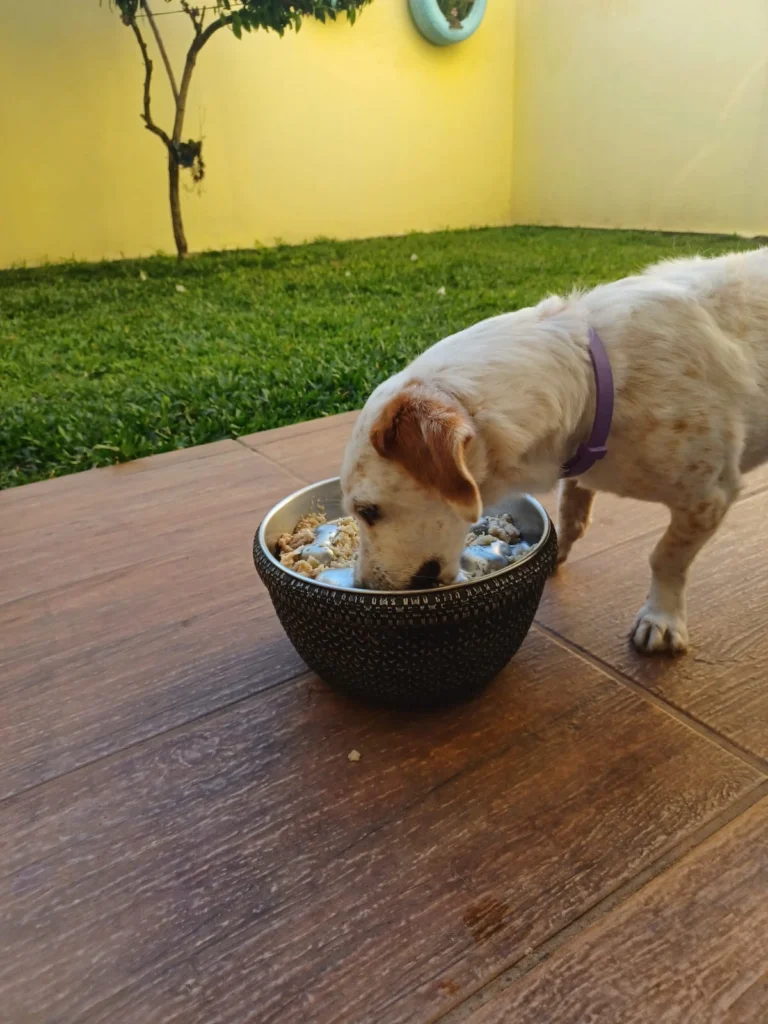
My senior dog won’t eat? Paying close attention makes all the difference! Loli’s experience showed that changes in eating behavior can reveal more than they seem.
When a senior dog won’t eat, this change rarely happens in isolation.
Most of the time, it is not just a lack of appetite. It is a signal — and often one of the first.
The most delicate point is that this signal does not always appear in an obvious way.
Not always a complete refusal
In contexts similar to what was observed with GOE, the change in eating behavior did not begin as a complete refusal of food.
What happened was more subtle.
The interest in food was still there, but it was no longer the same. The quantity started to decrease. The time spent eating increased. And behavior gradually began to change.
Over time, it became clear: it was not just aging.
It was part of a broader health process that required months of monitoring, adjustments, and ongoing care.
And this is exactly where many owners get confused.
Because it seems normal. But it is not always.
What actually changes with aging
The body of a senior dog goes through several adaptations.
Metabolism slows down. Digestion may become more sensitive. Energy levels decrease. And the response to stimuli changes.
These changes can influence appetite, yes.
But there is an important difference between eating slightly less and progressively losing interest in food.
When the change deserves attention
A senior dog may reduce food intake slightly, prefer softer foods, and take longer to eat.
This can be part of aging.
But when signs appear such as frequent refusal, persistent disinterest, and noticeable behavioral changes, closer observation becomes essential.
The most common mistake
The most common mistake in caring for senior dogs is normalizing discomfort.
Phrases like “it’s just age” or “he’s getting old” can delay the recognition of something that is already developing.
And often, the body is signaling before any diagnosis is made.
What may be behind the loss of appetite
In practice, when a senior dog won’t eat, this may be related to pain, discomfort when moving, digestive changes, reduced energy, or the early stages of a health condition.
It is not always about the food.
Often, the body is already showing that something has changed.
In other words, this is not just about food — it is about how the body is functioning as a whole.
The role of comfort — and why it matters more than it seems
One often overlooked factor is physical comfort.
When there is pain or difficulty moving, many senior dogs begin to avoid getting up, reduce movement, and conserve energy.
And that includes going to eat.
In long-term care contexts, environmental adjustments have shown a direct impact on behavior.
In observations similar to those involving GOE, providing a more supportive resting area helped reduce physical discomfort and contributed to better overall disposition.
If you want to explore this further, see this content on magnetic beds for dogs → https://logicalbark.com/magnetic-dog-bed-a-comfort-resource-tested-with-loli/
When feeding needs to be adjusted
Sometimes, the issue is not just age.
In contexts like Loli’s, for example, feeding had to be adapted due to specific health sensitivities.
This required attention to food selection, preparation, timing, and the body’s response.
In these cases, feeding stops being routine and becomes part of care.
If you want to understand more about dietary adjustments in sensitive conditions, see this content → https://logicalbark.com/food-for-dogs-with-a-sensitive-gut-when-fewer-ingredients-make-a-bigger-difference-lolis-experience/
When to seek evaluation
Some signs indicate the need for veterinary evaluation: persistent refusal to eat, weight loss, apathy, and behavioral changes.
In these situations, professional assessment is essential.
What you can do now
Some simple adjustments may help: offer easier-to-consume foods, maintain a predictable routine, reduce environmental stress during feeding, and observe patterns over time.
More important than acting quickly is observing carefully.
In some cases, small environmental adjustments also help — such as bowl height. Elevated feeders can make eating more comfortable for senior dogs.
Check this well-rated option →https://amzn.to/3NAfRY9
Conclusion
When a senior dog won’t eat, the answer is rarely just about food.
It lies in the whole: the body, the behavior, the routine, and the environment.
The problem does not always begin when the dog stops eating.
Sometimes, it begins when the dog still eats — but is no longer the same.
And that is exactly when attention makes all the difference.
Growing old alongside senior dogs transforms us deeply. It teaches us attention, sensitivity, and ongoing responsibility across so many years and a life woven with countless experiences and meanings.
Disclaimer: This content is for informational purposes only and does not replace veterinary guidance.
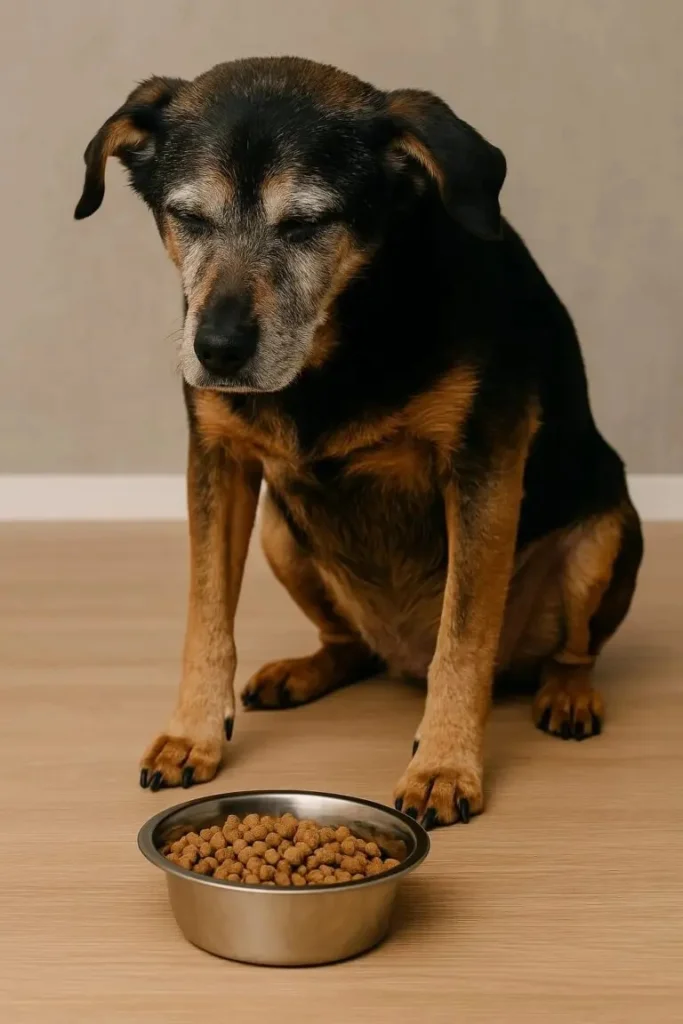
Sometimes it’s not just lack of appetite — changes in eating behavior may be important signals.
You may also like

Lusiane Costa is a digital writer with degrees in Marketing and English Literature.
Creator of Latido Lógico and Logical Bark, she develops evidence-based content on canine aging, wellness, and senior-dog health.
The project was inspired by Goe — a senior dog whose longevity and resilience shaped a grounded, compassionate view on the challenges of aging in pets.
Each article reflects her commitment to transforming real experiences into accessible knowledge, helping owners understand, prevent, and care better for their animals at every stage of life.
Goe remains the heartbeat of this project.
[…] If you want to better understand the causes of this behavior, also see: https://logicalbark.com/senior-dog-not-eating-discover-7-causes-and-how-to-help/ […]
[…] See how this connects → https://logicalbark.com/senior-dog-not-eating-discover-7-causes-and-how-to-help/ […]