
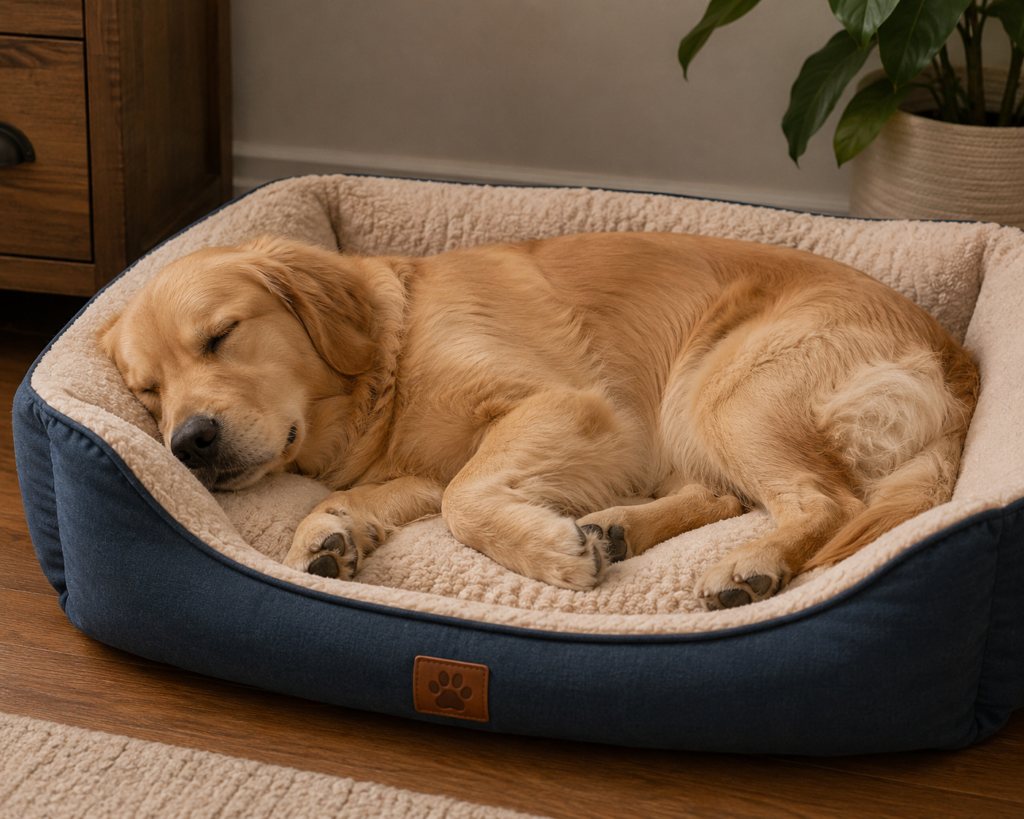
REM sleep in dogs is one of the most important phases for a dog’s brain, emotional, and physical health. During this period, many dogs twitch, move their paws, breathe faster, and may even appear to be running or dreaming while sleeping deeply.
Many pet owners become concerned when they notice these movements during sleep. However, in most cases, REM sleep in dogs is a completely natural neurological process. This phase is related to memory, physical recovery, learning, emotional balance, and brain processing.
Understanding how REM sleep in dogs works helps owners better understand canine behavior and prevents unnecessary worry when a dog shows tremors or small involuntary movements while resting.
What Is REM Sleep in Dogs?
The acronym REM stands for Rapid Eye Movement. This is considered the deepest and most active stage of sleep.
During REM sleep in dogs: – the brain remains highly active; – the eyes may move beneath the eyelids; – the body enters deep relaxation; – memories are processed; – small involuntary movements occur.
Even while deeply asleep, the brain continues working intensely.
Why Is REM Sleep in Dogs Important?
REM sleep in dogs plays an essential role in the body.
During this phase: – memories are organized; – learning is consolidated; – emotional stimuli are processed; – important hormones are released; – neurological recovery occurs; – the immune system receives support.
Because of this, dogs that sleep well often show: – better emotional balance; – less irritability; – more physical energy; – improved learning ability.
What Signs Appear During REM Sleep in Dogs?
The most common signs include: – moving paws; – light twitching; – faster breathing; – moving eyes; – twitching muzzle; – small sounds; – quick facial expression changes.
Many dogs appear to be running, playing, or reacting to something while sleeping.
Most of the time, these signs are completely normal during REM sleep in dogs.
Can Dogs Dream During REM Sleep?
Yes. Experts believe dogs can dream during REM sleep.
Research in animal neurology shows that dogs’ brains display patterns similar to those seen in humans during this stage of sleep.
This means a dog may relive: – playtime; – walks; – sounds; – smells; – interactions with owners; – emotional experiences.
That is exactly why some dogs move their paws, make small noises, or appear to run while deeply asleep.
Can Dogs Have Nightmares?
Possibly, yes.
Just as positive experiences may be processed during REM sleep in dogs, situations involving fear, anxiety, or stress may also influence dreams.
Some dogs may: – whine; – vocalize; – move intensely; – wake up startled.
Still, not every intense movement means there is a problem.
Do Puppies Enter REM Sleep More Often?
Yes. Puppies tend to enter REM sleep more frequently.
This happens because the brain is still developing.
During REM sleep in puppies: – the nervous system matures; – experiences are organized; – daily learning is consolidated.
Because of this, puppies usually: – sleep more; – twitch more; – show more involuntary movements during sleep.
Do Senior Dogs Also Show More Movements?
Many senior dogs may display more noticeable movements during deep sleep.
Aging changes: – sleep quality; – sleep cycles; – muscle recovery; – neurological function.
In addition, older dogs often sleep longer throughout the day.
How Long Does REM Sleep in Dogs Last?
REM sleep in dogs occurs in cycles during rest.
This phase usually lasts only a few minutes at a time, but it repeats several times throughout sleep.
Puppies enter REM sleep more quickly, while adult dogs tend to have more organized sleep cycles.
What Should You NOT Do During REM Sleep in Dogs?
Many owners try to wake their dog immediately when they notice twitching or involuntary movements. However, this may frighten the dog.
Avoid: – touching abruptly; – yelling; – shaking the dog; – interrupting sleep unnecessarily.
When a dog is suddenly awakened during deep sleep, it may: – become disoriented; – feel startled; – react instinctively; – experience temporary stress.
The best approach is simply to observe calmly.
What Can Help a Dog Sleep Better?
Some habits greatly improve sleep quality: – a calm environment; – a comfortable bed; – a balanced routine; – less stress; – proper nutrition; – age-appropriate exercise.
Senior dogs may benefit from orthopedic beds and quieter sleeping spaces.
Some Dogs Prefer More Comfortable Beds
Some dogs prefer softer and more comfortable beds to rest better during deep sleep. 🐶💤
If you would like to explore some highly rated options among dog owners, there are comfortable models available for different sizes and needs. → https://amzn.to/4tIEIrm
When Should You See a Veterinarian?
Although REM sleep in dogs is natural, some signs require attention.
Seek veterinary evaluation if your dog shows: – intense stiffness; – loss of consciousness; – excessive drooling; – difficulty waking up; – violent movements; – prolonged episodes; – frequent episodes outside sleep.
Seizures may sometimes be confused with natural sleep movements.
Does Sleep Influence a Dog’s Behavior?
Yes. Rest directly affects: – memory; – learning; – emotional balance; – physical energy; – canine behavior.
Dogs that do not sleep well may experience: – irritability; – anxiety; – agitation; – tiredness; – behavioral changes.
Proper sleep supports both physical and emotional recovery.
REM Sleep in Dogs: A Natural and Important Process
REM sleep in dogs is a natural mechanism essential for brain function and physical health.
Most of the time, light twitching, moving paws, and small reactions during deep sleep are completely normal.
Understanding REM sleep in dogs also helps owners better understand their dog’s behavior, rest, and emotional needs.
To learn more about canine comfort and rest, also check out this related post: https://logicalbark.com/do-senior-dogs-need-a-special-mattress-what-really-makes-a-difference-in-comfort-and-mobility/
Sometimes, the soul also needs to sway a little.
You may also like


Lusiane Costa is a digital writer with degrees in Marketing and English Literature.
Creator of Latido Lógico and Logical Bark, she develops evidence-based content on canine aging, wellness, and senior-dog health.
The project was inspired by Goe — a senior dog whose longevity and resilience shaped a grounded, compassionate view on the challenges of aging in pets.
Each article reflects her commitment to transforming real experiences into accessible knowledge, helping owners understand, prevent, and care better for their animals at every stage of life.
Goe remains the heartbeat of this project.
[…] See other related content that may help with your pet’s daily care routine: https://logicalbark.com/rem-sleep-in-dogs-what-happens-when-a-dog-sleeps-deeply/ […]