Dog hugs are often interpreted by humans as expressions of love, affection, protection, and emotional connection. However, understanding dog hugs requires observing canine behavior, emotional trust, bonding, and the way dogs interpret physical contact.
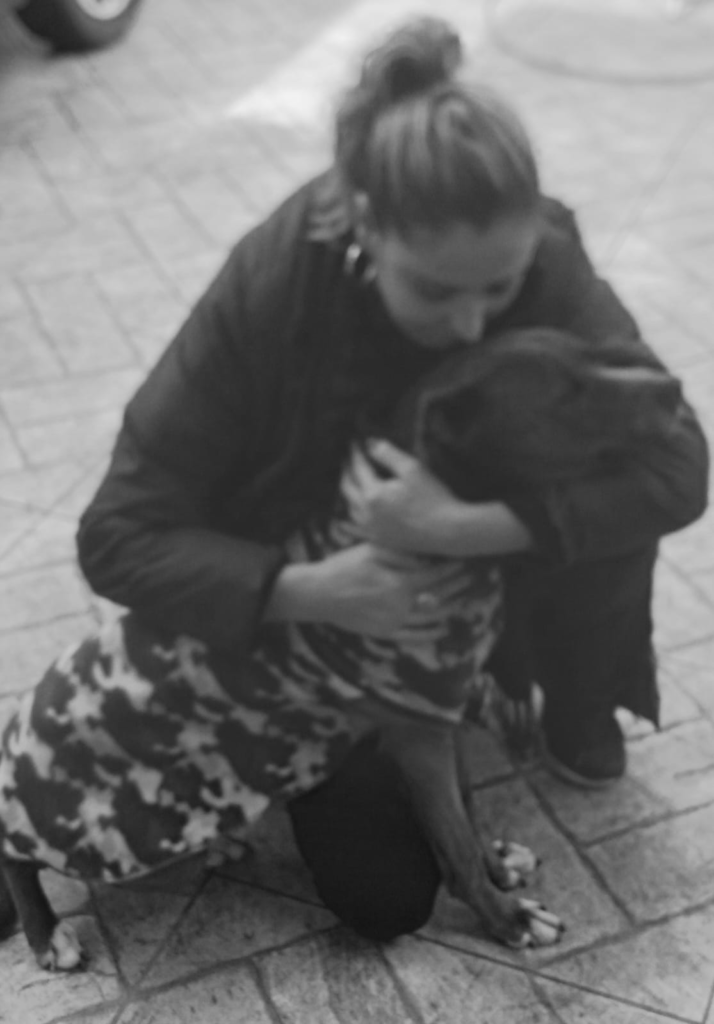
Dog hugs do not always mean what humans imagine they mean.
But between me and GOE, there was something that went beyond gestures.
For many people, dog hugs represent tenderness, emotional safety, and belonging. Yet dogs do not always interpret dog hugs the same way humans do. Through the perspective of canine behavior, cognition, and neuroscience, it becomes clear that dog hugs may carry different meanings depending on personality, emotional state, previous experiences, socialization, and environmental context.
From an evolutionary perspective, dogs descend from species whose survival depended on movement, environmental awareness, and the interpretation of social signals. Because of this, some forms of dog hugs may not always feel emotionally comfortable to every dog.
When humans wrap their arms around a dog, partially restricting movement, some dogs may perceive dog hugs as emotional closeness, while others may interpret the interaction as physical pressure, restraint, or loss of personal space.
This explains why canine behavior specialists frequently warn that dog hugs are not universally appreciated by every dog.
Common Signs a Dog May Not Enjoy Dog Hugs
Understanding how dogs react to dog hugs requires attention to subtle behavioral signs. Dogs rarely communicate discomfort through words. Instead, they use body language.
- Looking away repeatedly;
- Yawning during physical contact;
- Quick nose licking;
- Body stiffness;
- Pinned-back ears;
- Holding the breath;
- Trying to move away;
- Remaining unnaturally still.
Stillness is one of the most misunderstood canine signals. Many people assume a dog is enjoying dog hugs simply because the dog stays quiet. However, freezing behavior may actually indicate emotional tension or discomfort.
This does not mean dogs lack affection for humans. Quite the opposite. Modern science demonstrates that dogs develop deep emotional bonds with their guardians. Positive interactions involving trust, calmness, routine, and emotional safety strengthen those bonds over time.
Dogs recognize voices, routines, emotional changes, and facial expressions. Many dogs alter their own behavior when their guardians feel sad, anxious, stressed, or emotionally vulnerable.
Still, canine emotional language does not always mirror human emotional language. Humans frequently use dog hugs to communicate affection, while dogs often express affection through proximity, trust, and emotional predictability.
How Dogs Usually Express Affection
- Staying physically close;
- Following their guardian around the house;
- Resting beside familiar people;
- Seeking calm companionship;
- Maintaining visual attention;
- Sharing daily routines;
- Remaining emotionally connected through presence.
In practice, many dogs express love through trust and companionship rather than through prolonged physical restraint. Some dogs enjoy brief and gentle dog hugs, while others prefer softer forms of contact.
There is an emotional sophistication in canine behavior that many humans only begin to understand after years of coexistence.
Modern canine cognition studies suggest that dogs possess advanced socio-emotional abilities. Dogs interpret emotional tone, posture, vocal changes, movement patterns, and recurring human behaviors.
Because of this, the meaning of dog hugs may vary according to:
- Personality;
- Age;
- Socialization history;
- Tactile sensitivity;
- Previous experiences;
- Environmental stability;
- Emotional trust in the guardian.
Some dogs gradually learn to associate dog hugs with safety and affection. Others may never fully enjoy intense physical restraint. Respecting these differences is one of the healthiest ways to strengthen emotional connection between humans and dogs.
Children and Dog Hugs
Another important aspect involving dog hugs concerns children. Many bites occur when children hug dogs tightly or unexpectedly. Children usually interpret hugs as demonstrations of affection, while dogs may perceive sudden restraint as threatening or stressful.
Teaching children to recognize canine body language is essential for both emotional respect and household safety.
More important than asking whether dog hugs are right or wrong may be asking a different question: does the dog feel emotionally safe during the interaction?
This perspective changes the entire human-dog relationship. The focus moves away from human emotional intention alone and begins to include the dog’s emotional experience as well.
There is a profound difference between affection and emotional projection. Genuine affection respects boundaries and adapts to the emotional language of another living being.
Dogs do not necessarily need constant dog hugs to feel loved. They need emotional stability, trust, calmness, predictable routines, safety, and secure companionship.
Comfort, Calmness, and Emotional Safety
From a neurobehavioral perspective, dogs build emotional safety through repeated positive experiences. They learn who consistently provides calmness, protection, emotional regulation, and environmental stability.
Because of this, many guardians create peaceful resting spaces close to the family using calming beds, blankets, soft cushions, and quiet environments.
If you would like to explore some accessories commonly used during moments of comfort and emotional rest, I will leave a few here below: https://amzn.to/3PSlfqG
Complementary Reading
To better understand emotional bonding and canine perception, read this complementary article: https://logicalbark.com/how-dogs-understand-humans-science-explains-this-connection/
Some dogs may enjoy brief and gentle dog hugs. Others may prefer companionship without intense physical restraint. Understanding this difference may be one of the deepest forms of love humans can offer.
Because loving a dog does not mean emotionally transforming them into humans. It means recognizing, respecting, and embracing the singular beauty of what they truly are.
Dog hugs do not always mean what humans imagine they mean. Many dogs express affection through trust, closeness, routine, emotional stability, and companionship.
But between me and GOE, there was something that went beyond gestures. There was a language built through gentleness, respect, emotional awareness, and years of coexistence.
The best hugs of my life.
Dog hugs: perhaps one of the most beautiful places in the world looks exactly like this.
This content is for informational purposes only and does not replace professional veterinary or canine behavioral guidance.
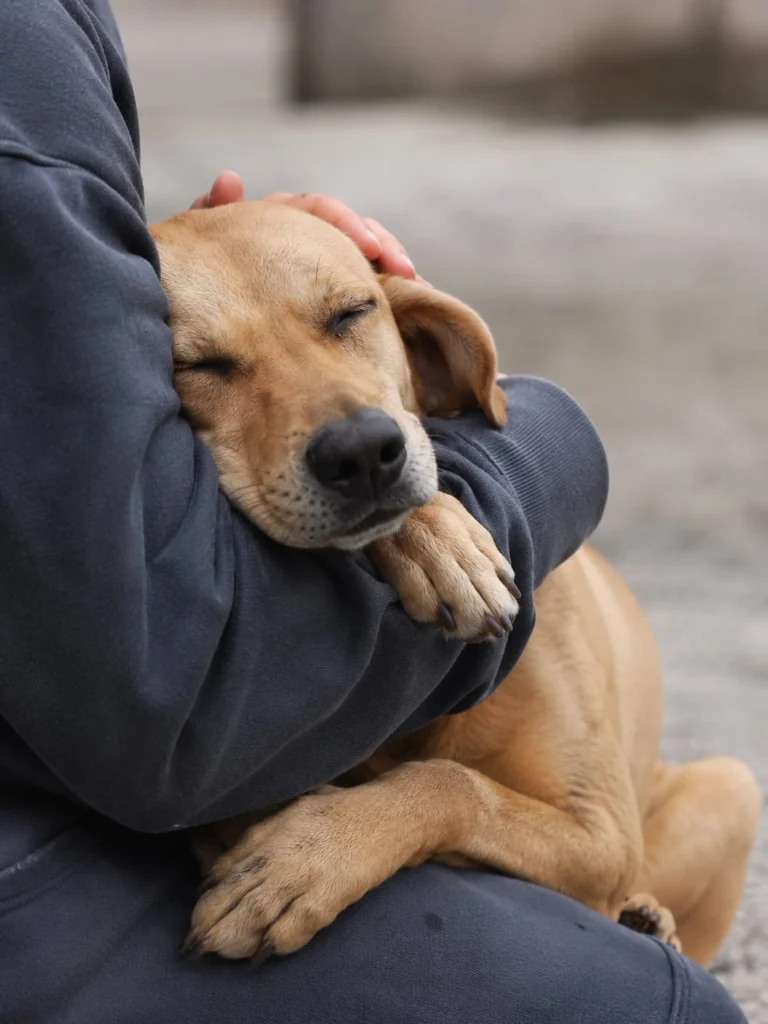
Dog hugs: perhaps one of the most beautiful places in the world looks exactly like this.
This content is for informational purposes only and does not replace guidance from a veterinarian or qualified canine behavior professional.
You may also like

Lusiane Costa is a digital writer with degrees in Marketing and English Literature.
Creator of Latido Lógico and Logical Bark, she develops evidence-based content on canine aging, wellness, and senior-dog health.
The project was inspired by Goe — a senior dog whose longevity and resilience shaped a grounded, compassionate view on the challenges of aging in pets.
Each article reflects her commitment to transforming real experiences into accessible knowledge, helping owners understand, prevent, and care better for their animals at every stage of life.
Goe remains the heartbeat of this project.