
July 3, 2026
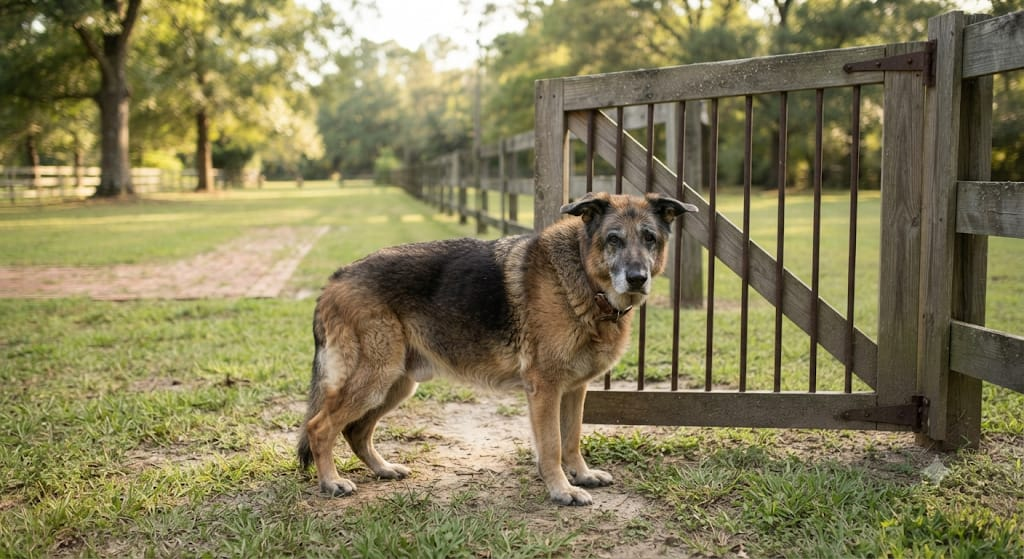
Senior dogs in the backyard inhabit time with a peculiar wisdom: there, between the earth and the sun, they process the world through scents, transforming the space into a territory of memory and emotional stability.
Many guardians believe that offering a large outdoor space is the key to canine well-being. However, when we speak of our senior friends, this premise requires a much more cautious look. The reality is that senior dogs in the backyard demands attention and planning that goes far beyond just opening the door. The transition to the senior years brings biological, sensory, and cognitive changes that make the outdoor environment a potentially dangerous or stressful place if not properly adapted.
The backyard as a silent risk
Unlike a young dog, the senior dog loses the ability to regulate its body temperature with the same efficiency. Excessive sun or intense cold can be severe for them, making access to thermally insulated houses, elevated from the ground and protected against wind and rain, indispensable. Furthermore, rough or very cold concrete floors should be avoided, as they aggravate joint pain, such as arthritis, which is common in this phase of life.
Safety is another fundamental pillar. It is necessary to eliminate uneven surfaces and use ramps or stairs with non-slip surfaces, minimizing the risk of falls that can be fatal to a fragile body. Social isolation is one of the greatest enemies of canine longevity: confinement in outdoor areas, away from family interaction, worsens cognitive conditions and drastically increases separation anxiety.
The danger of confinement and hypervigilance
A classic mistake is believing that “having a large yard means no need for walks.” For canine psychology, space matters less than the novelty of stimuli. When a dog, regardless of age, spends the whole day in the same place, it memorizes every inch, and the yard ends up becoming a “luxury cage.” The absence of new sensory challenges causes idleness to take control, leading the animal to deep boredom.
This boredom often turns into hypervigilance. The dog begins to patrol the wall, barking at the wind or lunging at pedestrians passing by the gate. This is how reactivity is born; the dog is not “bad,” it is just channeling its frustration due to the lack of a structured routine. Walking on the street with a loose leash is an irreplaceable exercise, as it expends mental energy through new olfactory stimuli that no yard, no matter how large, can offer.
My experience with Goe
My personal journey with Goe taught me that routine is the best medicine. With him, I adopted a strategy that balances safety and stimulation. In the morning, we always had our supervised walks, where he could explore the world safely and expend his energy in a healthy way. During the afternoon, his time in the yard was monitored, ensuring he was not exposed to extreme temperatures or the stress of loneliness.
Even with all the structure I created, I realized that the simple fact of us being connected and me monitoring his every step brought a peace that isolation in the yard would never offer. When he had health issues, this need for attention intensified, and daily care showed me that emotional connection depends on our willingness to be present. With Goe, I learned that, truly, senior dogs in the backyard demands redoubled attention and, above all, respect for his time and physical limitations.
Goe’s safety at home changed drastically after I installed these mats. It is not just an accessory, but a way to preserve the physical integrity of sensitive joints. If you want to see your dog walking with the same confidence as before, I have left the link to the solution I use in my daily life here: https://amzn.to/4vFnUn7
Conclusion: The yard is for rest, the street is for balance
The yard should be a place of rest, a refuge, but never a substitute for active leadership and quality walks. Your senior dog’s mental health depends on you being the conductor of its experiences. When observing reactive behaviors or boredom, do not blame the animal; look at your routine and ask if you are providing the necessary stimuli for it to remain balanced.
Remember that the emotional intelligence of a senior dog is a treasure that must be preserved. Therefore, whenever you worry whether senior dogs in the backyard demands attention, know that the answer is a resounding yes. They need you, your time, and your dedication to cross this golden phase with dignity and joy. Close interaction and a well-structured routine are the keys to your best friend having the happiest years by your side.
Learn more about this topic in the related article here: https://logicalbark.com/do-senior-dogs-feel-human-emotional-energy-the-science-behind-the-bond-between-guardians-and-their-dogs/
ADAPTATION GUIDE: SAFE BACKYARD FOR SENIOR DOGS
- Floor and Ground: Senior dogs lose firmness in their paws. Avoid very slippery ceramic floors that may cause slips and falls; if necessary, install non-slip strips or rubber mats along the paths it usually travels.
- Strategic Shade: The senior dog’s thermal regulation is slower. Ensure it has cool and ventilated shaded areas available throughout the day, avoiding direct exposure to strong sun, which can cause exhaustion quickly.
- Easy Access: The dog should not have to exert effort to get back inside. If there are steps or high gaps, consider building ramps with a gentle incline or adding auxiliary steps.
- Protection Barriers: Even if the yard is enclosed, check that there are no gaps or objects where it might get stuck or confused, as vision and hearing may be less sharp in this phase.
Disclaimer: This content is for educational and informational purposes, reflecting a subjective, conceptual perspective on canine connection and behavior. It is not a substitute for professional veterinary advice or clinical behavioral assessment.
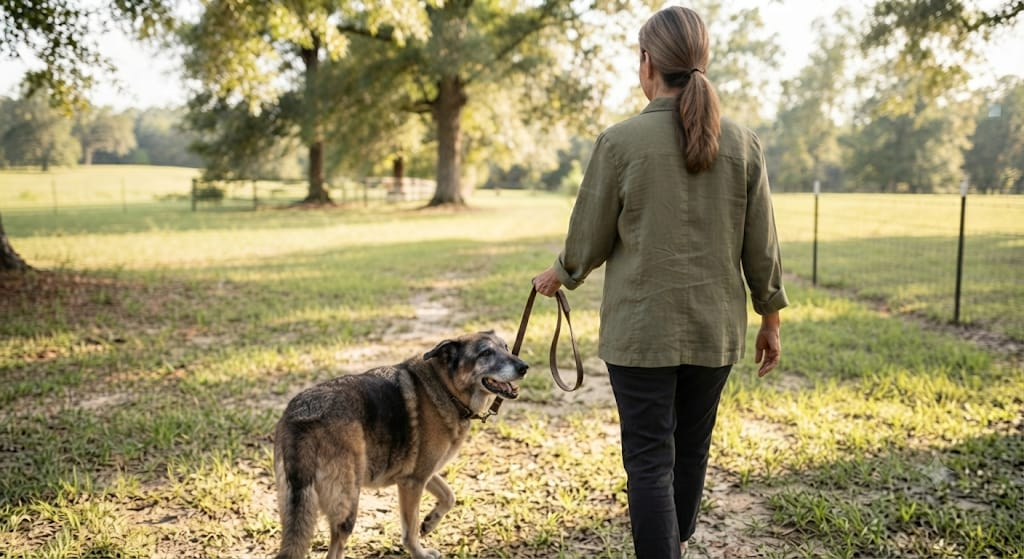
The shared walk is the pinnacle of our synchrony, where the cadenced step translates the complicity of a lifetime.
You may also like


Lusiane Costa is a digital writer with degrees in Marketing and English Literature.
Creator of Latido Lógico and Logical Bark, she develops evidence-based content on canine aging, wellness, and senior-dog health.
The project was inspired by Goe — a senior dog whose longevity and resilience shaped a grounded, compassionate view on the challenges of aging in pets.
Each article reflects her commitment to transforming real experiences into accessible knowledge, helping owners understand, prevent, and care better for their animals at every stage of life.
Goe remains the heartbeat of this project.