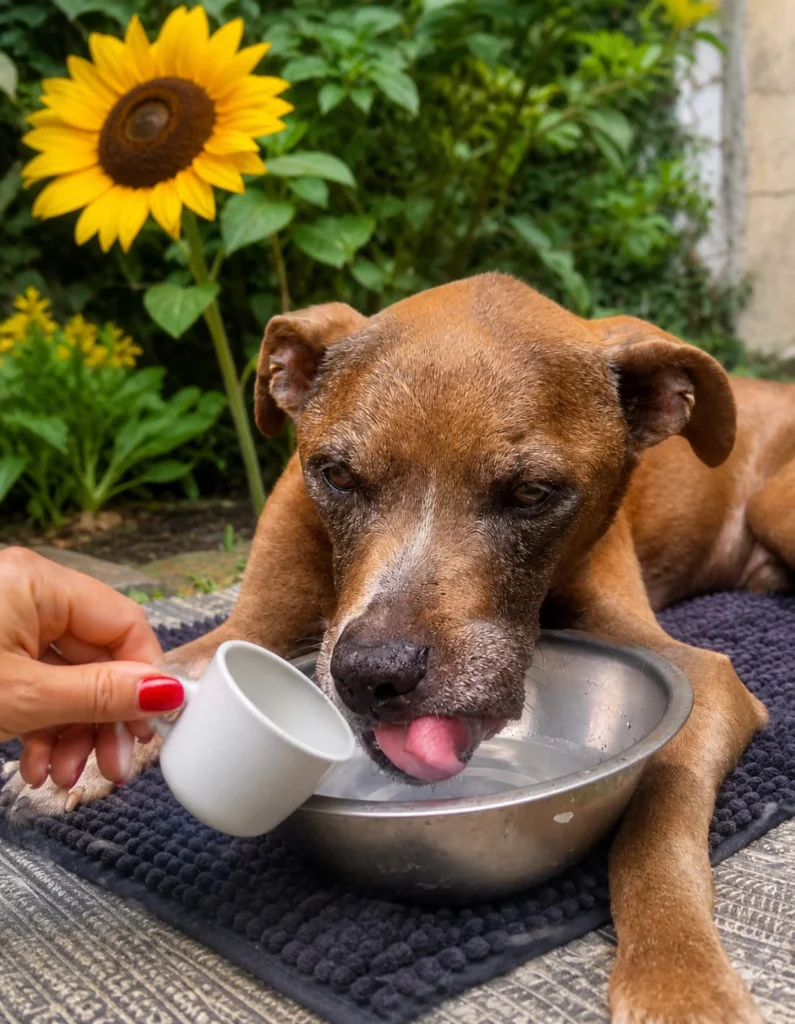
With GOE, it was always this way: water little by little, calmly — a careful and attentive approach in preventing gastric torsion in dogs
Gastric torsion in dogs is one of the most serious situations that can happen to a dog. It is frightening because it progresses quickly, can cause intense pain, and requires urgent veterinary care. For this reason, before talking about symptoms, causes, and treatment, it is important to begin with the point that helps the most in daily routine: what to do when the dog comes back from a walk thirsty, panting, or very agitated.
The first thing to know is simple: when the dog returns from a walk, especially on hot days or after a more intense walk, the ideal approach is not to leave a huge bowl of water freely available right away. The point is not to leave the dog without water, but to offer it little by little, calmly, and with intervals.
A practical way to handle this moment is:
1) When the dog comes back from the walk, offer a little water, in a small amount.
2) Wait about 15 minutes.
3) Then offer a little more water.
4) Wait again for about 15 minutes.
5) Only after that, if the dog is already calmer, with more stable breathing, allow him to drink more freely.
This care is especially important for dogs that come back from a walk very thirsty and want to drink too quickly. Rapid water intake, especially when the dog is still panting, can increase gastrointestinal discomfort and should be managed with attention.
How I did it with GOE: water little by little, with intervals and care
In GOE’s case, this care was part of the routine. When he came back from the walk, I did not immediately put down a full bowl for him to drink everything at once. I would place a little bit of water, about a cup or a small mug, in the bowl at the front part of the house, in the garden.
He would drink that first small amount. Then I would wait about 15 minutes. After that time, I would take him to the back part of the house and offer more water, also calmly. This division helped control both the amount and the pace of intake.
This type of care is simple, but very useful: instead of the dog drinking a large amount all at once, he hydrates in stages. For those who have a medium-sized, large, senior, anxious, very active dog, or a dog that returns from the walk very panting, this management can make a difference in the routine.
What is gastric torsion in dogs?
Gastric torsion in dogs, also called gastric dilatation-volvulus, happens when the stomach dilates due to the accumulation of gas, liquid, or food and may rotate on itself. When this occurs, the passage of contents becomes blocked, blood circulation is compromised, and the dog may go into shock quickly.
That is why gastric torsion should not be treated as a common indigestion. It is a veterinary emergency. The faster the dog receives care, the greater the chances of appropriate intervention.
Which dogs are at higher risk of gastric torsion?
Gastric torsion can occur in different dogs, but it is more common in large and giant breed dogs, especially those with a deep chest. In general, dogs over approximately 25 kg, tall dogs, long-bodied dogs, or dogs with a deeper body structure in the chest area deserve extra attention.
Among the breeds frequently associated with greater predisposition are:
Great Dane, German Shepherd, Saint Bernard, Doberman, Weimaraner, Irish Setter, Rottweiler, Boxer, Labrador Retriever, and other large breed dogs.
This does not mean that only these breeds can develop the problem. Predisposition increases the risk, but attention should always exist whenever the dog presents compatible signs.
Main symptoms of gastric torsion in dogs
The symptoms usually appear quickly. One of the best-known signs is a distended abdomen, meaning the belly becomes swollen, enlarged, and often hard to the touch.
Other important signs include:
Trying to vomit without success: the dog strains, seems as if he is going to vomit, but nothing comes out, or only foam appears.
Intense salivation: the dog may drool a lot, present foam around the mouth, or show evident discomfort.
Restlessness: he walks from one side to the other, cannot lie down properly, and changes position all the time.
Rapid breathing: he may seem tired, distressed, or have difficulty breathing.
Weakness or fainting: in severe cases, the dog may lose strength, become apathetic, or collapse.
Abdominal pain: some dogs show sensitivity when the belly area is touched.
How to know if the dog’s stomach has twisted?
The owner cannot confirm at home whether the stomach has actually twisted. This confirmation depends on veterinary evaluation and tests, such as radiography. However, some signs raise strong suspicion: enlarged belly, trying to vomit without success, intense salivation, pain, restlessness, and rapid worsening of the general condition.
If these signs appear together, do not wait. The safe recommendation is to seek emergency veterinary care. In gastric torsion, time is decisive.
Main causes and risk factors
Gastric torsion in dogs usually does not have a single cause. It involves body predisposition, feeding routine, behavior, speed of ingestion, and, in some cases, family history.
Among the factors that may increase the risk are:
Eating too fast: dogs that swallow food in a few seconds may ingest more air along with the food.
Drinking too much water at once: especially when the dog is very panting, tired, or agitated.
A meal that is too large: offering one large meal per day may increase gastric distension.
Intense exercise close to feeding time: running, jumping, or playing right before or right after eating may increase the risk in predisposed dogs.
Anxiety and agitation: very anxious dogs may eat and drink too fast, which requires more careful management.
Large size and deep chest: the anatomy of some dogs favors greater predisposition.
How to prevent gastric torsion in dogs in daily life
Prevention begins with routine. No measure guarantees absolute protection, but some precautions reduce risks and help the owner better manage feeding, hydration, and walks.
Divide the food into 2 or 3 daily meals. Instead of offering all the food at once, divide the total daily amount into smaller portions. This prevents gastric overload and makes digestion more balanced.
Avoid intense exercise before and after meals. Ideally, keep the dog calmer around feeding time. Light walks can be part of the routine, but running, agitated play, and intense effort should be avoided right after eating.
Use slow feeders for dogs that eat fast. A slow feeder helps the dog reduce the speed of ingestion. This is very useful for dogs that “inhale” their food, swallow without chewing, or become anxious at mealtime.
Control water after the walk. When returning from the walk, offer a little water, wait 15 minutes, offer a little more, wait another 15 minutes, and only then allow freer access, especially if the dog is still very panting.
Observe the dog’s behavior. Sudden changes, abdominal discomfort, trying to vomit without success, and restlessness should not be ignored.
Slow feeder: why can it help?
A slow feeder is an accessory with dividers, raised patterns, or internal obstacles that make rapid food intake more difficult. It does not treat gastric torsion, but it may help prevent problems associated with rushed eating.
For dogs that eat too quickly, this type of feeder makes the food take longer to be consumed. This may reduce air intake, improve the rhythm of the meal, and make feeding safer.
If your dog swallows food in seconds, it is worth considering this accessory as part of the routine. It is especially useful for anxious dogs, large breed dogs, and dogs that need more control at mealtime.
Suggestion for the owner: choose a model suitable for the dog’s size, easy to clean, and made of resistant material. Ideally, the dog should be able to eat more calmly, without excessive frustration.
If it’s of your interest to better understand this context and explore different models to see how they work, this is a great option:https://amzn.to/4eW9oBQ
What to do in case of suspected gastric torsion?
If you suspect gastric torsion, do not try to solve it at home. Do not offer medication, do not force feeding, do not wait for it to “pass,” and do not try to massage the dog’s belly.
The correct course of action is to take the dog immediately to emergency veterinary care.
While on the way, keep the dog as calm as possible. Avoid excessive handling and inform the veterinarian about the symptoms observed: the time they started, whether there was recent feeding, water intake, a walk, attempts to vomit, abdominal enlargement, and behavioral changes.
How to treat gastric torsion in dogs?
The treatment for gastric torsion is veterinary and emergency-based. In general, it involves clinical stabilization, shock control, stomach decompression, and, in many cases, surgery.
During surgery, the veterinarian repositions the stomach and evaluates the condition of the tissues and affected organs. In many cases, gastropexy may be performed, a procedure in which the stomach is fixed to the abdominal wall to reduce the risk of another torsion.
Treatment depends on the severity of the case, the time of progression, and the dog’s overall condition. For this reason, fast care is essential.
What is surgery for gastric torsion in dogs?
Surgery for gastric torsion in dogs is the procedure performed to correct the rotation of the stomach, relieve distension, and try to restore adequate circulation. During the procedure, the veterinarian may remove compromised tissue, evaluate the spleen and stomach, and perform gastropexy when indicated.
It is emergency surgery, not a simple elective procedure. After surgery, the dog needs follow-up, hospitalization, pain control, monitoring, and postoperative care.
Gastric torsion in dogs: how long does it last?
Gastric torsion should not be understood as something that “lasts” and then gets better. It can progress quickly and become severe within a few hours. In many cases, the difference between acting early and acting late can be decisive.
For this reason, if there are signs such as a distended belly, trying to vomit without success, intense salivation, weakness, or abnormal agitation, the right path is to seek care immediately.
Final considerations
Gastric torsion in dogs requires knowledge, prevention, and a quick response. The owner does not need to live in fear, but does need to know how to manage the routine intelligently: divide food into 2 or 3 meals, avoid intense exercise close to feeding time, use a slow feeder when the dog eats too fast, and control water intake after the walk.
The 15-minute care is a simple measure: the dog comes back from the walk, offer a little water; wait 15 minutes; offer a little more; wait another 15 minutes; then allow more freedom. That is how I did it with GOE: first a little water at the front of the house, then, after the interval, more water at the back.
To deepen your understanding of this topic, also check out this related post: https://logicalbark.com/what-can-a-dog-drink-besides-water-5-options-that-may-help-in-specific-situations/
This type of routine does not replace veterinary guidance, but it helps the owner care better, observe better, and act with more awareness.
Final disclaimer: this content is for informational purposes only and does not replace the evaluation, diagnosis, or treatment recommended by a veterinarian. In case of suspected gastric torsion in dogs, seek veterinary care immediately.
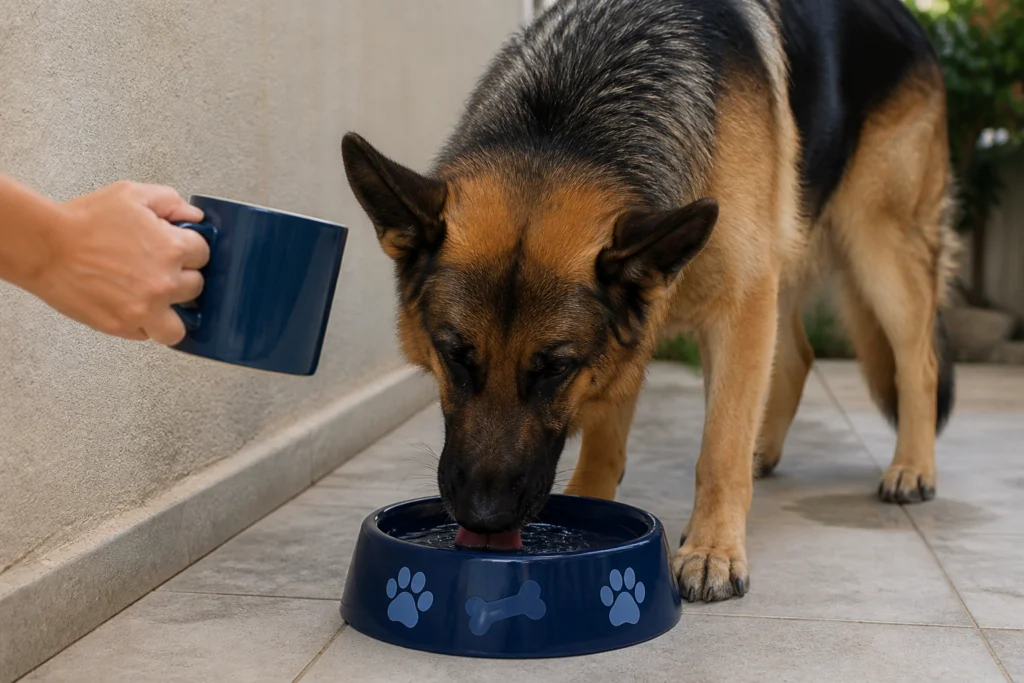
After walks, offering water in small portions, calmly and with intervals, is an important care step in preventing gastric torsion in dogs.
You may also like

Lusiane Costa is a digital writer with degrees in Marketing and English Literature.
Creator of Latido Lógico and Logical Bark, she develops evidence-based content on canine aging, wellness, and senior-dog health.
The project was inspired by Goe — a senior dog whose longevity and resilience shaped a grounded, compassionate view on the challenges of aging in pets.
Each article reflects her commitment to transforming real experiences into accessible knowledge, helping owners understand, prevent, and care better for their animals at every stage of life.
Goe remains the heartbeat of this project.