
April 15, 2026
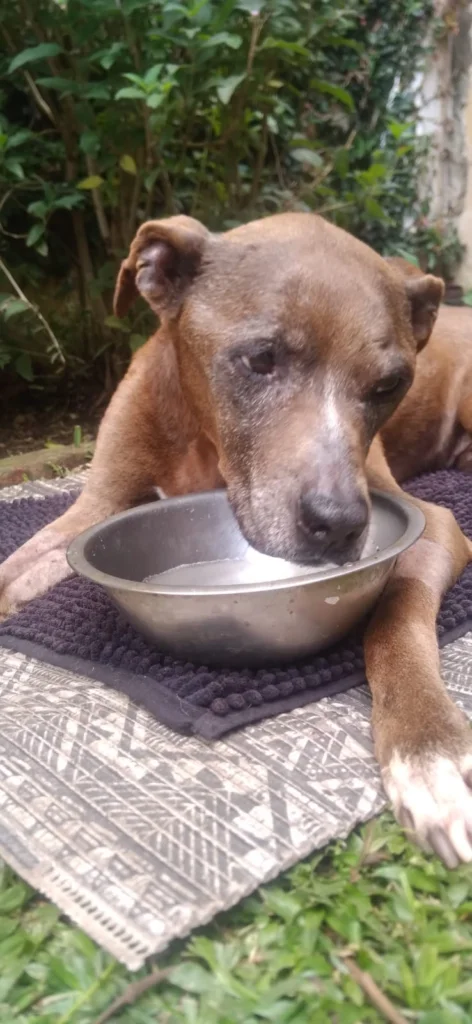
GOE in a more comfortable position after hydration, considering the limitations of that phase.
When a pet owner begins to notice changes in appetite, energy levels, or even acceptance of water, a very common question arises: what can a dog drink besides water? This question usually comes up especially during periods of intense heat, increased anxiety, physical recovery, digestive sensitivity, or changes in routine. Although water remains the main source of hydration, there are some occasional alternatives that may be offered with care, moderation, and common sense.
Understanding what can a dog drink besides water does not mean replacing regular hydration or turning complementary drinks into a fixed part of the routine without need. The most appropriate approach is to think of these resources as occasional supports, useful in certain contexts, always observing the dog’s acceptance, the composition of the drink, and the overall health condition. In other words, the question should not only be what to offer, but in what situation it truly makes sense.
In many cases, what makes a difference is not simply offering something different, but choosing simple, natural options without excess. When a pet owner better understands what can a dog drink besides water, they can act with more confidence and avoid unsuitable improvisations, especially during phases of greater clinical fragility, discomfort, or food selectivity. This is especially important because, when dealing with a more sensitive dog, any apparently small choice may influence well-being, digestion, and even overall disposition.
Natural Coconut Water
Natural coconut water is one of the first options people remember when thinking about complementary hydration. This happens because it contains electrolytes and is often well accepted by some dogs in small amounts. On very hot days, during phases of mild discomfort, or in situations where the dog shows less interest in water, this alternative may be useful occasionally.
The most important point here is moderation. Coconut water should not replace plain water, nor should it be offered in large quantities. It is also wise to avoid industrialized, sweetened, or preservative-filled versions. If the goal is to broaden understanding of what can a dog drink besides water, it is worth remembering that the safest form is still the simplest one: natural, unsweetened, and free of unnecessary additions.
Instead of viewing coconut water as something “more nutritious” than water, the most prudent approach is to understand it as a complementary possibility in specific contexts. It is precisely this balanced perspective that avoids excess. During care-related phases, the pet owner needs realistic alternatives, not improvised solutions that only seem healthy on the surface.
Bone Broth or Homemade Chicken Broth
Another possibility often mentioned when discussing what can a dog drink besides water is homemade broth, especially chicken broth or bone broth, as long as it is prepared without seasoning, onion, garlic, excess fat, or ingredients unsuitable for the canine body. Interest in this type of broth is usually linked to its more appealing aroma, which may encourage dogs with reduced appetite or lower enthusiasm.
Besides being more palatable, broth may serve as a liquid support during recovery phases or periods of greater feeding sensitivity. Even so, it should not be seen as an automatic solution or as a substitute for balanced nutrition. The ideal is to treat it as an occasional complement, not as the fixed basis of hydration. In dogs with a more sensitive digestive history, any new offering should be observed carefully.
In practical terms, this may be a good alternative when the pet owner is looking for something light, homemade, and more attractive than plain water in certain moments. But once again, the value of the strategy lies in the context. Knowing what can a dog drink besides water is not only about listing possible drinks, but about understanding that each one only makes sense when it respects the dog’s phase, tolerance, and clinical condition.
Chamomile Tea
Among the alternatives that usually attract attention, chamomile tea appears frequently, especially in contexts of greater restlessness. When the question is what can a dog drink besides water, chamomile comes in as a light drink, served cool or at room temperature, without sugar and in small quantities.
During health care contexts involving GOE, especially in phases when he was a little more anxious, I used to offer chamomile tea, and that helped a lot. At certain moments, I also used lemon balm tea that I had in the garden at my own home. The intention was never to replace clinical care or turn these teas into the answer for everything, but rather to offer a simple, gentle support that made sense within that specific reality.
This kind of practical observation matters because it shows that, when thinking about what can a dog drink besides water, the pet owner is often not only looking for hydration. In certain phases, they are also looking for comfort, relief, and support in more delicate moments. Even so, gentle drinks should still be used with caution, especially if the dog has a gastrointestinal history, pre-existing diseases, or continuous medication use.
Chamomile and lemon balm, when offered in a very simple way and without any additions, may be seen as complementary resources in specific circumstances. What is not advisable is to exaggerate the frequency or assume that any plant beneficial to humans will have the same effect, under the same conditions, on dogs. Prudence remains the best standard.
Well-Diluted Watermelon Juice
Watermelon, due to its high water content, is also often remembered in this kind of search. Instead of offering elaborate preparations, the most prudent option is to think of something extremely simple: fruit blended with water, without sugar and without seeds, in a small amount. In practical terms, this may work more as an occasional liquid treat than as a regular strategy.
When reflecting on what can a dog drink besides water, the pet owner needs to consider that not every fruit, not every mixture, and not every “natural” drink is automatically suitable. In the case of watermelon, simplicity of preparation and moderation are the two main keys. The goal is to offer something light, not to introduce sugar, excess fructose, or unnecessary volume.
This option may be more interesting on hot days or in situations where the pet owner wants to offer something occasional without turning to industrialized products. Even then, water remains the main reference for hydration. Alternatives like this do not compete with what is essential; they only complement it, occasionally, in very specific contexts.
Plain Yogurt
Plain yogurt appears as an option in some guidelines because of the presence of probiotics. In certain dogs, this may be interesting as an occasional complement, especially when there is good digestive tolerance. But there is an important difference here: not every dog tolerates dairy products well. For this reason, before including this item more often, it is worth observing whether there is intestinal discomfort, changes in stool, or any sign of intolerance.
If the question is what can a dog drink besides water, plain yogurt may be a possible occasional option for some dogs, but it is not a universal choice. The fact that it is natural does not eliminate the need for individual observation. In more sensitive organisms, simplicity may continue to be the better route, especially when the focus is digestive comfort and routine stability.
In many cases, the greatest prudence lies precisely in not turning everything into a habit. An alternative may be appropriate occasionally and still not be ideal as a daily practice. This distinction is important so that the pet owner does not confuse an occasional complement with a continuous recommendation.
What to Avoid When the Question Is What Can a Dog Drink Besides Water
Just as important as knowing what can a dog drink besides water is understanding what should stay off that list. Sugary drinks, coffee, chocolate drinks, soda, alcohol, artificial juices, and preparations with preservatives or sweeteners are not suitable alternatives. It is also wise to be cautious with boxed products, including industrialized coconut water, precisely because of their less clean composition.
In general, the shorter, more natural, and more understandable the composition is, the better. Even then, use should be complementary and occasional. Water remains the main reference. This reasoning, although it may seem basic, prevents many mistakes. In situations of fragility, some people tend to offer the dog what feels comforting to them, without evaluating whether the canine organism tolerates that choice well.
For this reason, when the question is what can a dog drink besides water, it is better to invest in a few well-selected options than in a broad and poorly judged list. Too many alternatives, instead of helping, may confuse the pet owner and disrupt care.
If it is of interest to you to know some helpful solutions for this context, there are elevated stands that may make access to water easier and reduce effort in certain phases: https://amzn.to/4sUa4v7
When These Options Really Make Sense
These alternatives usually make more sense in specific situations: intense heat, mild reluctance to drink water, periods of sensitivity, anxiety, convalescence, or moments when the pet owner is seeking an additional source of comfort. This does not mean that every behavioral change should be addressed with another drink. In many cases, refusal of water requires clinical observation, not only an adaptation of what is being offered.
For this reason, when thinking about what can a dog drink besides water, the ideal is to keep a balanced perspective. Yes, some options may help. But if there is apathy, vomiting, diarrhea, pain, urinary changes, fever, persistent refusal of fluids, or a marked behavioral change, the most important thing stops being the complementary drink and becomes the investigation of the cause.
This distinction is essential. A complementary drink may serve as occasional support, but it should not mask signs that require closer attention. The value of these alternatives lies in their prudent use, not in an exaggerated expectation of their effects.
If you are also interested in better understanding how hydration may require adaptations in certain contexts, it is worth seeing a related piece about GOE’s hydration: https://logicalbark.com/hydration-in-senior-dogs-goes-70-sips-%f0%9f%90%be/
Conclusion
What can a dog drink besides water is a legitimate question, especially in phases of greater care. Among the most frequently remembered options are natural coconut water, homemade broth without unsuitable seasonings, chamomile tea, very simple watermelon juice, and, in some cases, plain yogurt. Each of these possibilities may have occasional value, as long as it is offered with moderation, observation, and consistency with the dog’s reality.
In prolonged care contexts involving GOE, the gentler options, such as chamomile and lemon balm, were resources that helped a lot in specific moments of anxiety. This experience reinforces an important idea: sometimes the pet owner does not need complicated solutions, but prudent, natural, and carefully observed choices.
In the end, understanding what can a dog drink besides water is less about inventing alternatives and more about knowing when a small adaptation may be useful without losing sight of what is essential: proper hydration, attentive observation, and responsible care. When this understanding becomes stronger, the pet owner gains more confidence to act without excess, without unsuitable improvisation, and without turning every moment of sensitivity into a reason to test unnecessary resources.
Disclaimer: This content is for informational purposes only and does not replace evaluation by a veterinarian. In cases of persistent refusal of water, digestive changes, apathy, pain, or any important change in the dog’s general condition, professional guidance is essential.
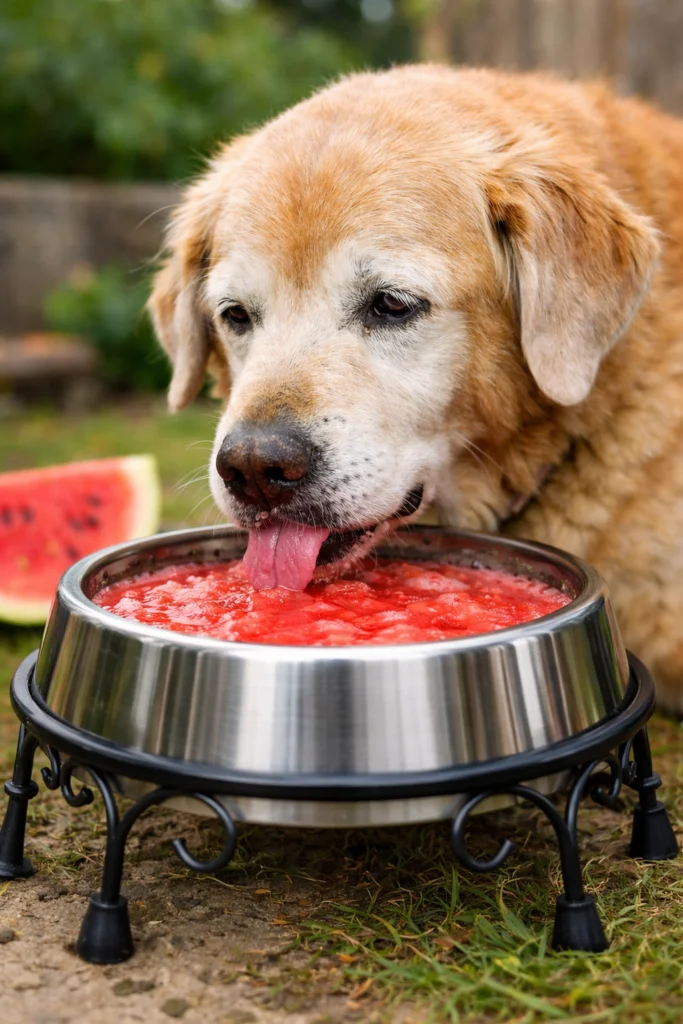
Occasional and always simple: watermelon without sugar, without excess, and with caution.
You may also like


Lusiane Costa is a digital writer with degrees in Marketing and English Literature.
Creator of Latido Lógico and Logical Bark, she develops evidence-based content on canine aging, wellness, and senior-dog health.
The project was inspired by Goe — a senior dog whose longevity and resilience shaped a grounded, compassionate view on the challenges of aging in pets.
Each article reflects her commitment to transforming real experiences into accessible knowledge, helping owners understand, prevent, and care better for their animals at every stage of life.
Goe remains the heartbeat of this project.
[…] To deepen your understanding of this topic, also check out this related post: https://logicalbark.com/what-can-a-dog-drink-besides-water-5-options-that-may-help-in-specific-situa… […]