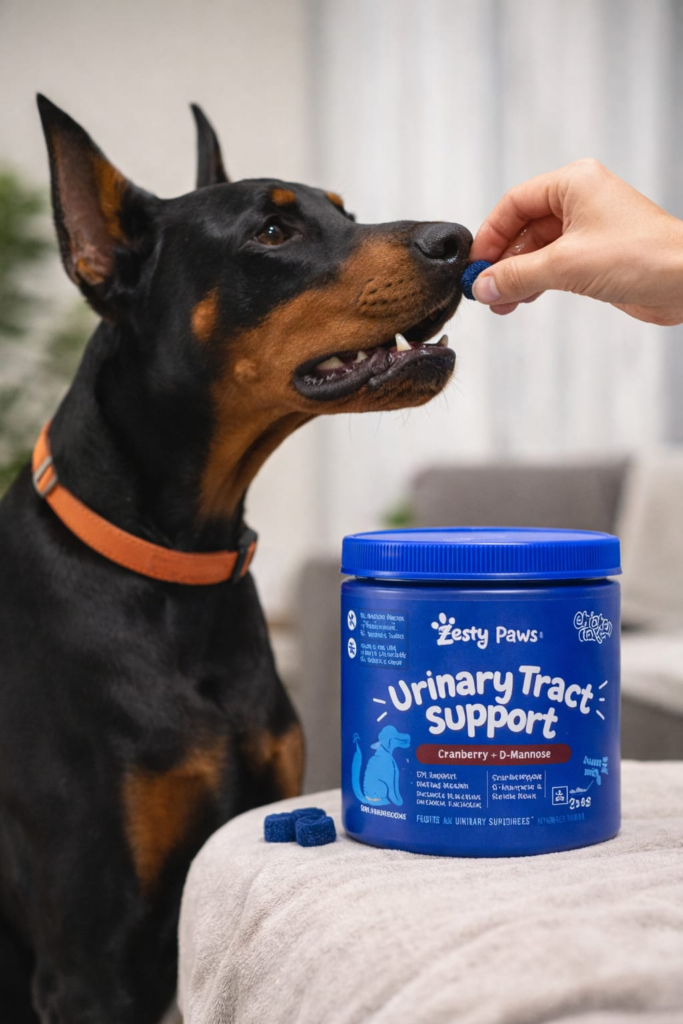
Zesty Paws Urinary Tract Support integrated into a daily urinary care routine for senior dogs.
Important note: This content is informational and does not replace veterinary guidance. A urinary support supplement is not a cure and should never delay diagnosis when symptoms are present.
Urinary comfort becomes a more delicate topic as dogs age. Even when a senior dog looks “fine,” subtle changes can start to appear: more frequent urges to urinate, occasional discomfort, changes in urine odor, mild accidents, restlessness at night, or a pattern that feels different from what the dog’s routine used to be.
In many real-world cases, what makes the biggest difference is not a single solution, but a structured routine: veterinary follow-up, hydration habits, diet decisions, environmental management (easy access to water and potty breaks), and, when appropriate, carefully chosen supplements that support the urinary tract.
This is where products like Zesty Paws Urinary Tract Support often enter the conversation—especially among people caring for senior dogs who need a practical, consistent, and well-tolerated daily support option.
View the full item information →https://amzn.to/4qKgIDh
What Zesty Paws Urinary Tract Support Is (and What It Is Not)
Zesty Paws Urinary Tract Support is commonly positioned as a daily supplement that may help support urinary tract health and bladder comfort as part of a broader wellness routine.
It is not a medication. It is not designed to diagnose, treat, cure, or prevent disease. It also should not be framed as a “replacement” for veterinary care. The most responsible use is as a supportive tool—especially for dogs with recurring urinary sensitivity or for older dogs whose overall resilience is not the same as it used to be.
Why Urinary Support Matters More in Senior Dogs
Senior dogs often experience changes that indirectly affect the urinary system:
- Reduced muscle tone, which can impact bladder control and posture for urination.
- Lower thirst drive (some older dogs drink less unless encouraged), which can reduce flushing of the urinary tract.
- Mobility limitations, making it harder to ask for the door or reach the designated potty area in time.
- Routine shifts (more rest, less movement), which can affect hydration patterns and bathroom timing.
Because of these variables, “small” urinary changes in a senior dog should be taken seriously. Support can be helpful, but the first priority is always clarity: understanding what is happening and why.
Common Signs That Deserve Veterinary Attention First
If any of the following appear, a vet visit is the correct first step—before adding any supplement:
- Blood in the urine
- Straining to urinate, crying, or visible discomfort
- Very frequent urination with small output
- Strong odor changes that are sudden and persistent
- Accidents that appear abruptly in a previously stable routine
- Excessive licking of the genital area
- Fever, lethargy, or reduced appetite
These signs can be associated with UTIs, bladder inflammation, stones/crystals, prostate issues (in males), endocrine conditions, or other causes that require professional assessment.
How a Urinary Supplement Can Fit Into a Practical Routine
When a veterinarian agrees that supplementation makes sense, urinary support products are usually most useful when combined with consistent daily actions:
- Hydration strategy: fresh water access, water bowls in more than one location, or hydration-friendly meals when appropriate.
- Bathroom schedule: more frequent potty breaks, especially for dogs with mobility limitations.
- Comfort management: easy-to-reach potty areas, non-slip surfaces, and reduced stress around routine changes.
- Diet alignment: any diet adjustments should be made with veterinary input, particularly if urinary concerns recur.
In other words: a supplement is not “the plan.” It is one piece inside a plan.
What People Usually Expect From Urinary Support Supplements
With responsible expectations, some owners report improvements such as:
- more stable urinary routines
- less apparent urgency
- better day-to-day comfort
- fewer “off” days when urinary sensitivity tends to appear
However, results vary. Senior dogs are highly individual, and urinary patterns can be influenced by multiple systems at the same time.
A Real-Life Reference Point: Routines Observed With GOE (Around 17 Years Old)
In routines observed with GOE—my senior dog—urinary support was not treated as a trend or a shortcut. It was approached as a responsible, guided adjustment within a broader senior-care framework.
The key lesson from that kind of long senior journey is simple: caring well is not about doing “more.” It is about doing what is appropriate, at the right time, with professional guidance, and with attention to the dog’s real limits.
Urinary support supplementation, when discussed and monitored properly, can be part of that approach—especially in older dogs whose routines benefit from stability and predictable daily support.
Who This Type of Urinary Support May Make Sense For
- Senior dogs with occasional urinary sensitivity (with vet awareness and monitoring)
- Dogs with mobility limitations that make bathroom timing harder
- Dogs whose routines suggest the need for additional daily urinary tract support
- Owners who want a practical supplement option to pair with hydration and routine management
If a dog is actively symptomatic, the correct move is diagnosis first. Supplements work best when they support a plan, not when they substitute for one.
How to Use It Responsibly
Before adding any urinary supplement, especially for a senior dog:
- Confirm the dog’s current health status with a veterinarian (especially if symptoms exist).
- Ask whether the supplement is appropriate alongside any medications or prescriptions.
- Follow label guidance and start with a consistent schedule.
- Observe changes calmly and consistently (bathroom frequency, comfort, appetite, energy).
Consistency matters more than intensity. A supplement should fit smoothly into the day, not create a complicated routine that is hard to maintain.
Important Disclaimer
Zesty Paws Urinary Tract Support is a dietary supplement. It is not intended to diagnose, treat, cure, or prevent any disease. Individual results may vary.
Always consult a qualified veterinarian or healthcare professional before starting any supplement, especially if your dog is a senior, has a medical condition, or takes prescription medications.
Other urinary support options worth reviewing: some dogs may respond better to different formulations, depending on their routine, tolerance, and veterinary guidance.
Check the recommended product →https://amzn.to/4jCScBN
Related Reading
If you’d like to keep building a consistent senior-dog routine, this complementary article may help:
👉 https://logicalbark.com/hydration-in-senior-dogs-goes-70-sips-%f0%9f%90%be/
Final Thought
Urinary support for senior dogs is not about promises. It is about practical care. When a supplement is selected responsibly—paired with hydration habits, stable routines, and veterinary guidance—it can contribute to a more comfortable daily experience for an older dog.
In senior care, the goal is rarely “perfect.” The goal is better days, built with calm decisions, consistent routines, and respect for what the dog actually needs.

Senior dog resting among flowers, reflecting a calm, healthy environment and supportive daily routines
You might enjoy


Lusiane Costa is a digital writer with degrees in Marketing and English Literature.
Creator of Latido Lógico and Logical Bark, she develops evidence-based content on canine aging, wellness, and senior-dog health.
The project was inspired by Goe — a senior dog whose longevity and resilience shaped a grounded, compassionate view on the challenges of aging in pets.
Each article reflects her commitment to transforming real experiences into accessible knowledge, helping owners understand, prevent, and care better for their animals at every stage of life.
Goe remains the heartbeat of this project.