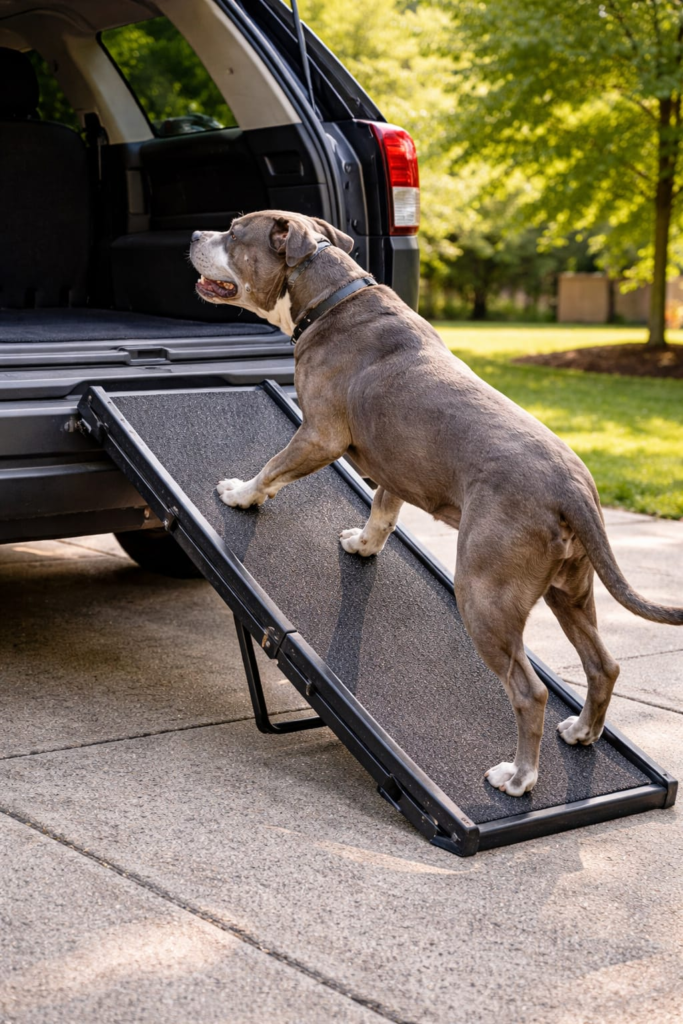
Why dogs have difficulty climbing stairs: a ramp can help senior dogs enter the car more safely and reduce pressure on their joints
Many dog guardians begin to notice small changes as their dogs grow older. One of the most common concerns appears when a dog suddenly hesitates before climbing stairs. In some cases, the dog may stop using stairs completely or show signs of discomfort when trying.
This situation often raises an important question: why dogs have difficulty climbing stairs? Understanding the possible reasons can help guardians respond with care and provide better support for their companions.
Natural aging and joint changes
As dogs age, their bodies naturally go through changes that can affect mobility. The joints may become less flexible, cartilage may wear down gradually, and muscles may lose strength over time.
Because climbing stairs requires coordination, balance, and strength in the legs and hips, even small changes in mobility can make this activity more difficult.
Some common signs guardians may notice include:
- hesitation before climbing stairs
- walking more slowly than usual
- difficulty getting up after resting
- avoiding stairs completely
These changes do not always indicate a serious problem, but they should be observed carefully.
Joint discomfort and mobility limitations
One of the most common reasons why dogs have difficulty climbing stairs is joint discomfort. Conditions such as arthritis, hip dysplasia, or general joint wear associated with aging can make movements that were once simple more challenging.
Climbing stairs requires the dog to lift its body weight repeatedly, which can place additional pressure on joints that are already sensitive. Because of this, many dogs prefer to avoid stairs when they start experiencing discomfort.
See complementary information →https://logicalbark.com/what-is-aging-alongside-a-dog-for-16-years/
Muscle strength and balance
Another factor that can influence stair climbing is muscle strength. Older dogs may experience gradual muscle loss, which can affect their ability to push themselves upward.
Balance also plays an important role. Dogs rely on coordination between their legs and core muscles to climb stairs safely. When that coordination becomes weaker, stairs can feel unstable or risky.
Environmental factors
Sometimes the difficulty is not only related to the dog’s body but also to the environment. Stairs that are slippery, narrow, or steep can increase the effort required to climb them.
In these situations, simple adjustments at home may help reduce the challenge for the dog.
A practical example from daily life
In contexts similar to what GOE experienced, mobility changes became noticeable over time. One of the situations that required adaptation involved getting into the car for veterinary visits.
Because jumping into the vehicle became difficult, a ramp was introduced to make the movement safer and more comfortable. Instead of forcing the dog to jump or climb, the ramp allowed gradual walking into the car.
This small environmental adjustment helped reduce strain on the joints and made transportation to veterinary appointments much easier.
How ramps can help dogs
Ramps are often recommended when dogs begin to show difficulty climbing stairs or jumping into elevated spaces such as cars, sofas, or beds.
The advantage of a ramp is that it distributes the effort more evenly across the dog’s body. Instead of lifting the entire body weight in a vertical movement, the dog walks along a gentle incline.
This can help reduce pressure on sensitive joints and provide more stability during movement.
View this suggested option →https://amzn.to/40in0z1
When to seek veterinary guidance
If a dog suddenly develops difficulty climbing stairs, it is important to observe other possible signs, such as:
- limping
- reduced appetite
- reluctance to move
- changes in posture
A veterinarian can evaluate whether the difficulty is related to joint health, muscle condition, or another underlying issue.
Supporting mobility in aging dogs
As dogs grow older, maintaining mobility becomes an important part of overall care. Some strategies that may help include:
- providing comfortable resting areas
- encouraging light and regular movement
- adjusting the environment with ramps or supportive surfaces
- following veterinary recommendations
Small changes in daily routines can make a significant difference in preserving comfort and independence.
Conclusion
Understanding why dogs have difficulty climbing stairs helps guardians respond with patience and attention. In many cases, the difficulty is related to natural aging and joint changes.
By observing the dog’s behavior and making thoughtful adjustments to the environment, it is possible to maintain mobility and improve comfort during later stages of life.
Simple solutions, such as ramps, gentle routines, and veterinary follow-up, can support a dog’s quality of life and help them move with more confidence and ease.
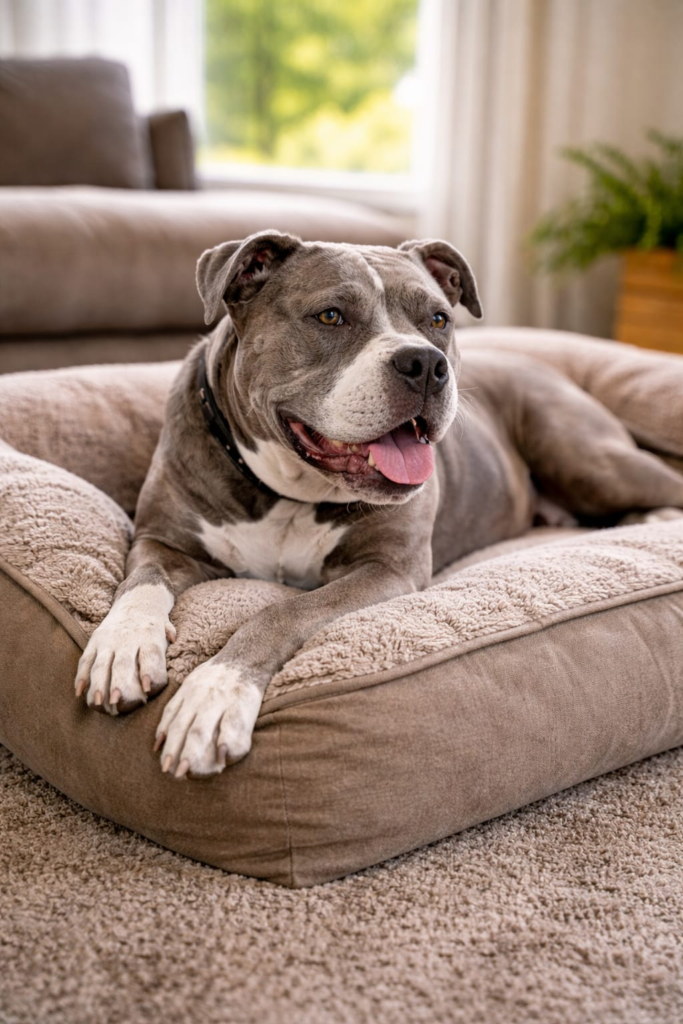
After using supportive tools like ramps, senior dogs often feel more comfortable and can rest calmly after movement
You may also like


Lusiane Costa is a digital writer with degrees in Marketing and English Literature.
Creator of Latido Lógico and Logical Bark, she develops evidence-based content on canine aging, wellness, and senior-dog health.
The project was inspired by Goe — a senior dog whose longevity and resilience shaped a grounded, compassionate view on the challenges of aging in pets.
Each article reflects her commitment to transforming real experiences into accessible knowledge, helping owners understand, prevent, and care better for their animals at every stage of life.
Goe remains the heartbeat of this project.