February 24, 2026
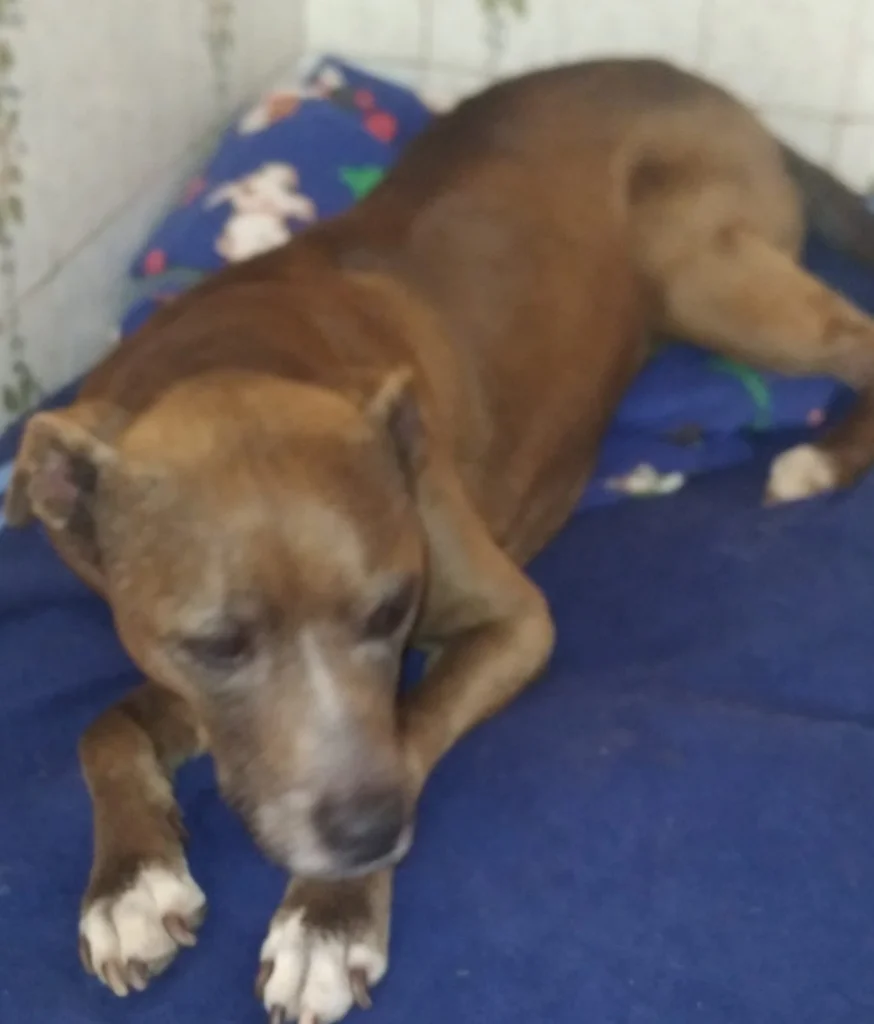
That was the place he turned into his point of reference. Understanding why an elderly dog starts choosing one spot in the house changes the way we care.
At a certain stage of aging, something shifts in the dynamics of the home. Why does an elderly dog start choosing one specific place to stay?
It is not a sudden movement. It is not abandonment of routine. It is a gradual, concrete alteration. Space begins to carry a different meaning.
Many guardians ask themselves: why does an elderly dog start choosing specific places? Is it isolation? Discouragement? Weakness? Or simply a phase?
With my senior dog, Goe, this change happened little by little. For many years, he lived mostly in the external area of the house. That was his preferred territory. However, as time progressed, he began to remain more inside. Not because of immediate incapacity, but due to care adjustments and his own choice.
When Space Begins to Represent Safety
With aging, a dog reorganizes priorities. Room temperature becomes more relevant. Flooring begins to influence joint comfort. Human traffic may become tiring. Proximity to family gains value.
He started to prefer a room near the kitchen. There was moderate movement there, familiar scents, and predictable routine. Gradually, that space became his reference point.
It was also the area where he ate, where he received his supplements, and where recommended care took place. Keeping everything close made the routine easier and reduced unnecessary movement.
Why does an elderly dog start choosing one spot in the house? Often, it is connected to sensory stability and predictability. Aging alters auditory perception, vision, and proprioception. Remaining in a fixed point reduces cognitive and physical effort.
Understand which supplements became part of his routine, under veterinary guidance, alongside the meals prepared in that same space: https://amzn.to/4s6Q4VI
Age or Limitation?
It is common to think a dog stays in the same place because he can no longer walk. In some cases, there may indeed be physical limitation. In others, it is energy conservation. The path to another room requires greater calculation. The decision becomes functional: “Is it worth moving?”
With my elderly dog, who reached 16 years of age, movement still existed. He stood up to eat, followed the sounds of the house, walked when necessary. But he returned to the chosen corner. That was where he seemed to feel balanced.
The Role of Treatments and Routine
There were phases when complementary care became integrated into the routine. After chromotherapy sessions, which he received calmly, it was noticeable that he sought his space even more. It was not dramatic exhaustion. It was reorganization. His body adjusted to the stimuli and requested pause.
The chosen corner became a recovery point. Predictable environment, familiar flooring, controlled noise. An aging organism responds better when the environment does not demand constant adaptation.
Check another text that complements this topic →https://logicalbark.com/what-senior-dogs-feel-emotional-signs-and-how-to-interpret-them/
Behavioral Aspects of Aging
An elderly dog starts choosing one spot in the house also due to emotional factors. Proximity to human routine can offer security. Remaining near the kitchen, for example, keeps him connected to schedules and family movement.
In addition, aging reduces exploratory curiosity. The need to patrol decreases. Territorial instinct softens. The focus becomes comfort.
- Search for more stable surfaces;
- Preference for locations with balanced temperature;
- Lower tolerance for abrupt environmental changes;
- Valuing proximity to familiar people;
- Reduced need for constant exploration.
When to Be Concerned
Although choosing a corner may be part of natural aging, some signs require attention:
- Persistent refusal to stand;
- Significant loss of muscle mass;
- Evident pain when moving;
- Abrupt behavioral change.
When the pattern changes suddenly or accompanies other symptoms, veterinary evaluation becomes necessary. Not every preference for a single location represents age alone.
What I Learned from Observing
It took me time to understand that he was not isolating himself. He was choosing. The difference between those two interpretations changes everything. Choosing a place is an act of autonomy. Even with limitations, there was still decision.
I learned to respect that space. I adjusted the environment. I kept the area comfortable. I avoided unnecessary movement. I began to sit near him at certain moments of the day. The house reorganized itself around his new preference.
Aging is not disappearing from environments. It is redefining how to occupy them.
The Meaning of All This
To live and age alongside a dog is also to age humanly with purpose and meaning. Daily coexistence, adaptations, and care transform us internally. Life beside them is always better because they teach us to slow down and to observe more attentively.
Goe did not merely accompany my days — he redefined them. Each shared phase carried learning. There is nothing more enriching than crossing time alongside a being who trusted us entirely.
There is a meaning to life and a profoundly enriching sense in aging alongside a dog. Understanding this changes the way we move through each stage marked by a great shared history.
Disclaimer: This content is for informational purposes only and does not replace the guidance of a veterinarian. In the presence of persistent signs of pain or abrupt behavioral change, always seek professional evaluation.
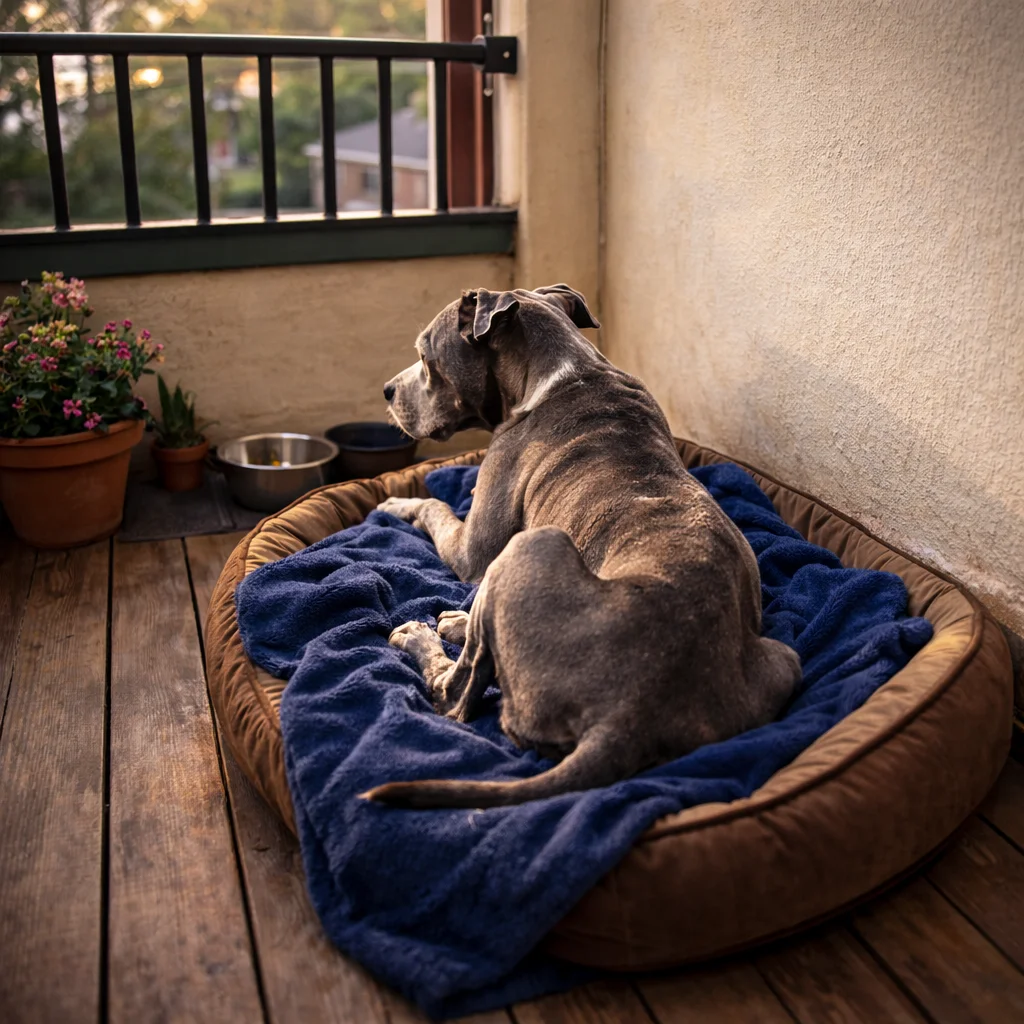
With time, a dog begins to choose his preferred corners — places where he finds comfort.
You may also like

Lusiane Costa is a digital writer with degrees in Marketing and English Literature.
Creator of Latido Lógico and Logical Bark, she develops evidence-based content on canine aging, wellness, and senior-dog health.
The project was inspired by Goe — a senior dog whose longevity and resilience shaped a grounded, compassionate view on the challenges of aging in pets.
Each article reflects her commitment to transforming real experiences into accessible knowledge, helping owners understand, prevent, and care better for their animals at every stage of life.
Goe remains the heartbeat of this project.