March 11, 2026
Why does a dog stare at its owner?
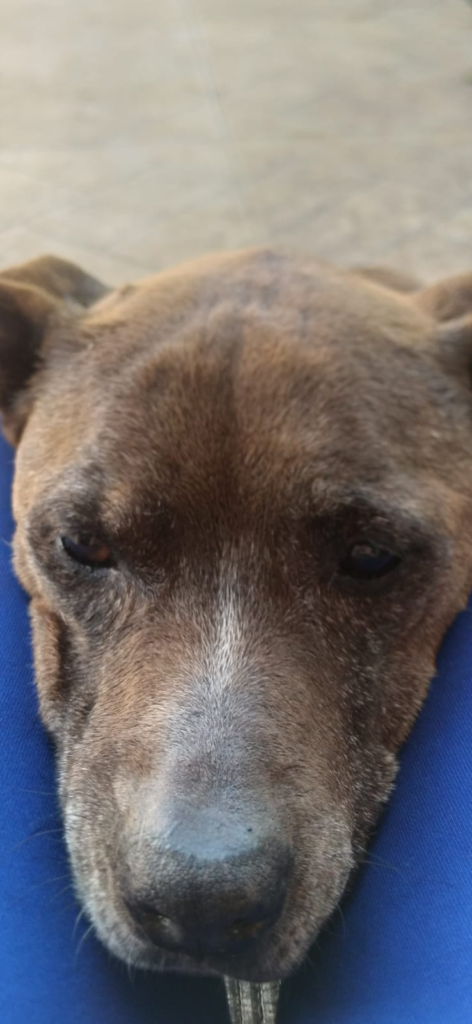
GOE’s attentive gaze
Among the behaviors that most intrigue dog owners is that moment when a dog simply stops and looks at a person for a prolonged time. Often the owner may be sitting, reading, working, or just resting, and suddenly notices the dog watching attentively, almost as if trying to communicate something.
This behavior raises a very common question: why does a dog stare at its owner? The answer may involve different aspects of canine behavior, communication between species, and even biological processes related to the emotional bond between dogs and humans.
Although each dog has its own way of interacting, several studies and behavioral observations suggest that eye contact between dogs and humans can carry important meanings.
Eye contact as a form of communication
For dogs, eye contact is an important communication tool. Unlike interactions between unfamiliar dogs — where direct staring can be interpreted as a challenge — between dogs and humans, eye contact often serves a much more social and affectionate function.
When a dog stares at its owner, it may be:
- waiting for guidance
- asking for attention
- trying to anticipate an action
- observing the person’s reaction
Dogs are extremely attentive to human signals. They observe facial expressions, body movements, and changes in tone of voice. The fixed gaze is often a way of following these signals.
The emotional bond between dogs and humans
One of the most interesting explanations for this behavior involves the emotional bond between dogs and their owners.
Scientific research suggests that when a dog looks at its owner and receives attention in return, there is an increase in oxytocin levels in both the dog and the person.
Oxytocin is known as the bonding hormone, because it is associated with feelings of affection, trust, and social connection. This same hormone is involved in the relationship between mothers and human children.
In other words, when a dog looks at its owner and attention is exchanged, the brain of both may release substances associated with strengthening the bond.
For this reason, that prolonged gaze is often not just curiosity — it may be part of the construction of a deep emotional relationship between the dog and the person.
Observation and learning
Dogs also learn a lot by observing. Over time, they begin to recognize patterns in the household routine.
When a dog stares at its owner, it may be trying to anticipate something that usually happens next, such as:
- feeding time
- the moment for a walk
- preparation to leave the house
- the start of playtime
With time, dogs learn to associate simple gestures with specific events. The attentive gaze may simply be a way of following these cues.
Request for attention or interaction
Another possibility is that the dog is seeking some form of interaction.
Some dogs stare at their owners when they want:
- affection
- to play
- to go for a walk
- to receive a treat
This type of behavior is especially common in dogs that have developed a very close relationship with their owners and have learned that eye contact often generates a response.
When the gaze appears during calm moments
There are also situations in which a dog looks at its owner without showing any urgency or specific request.
The dog simply stays nearby and observes calmly.
In experiences similar to what happened with GOE, for example, there were moments when he would simply watch quietly, especially after the daily care he received during the later stage of his life.
These moments of calm observation can be part of a very particular form of bond between the dog and the person who cares for it.
In some cases, the gaze seems to carry a dimension that is difficult to explain using only technical terms. It may simply be the dog’s way of remaining close, attentive, and connected to its owner.
Dogs also observe human emotions
Several studies indicate that dogs are capable of perceiving human emotional states.
They can identify changes in facial expressions, tone of voice, and even body posture. This means that they often observe people carefully when they notice some emotional shift in the environment.
For this reason, some dogs may stare when:
- the owner is sad
- the person is deeply focused
- there is a change of mood in the house
This kind of social sensitivity is one of the characteristics that made dogs such close companions to humans throughout history.
See a related article: https://logicalbark.com/goe-the-voice-that-inspired-logical-bark/
Every dog has its own personality
Although there are general explanations for this behavior, it is important to remember that every dog has its own personality.
Some dogs maintain eye contact frequently, while others are more discreet and observe more indirectly.
Factors that influence this behavior include:
- breed
- life history
- level of socialization
- previous experiences
- the relationship built with the owner
Therefore, when asking why a dog stares at its owner, the answer is often also found in the specific story of that relationship.
The gaze as part of daily companionship
Living with a dog means sharing a form of communication that goes beyond words.
Dogs communicate through gestures, body posture, tail movements, and also through their gaze.
In many homes, this eye contact becomes part of everyday life. The owner looks at the dog, the dog looks back, and this exchange becomes part of the routine.
It is not only a behavioral signal, but also a form of shared connection.
Beyond companionship and emotional bonding, caring for a dog also involves attention to health and comfort throughout life. In some situations, owners turn to nutritional supplements to support well-being and mobility, especially in older dogs.
Explore this practical option → https://amzn.to/46X3EmJ
Conclusion
The question why does a dog stare at its owner may have several answers. In some cases, the dog is seeking attention or anticipating an activity. In others, it may simply be observing the environment or maintaining social contact with the owner.
Research about oxytocin suggests that eye contact between dogs and humans may strengthen the emotional bond between the two species.
More than an isolated gesture, a dog’s gaze often becomes part of a relationship built through companionship, care, and trust.
And for many owners, these quiet moments of observation become one of the most meaningful aspects of life alongside their loyal companion.
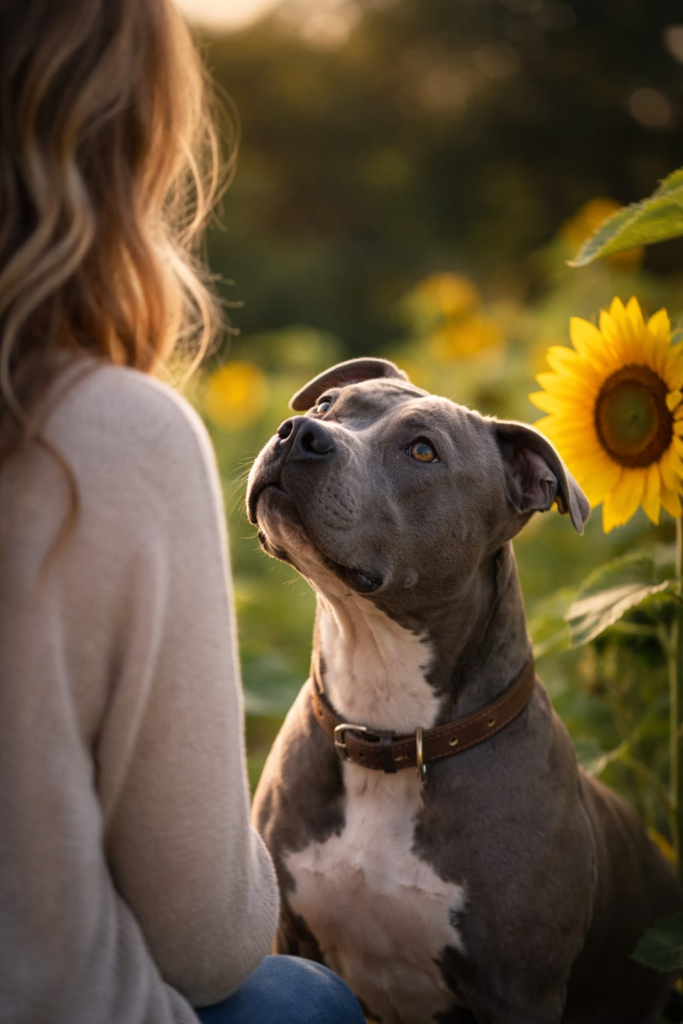
The gaze says everything 🐾
You may also like
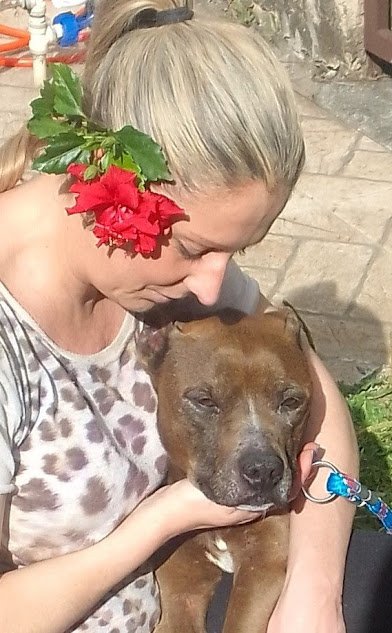

Lusiane Costa is a digital writer with degrees in Marketing and English Literature.
Creator of Latido Lógico and Logical Bark, she develops evidence-based content on canine aging, wellness, and senior-dog health.
The project was inspired by Goe — a senior dog whose longevity and resilience shaped a grounded, compassionate view on the challenges of aging in pets.
Each article reflects her commitment to transforming real experiences into accessible knowledge, helping owners understand, prevent, and care better for their animals at every stage of life.
Goe remains the heartbeat of this project.