February 13, 2026
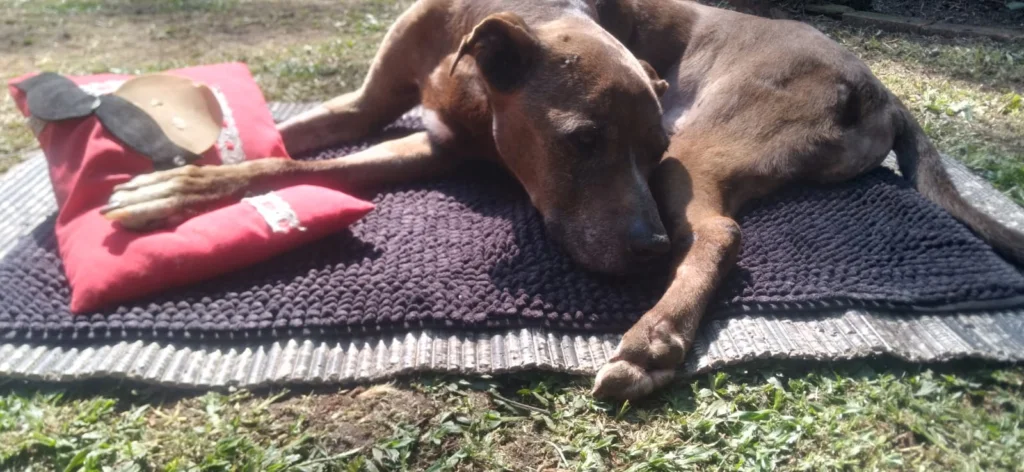
Why does a dog lick its paw – GOE observing his hind paw
Why does a dog lick its paw repeatedly, every day, even when there is no visible wound? This is a very common question. Constant licking can have multiple causes — skin irritation, allergies, stress, parasites — but it may also indicate joint pain or musculoskeletal discomfort, especially when the licking concentrates on one specific paw and is accompanied by changes in mobility.
When a dog keeps licking its paw, the behavior may function as an attempt to relieve internal sensations: inflammation, stiffness, discomfort when bearing weight, pain during movement, or overload of a joint. Careful observation of the context makes a difference: time of day, walking pattern, reaction when getting up, tolerance for stairs and play.
Why Does a Dog Lick Its Paw: Common Causes
Before concluding that joint pain is present, it is important to consider the most frequent causes of paw licking:
- Skin irritation (dermatitis, dryness, contact with cleaning products, grass, hot pavement).
- Allergies (food or environmental), often with itching in other areas.
- Parasites (fleas, mites), even when not easily visible.
- Small wounds (thorn, cracks, broken nail), sometimes difficult to identify.
- Anxiety and boredom, especially when licking appears during low-activity moments.
- Pain and inflammation in joints, tendons, or muscles, with licking as the “focus” of discomfort.
Among these, the joint hypothesis becomes stronger when licking persists for weeks, recurs in cycles, increases after walks, or appears alongside stiffness and subtle limping.
When Licking Points to Joint Pain
In many cases, the question why does a dog lick its paw finds its answer in a cause that is not visible on the skin. Joint changes often generate deep discomfort, and the dog may direct licking to the region closest to the pain. However, the paw is not always the exact site of the problem. Pain in the knee, hip, spine, or elbow may lead to weight compensation and eventually “show up” as licking of a paw.
Joint conditions most commonly associated with this pattern include:
- Osteoarthritis: progressive cartilage wear and joint inflammation.
- Dysplasia: hip or elbow alterations with long-term overload.
- Patellar luxation: knee instability, common in small dogs but possible in others.
- Ligament injuries (e.g., cruciate ligament): instability, pain, altered gait.
- Chronic overload: excess weight, slippery floors, frequent stairs, low muscle mass.
Physical and Behavioral Signs That Often Accompany It
Beyond licking, some signs tend to appear together. Observe carefully:
- Stiffness when getting up, especially after rest.
- Avoiding stairs or climbing slowly with pauses.
- Change in walking rhythm (shorter walks, more stops, reduced enthusiasm).
- Difficulty jumping onto the couch, bed, or into the car.
- Intermittent limping, especially after activity.
- Mood changes (irritation when touched, withdrawal, lower tolerance to handling).
- Altered posture (arched back, shifting weight off one paw).
When these signs appear alongside licking, they help clarify why a dog licks its paw and guide the need for clinical evaluation.
In Routines Observed with GOE
In routines observed with GOE, repetitive licking of one paw appeared as an early sign of discomfort. The skin seemed intact, but the pattern shifted: on days with greater stiffness, licking increased; on more stable days, it decreased. This type of fluctuation often occurs in joint conditions, in which effort, ambient temperature, sleep quality, and movement load influence well-being.
During veterinary follow-up for joint issues in the leg, licking helped indicate that discomfort persisted even without obvious limping. This type of observation does not replace veterinary consultation but improves the quality of the guardian’s report and speeds clinical investigation.
In joint support protocols supervised by a veterinarian, specific supplements aimed at cartilage and mobility were used, such as formulations based on chondroitin and glucosamine. These nutraceuticals are frequently indicated for dogs with joint overload, osteoarthritis, or chronic inflammatory processes.
See the recommended product → https://amzn.to/46s05or
How to Differentiate Allergy from Joint Pain
Some clues help distinguish the most common scenarios:
Allergy: itching in multiple areas (ears, armpits, belly), redness, bilateral licking, seasonal episodes, recurrent ear infections.
Joint pain: focus on one paw, stiffness when getting up, difficulty on stairs, worsening after exercise, discomfort when moving joints.
If doubt remains, veterinary evaluation becomes essential. Orthopedic examination and, when indicated, radiographs or other imaging help confirm the source of the problem.
When to Seek Veterinary Care
Seek evaluation without delay if there is:
- Persistent licking for more than 3–5 days without visible cause.
- Limping, significant stiffness, or refusal to bear weight.
- Pain upon touch, swelling, local heat, or shape alteration.
- Sudden appetite loss, lethargy, or vocalization during movement.
- Progressive worsening, even with rest.
In general, the earlier the cause is identified, the broader the management options (weight control, environmental adjustments, physiotherapy, proper analgesia, supplementation, and routine modifications).
Joint Supplementation: When It Makes Sense
If the answer to why does a dog lick its paw involves joint pain, a support strategy may include supplementation. It does not replace diagnosis or treatment but may contribute to managing joint wear and inflammation, especially when combined with weight control, safe flooring, and guided muscle strengthening.
Among the most commonly used compounds in joint support protocols, under veterinary guidance, are:
- Chondroitin and glucosamine: support for cartilage and joint structure.
- Type II collagen: support for joint health in some protocols.
- Omega-3: inflammatory modulation; selection depends on individual tolerance and composition.
- MSM: support for joint comfort in some cases.
Check this well-rated option → https://amzn.to/4cspDFu
Strategic supplement insertion (osteoarthritis/joints): if a joint supplement is already planned for use on your site, insert the link here, after this paragraph, with an objective and responsible sentence, without cure claims.
Example support sentence for CTA: “In joint support protocols, some guardians choose supplements aimed at cartilage and mobility, always under veterinary guidance and with progress monitoring.”
Quick Checklist: What to Observe Today
- When does the dog lick its paw? After walks? Upon waking?
- Is there stiffness when getting up?
- Is there mild limping or weight shifting?
- Has behavior changed (lower tolerance to touch, lower disposition)?
- Is there redness, cracks, or foreign material between the toes?
This checklist facilitates conversation with the veterinarian and avoids premature conclusions.
Frequently Asked Questions
Why does a dog lick its paw at night?
At night, the environment tends to be quieter, and the dog may focus more on physical discomfort. In joint conditions, discomfort may increase after accumulated movement during the day. It may also relate to boredom, anxiety, or allergy. The combination of signs defines the most likely hypothesis.
Why does a dog lick its paw and limp occasionally?
This intermittent pattern frequently appears in mild to moderate joint discomfort, especially when symptoms worsen after exercise. Orthopedic evaluation helps differentiate osteoarthritis, ligament injuries, and other causes.
Why does a dog lick its paw even without a wound?
Not all discomfort originates in the skin. Joint pain, deep inflammation, weight overload, and even referred pain may induce licking without visible external signs.
Conclusion
Why does a dog lick its paw? In many cases, the explanation does not lie in the skin but in internal discomfort. Repetitive licking may indicate joint pain, especially when it appears alongside stiffness, altered gait, difficulty on stairs, and behavioral changes.
Deepen your understanding → https://logicalbark.com/lolis-journey-ibd-in-dogs-and-when-the-gut-skin-and-joints-are-connected/
With careful observation, a structured report, and veterinary evaluation, it becomes possible to identify the cause more accurately and choose an appropriate management plan — including, when appropriate, responsible joint support and supplementation.
Rest after supplementation and a structured care routine contributes to improved recovery and overall balance.
You may also like

Lusiane Costa is a digital writer with degrees in Marketing and English Literature.
Creator of Latido Lógico and Logical Bark, she develops evidence-based content on canine aging, wellness, and senior-dog health.
The project was inspired by Goe — a senior dog whose longevity and resilience shaped a grounded, compassionate view on the challenges of aging in pets.
Each article reflects her commitment to transforming real experiences into accessible knowledge, helping owners understand, prevent, and care better for their animals at every stage of life.
Goe remains the heartbeat of this project.