March 16, 2026
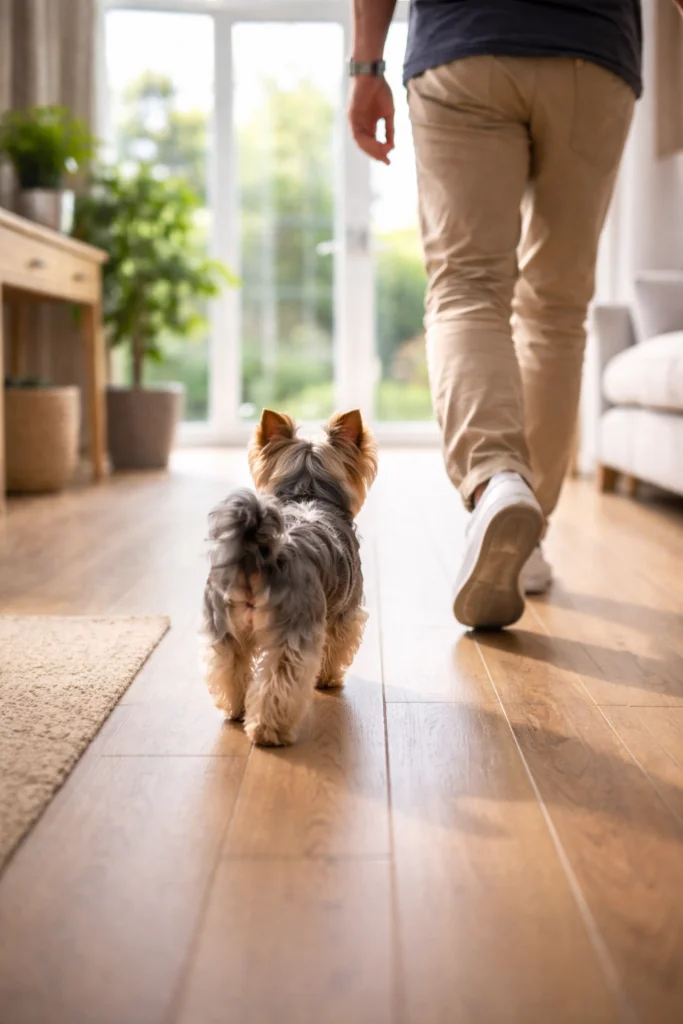
Why does a dog follow its owner around the house? This common behavior is usually linked to bonding and daily companionship between dog and owner.
Many owners notice this behavior in everyday life: they get up to go to the kitchen, the bedroom, the bathroom, or the laundry room, and the dog goes right behind them. In some homes this happens all the time, which leads to a very common question: why does a dog follow its owner around the house?
Most of the time, this behavior is natural and is part of the way dogs live with people. The dog observes the routine of the house, follows the owner’s movements and, over time, learns that following the person who cares for them may mean closeness, attention, security, and even the expectation of some pleasant activity.
Although each dog has its own personality, following the owner around the house is usually linked to bonding, curiosity, learning the household routine and, in some cases, the search for stimulation. Understanding the context in which this happens helps to interpret the behavior more accurately.
Bonding and daily coexistence
One of the most common reasons for understanding why a dog follows its owner around the house lies in the bond built over time through coexistence. Dogs are highly social companions and tend to orient themselves around the people they live with.
In an experience observed throughout my life with GOE, my own dog, already elderly and undergoing health care, used to stay nearby while I carried out my activities at home. Even when I was working or moving from one room to another, he would often come close, walk around me and then settle again near me. It is possible that, at that stage of life, his own physical condition and need for security contributed to his desire to remain even closer to me, something that is also observed in many dogs when they are aging or going through more sensitive phases.
In practice, the owner becomes a reference point for the dog. It is the owner who offers food, organizes the routine, takes the dog for walks, calls them for interactions, and participates in moments of care. For this reason, following the person around the house may be a simple way of maintaining closeness within this nucleus of coexistence.
Social instinct and group behavior
Dogs descend from species that live in groups and, for this reason, tend to orient themselves according to the movement of their peers. Even in the domestic environment, this social component remains present.
When the owner moves around, the dog may interpret this movement as something worthy of attention. Instead of remaining isolated in another room, the dog prefers to follow in order to understand what is happening.
This behavior may be even more evident in dogs that spend a lot of time close to the family and have become accustomed to taking part in all the small movements around the house.
Curiosity and anticipation of routine
Another frequent reason for explaining why a dog follows its owner around the house is curiosity. Dogs observe patterns with great precision. They quickly learn what certain gestures mean: opening cabinets, picking up keys, walking to the kitchen, approaching the door, or handling containers and bags.
Over time, the dog starts to associate these movements with important events, such as:
- meal time
- walk time
- playtime
- receiving treats
- leaving the house
For this reason, following the owner may simply be a way of anticipating what is going to happen next.
Seeking attention and interaction
In some cases, this behavior may also indicate a search for contact. The dog learns that, by staying close to the owner, they have a greater chance of receiving affection, conversation, play, or some other kind of response.
This usually happens especially with very interactive dogs, who enjoy constant company and associate movement around the house with opportunities for bonding.
If the owner frequently talks to the dog, offers treats, or starts games when the dog approaches, this pattern tends to become stronger.
When the behavior is reinforced without noticing
Many times, the owner themselves reinforces the behavior without noticing. This is not necessarily a problem; it simply helps explain why it becomes so frequent.
For example, if every time the dog follows the person to the kitchen they receive a piece of food, a treat, or special attention, they learn that following the owner may bring some reward.
This type of learning is part of daily coexistence and helps explain why some dogs become even more attentive to movements around the house.
Treats, education, and positive association
Treats can play an important role in a dog’s education, especially when used with discretion. They help mark desired behaviors, make training easier, and make interaction more predictable for the dog.
In the context of following the owner around the house, treats should not be offered all the time in a random way, because this can cause the dog to start following every step simply waiting for food. However, when used strategically, they can help teach commands, remaining in place, returning to the bed, or waiting calmly during certain moments of the routine.
For this reason, many owners look for training treats, with a small size and good acceptance, to use in everyday educational situations.
Some owners also take advantage of these moments of closeness to reinforce positive behaviors. Small rewards or functional supplements may help stimulate training and keep the dog engaged in interactions with the owner. When used with balance, these resources become part of a healthy routine of coexistence and learning.
Check out this well-rated option → https://amzn.to/4s9TJCH
When following the owner may indicate difficulty being alone
Although most of the time this behavior is normal, it is worth observing whether it comes together with signs of discomfort when the owner moves away.
If the dog follows the person around the house, cries when a door is closed, becomes very agitated when losing visual contact, or shows intense anxiety when left alone, there may be a greater difficulty in tolerating brief separations.
In these cases, the ideal approach is to observe the context carefully and gradually work on the dog’s autonomy, with a predictable routine, environmental enrichment, and appropriate stimulation.
How to differentiate healthy closeness from excessive dependence
Not every dog that follows the owner is suffering. In many homes, this is part of a perfectly balanced coexistence. The difference lies in observing whether the dog:
- can relax in another room
- sleeps calmly when the owner is not nearby
- remains well during short moments of separation
- continues eating, playing, and resting normally
If these aspects are preserved, the behavior tends to represent only bonding, habit, and participation in the domestic routine.
What to do if you want to reduce this behavior
If the owner wants the dog not to follow every movement, it is possible to work on this gently and consistently. Some measures may help:
- teach the dog to remain in their own bed for a few minutes
- offer stuffed toys or distractions at specific moments
- reward short periods of calm in another place in the house
- avoid turning every trip to another room into an opportunity for food
These strategies help the dog develop more autonomy without breaking the bond built with the owner.
Explore related content → https://logicalbark.com/why-does-an-elderly-dog-start-choosing-one-spot-in-the-house-what-i-observed-in-my-dog-who-reached-16-years-of-age/
Conclusion
The question why does a dog follow its owner around the house usually finds its answer in the bond itself between dog and owner. Most of the time, this behavior is linked to coexistence, the habit of following the routine, curiosity, and the search for closeness.
There may also be an expectation of interaction, learned reinforcement over time, and interest in the events taking place around the house. In some cases, observing this behavior more carefully even helps adjust the routine, the use of treats, and the dog’s education in a more balanced way.
More than an isolated gesture, following the owner around the house reveals how dogs build deeply connected relationships with the people they live with.
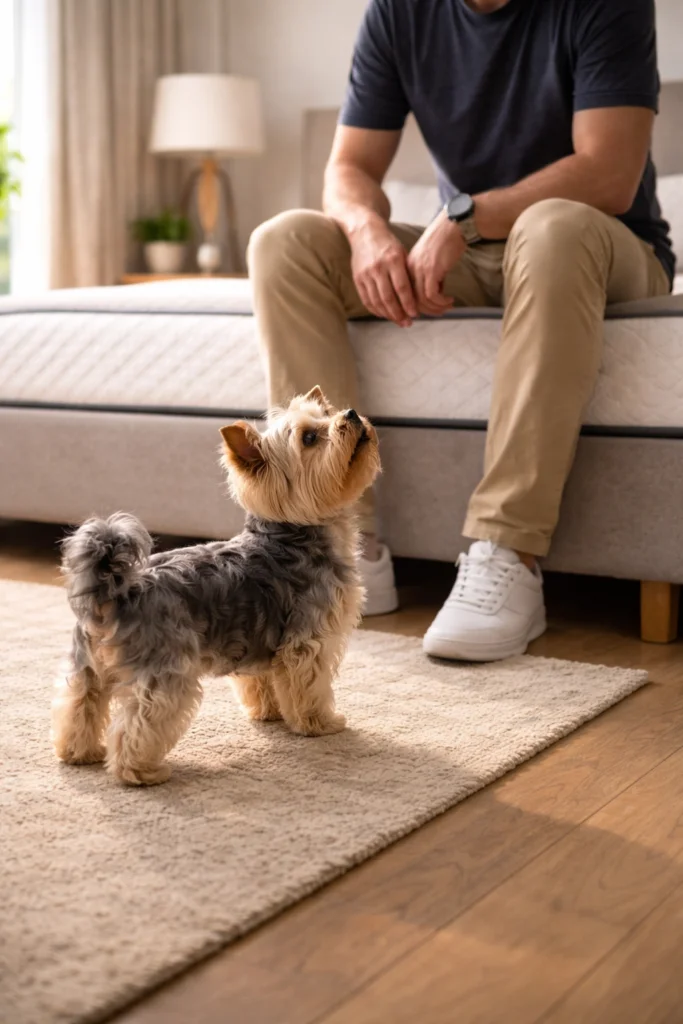
Dog and owner: closeness that reveals bonding and coexistence.
You may also like

Lusiane Costa is a digital writer with degrees in Marketing and English Literature.
Creator of Latido Lógico and Logical Bark, she develops evidence-based content on canine aging, wellness, and senior-dog health.
The project was inspired by Goe — a senior dog whose longevity and resilience shaped a grounded, compassionate view on the challenges of aging in pets.
Each article reflects her commitment to transforming real experiences into accessible knowledge, helping owners understand, prevent, and care better for their animals at every stage of life.
Goe remains the heartbeat of this project.