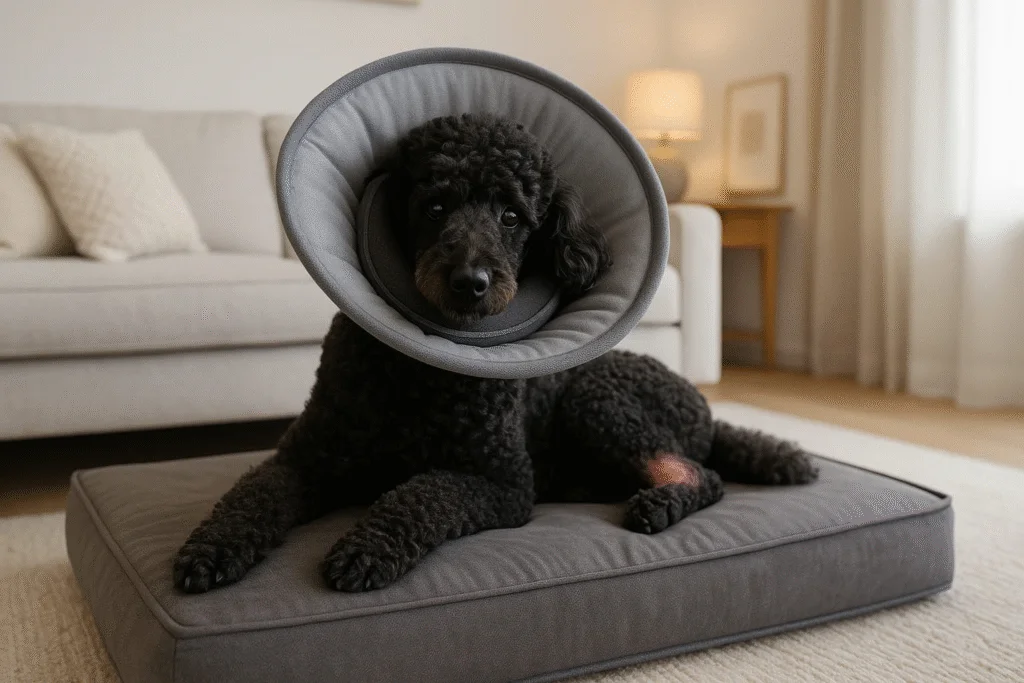
Skin complications in senior dogs: protecting the skin after surgery.
Senior dogs who undergo major surgeries require very careful post-operative follow-up. Beyond the natural demands of wound healing, aging skin tends to be thinner, more sensitive, more prone to irritation, and it can respond differently during recovery.
Goe, my 16-and-a-half-year-old dog, is a real example of this experience. He surprised everyone by recovering remarkably well from an extensive surgery, keeping vitality, appetite, and energy above what was expected. However, even with an overall positive clinical course, a mild skin complication appeared around the stitches—unexpected, but common in senior dogs.
This report aims to inform guardians facing similar situations, showing that even when everything is done correctly, skin changes may occur and require attention, but they do not necessarily indicate a serious problem.
Why do skin complications occur more often in senior dogs?
Aging causes progressive changes in a dog’s skin. The main vulnerabilities include:
- Thinner skin, more susceptible to micro-injuries;
- Reduced elasticity, which can slow healing;
- Greater vulnerability to inflammation;
- Slower immune response;
- Higher risk of irritation from bandages, micropore tape, gauze, or excessive movement.
Because of this, even when surgery goes well, the skin around stitches or staples may react with redness, irritation, swelling, or light bleeding. These signs do not necessarily mean infection, but they do suggest the skin is sensitive and needs extra care.
How skin changes can appear after surgery
Even with proper hygiene, what we often call a post-operative skin reaction can occur, when the skin responds with irritation, itching, or increased sensitivity.
In Goe’s case, the area was protected, cleaned appropriately, dressed lightly, and kept well ventilated. Still, when he moved to urinate, friction against the dressing caused slight bleeding. The irritation intensified mainly due to movement and the difficulty of keeping the area dry and stable.
These issues are considered natural setbacks during healing in senior dogs. They do not mean the guardian did something wrong—rather, they indicate the need to adjust care and maintain monitoring.
Care routine recommended by professionals
With veterinary support, we followed these guidelines:
1) Proper cleaning (once a day, or as directed)
- Use a sterile aqueous solution (such as saline or another solution recommended by the veterinarian);
- Apply with clean gauze, without rubbing directly on the stitches;
- Dry gently using dry gauze only.
2) Light, breathable protection dressings
- Use clean gauze with minimal lint;
- Secure with micropore tape without tightening;
- Avoid thick cloths, loose cotton, or fabrics that retain moisture.
3) Replace immediately if it gets wet
Wet dressings increase irritation, skin maceration, and discomfort.
4) When irritation becomes moderate
Veterinarians may recommend water-based healing ointments or hydrogel, or prescribe antibiotics when needed.
There are different types of gauze and dressings on the market—some simpler for everyday use, and others more reinforced, with bordered edges, adhesive protection, or skin-comfort technologies. Knowing these options helps you choose the most appropriate material for each care need.
Functional option: https://amzn.to/4pcIebs
Premium option: https://amzn.to/3Y9729h
When irritation requires immediate veterinary evaluation
Some signs are considered warning signals and require prompt contact with your veterinarian:
- Yellow discharge or foul odor;
- Bleeding that persists after minor movement;
- Skin that is very red, warm, or firm around the stitches;
- Constant licking or intense discomfort;
- Fever, lethargy, or loss of appetite.
Protective collars (Elizabethan or inflatable) help prevent licking and friction in the operated area, protecting healing in a safe and comfortable way. See some options for dogs in recovery ➤ https://amzn.to/4pWsQ4d
In Goe’s case, there was localized, mild irritation, with no signs of systemic infection. With correct cleaning and dressing adjustments, the situation stabilized.
The importance of respecting a senior dog’s limits
Long-lived dogs—even strong and resilient ones like Goe—can respond differently to procedures. Healing tends to be slower, and the skin may react even when all care is done properly.
Simple movements—such as standing up, shifting to lie down, or walking to urinate—can disrupt the dressing and cause micro-traumas, especially in the first days.
That’s why the main rule is to observe, adapt the environment, keep the routine calm, and avoid excessive bandage changes. In many cases, less is more: light protection, appropriate hygiene, and daily monitoring.
To go deeper into this kind of care, see how to prepare the home in a safe and comfortable way for senior dogs, supporting recovery and mobility with quality: https://logicalbark.com/how-to-prepare-your-home-for-a-senior-dog/
When experience helps other guardians
Sharing real experiences like Goe’s helps other guardians understand that:
- Not every healing process is linear;
- Skin complications in senior dogs are common and often mild;
- The key is to act calmly, follow professional guidance, and keep consistent attention;
- Advanced age does not prevent good recovery—it simply requires more time, patience, and veterinary support.
Conclusion
Skin complications in senior dogs after major surgeries can happen and are often manageable with simple care, continuous observation, and veterinary follow-up. Aging skin tends to react, but with attention and appropriate management, recovery can remain stable.
In Goe’s case, despite the mild and unexpected irritation around the stitches, he continues doing well—with vitality, preserved appetite, and clinical support. This shows that small setbacks do not invalidate post-operative success; they simply require careful adjustments.
Most importantly, do not panic when skin changes appear. Understand that they can be part of the process—especially when caring for senior, brave, long-lived dogs.

Senior dog resting at sunset
You might enjoy
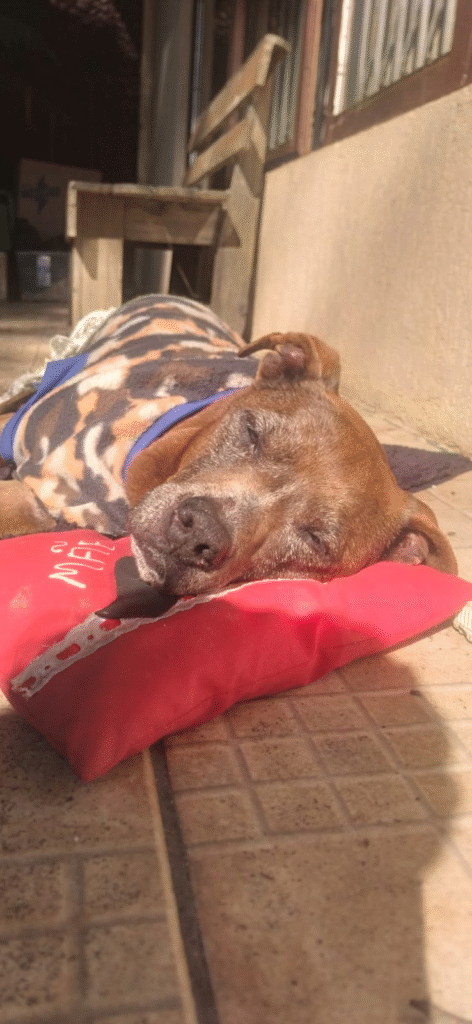

Lusiane Costa is a digital writer with degrees in Marketing and English Literature.
Creator of Latido Lógico and Logical Bark, she develops evidence-based content on canine aging, wellness, and senior-dog health.
The project was inspired by Goe — a senior dog whose longevity and resilience shaped a grounded, compassionate view on the challenges of aging in pets.
Each article reflects her commitment to transforming real experiences into accessible knowledge, helping owners understand, prevent, and care better for their animals at every stage of life.
Goe remains the heartbeat of this project.