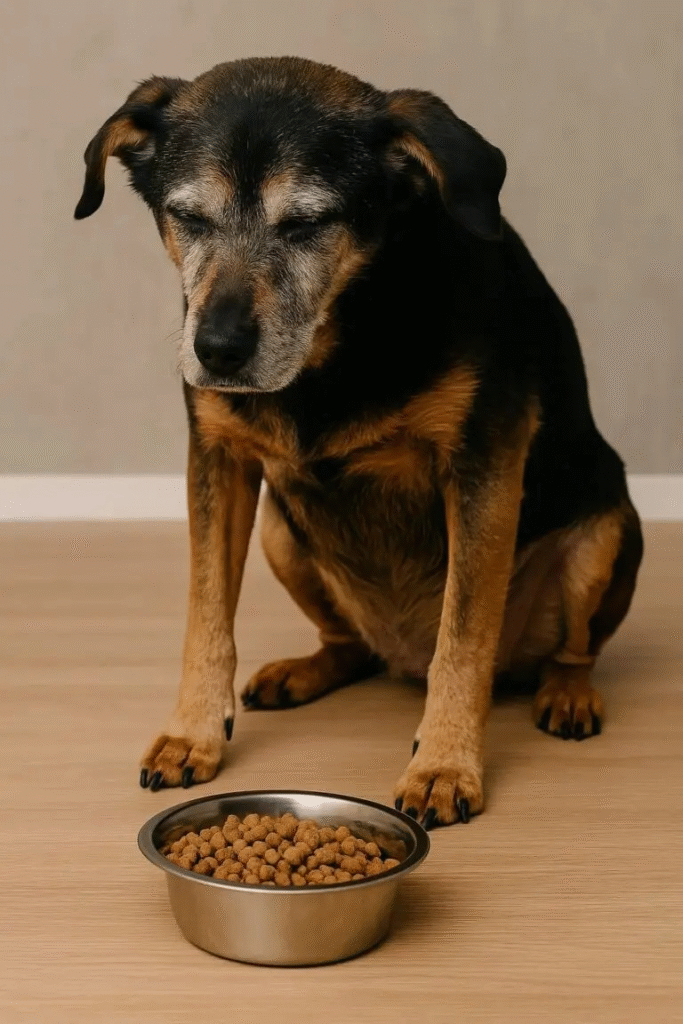
Senior dog showing signs of loss of appetite
When our four-legged friends grow older, some changes in their behavior can be concerning. One of the most common is loss of appetite. If your senior dog doesn’t want to eat, it’s important to know that there are multiple causes — and some require immediate veterinary attention. In this article, we’ll explain the 7 most common reasons for appetite loss in senior dogs and how you can help your pet eat better and live with more quality of life.
- Natural Age-Related Changes
- As dogs age, their metabolism slows down, and they tend to feel less hungry.
- They sleep more and spend less energy.
- Their sense of smell and taste may weaken, making food less appealing.
How to help:
- fer smaller, more frequent meals.
- Choose senior dog food or wet food to stimulate appetite.
Discover healthy food options → https://amzn.to/4324koC
- Dental Problems
Tooth pain or inflamed gums may cause your dog to avoid chewing.
Tartar buildup, broken teeth, or even tooth loss are common in senior dogs.
How to help:
- Schedule a veterinary dental check-up.
- Offer wet food or soften dry kibble with warm water.
Explore senior dog food options →https://amzn.to/3KwUrcp
- Chronic Diseases:
Senior dogs may develop chronic conditions such as:
- Kidney disease
- Liver disease
- Diabetes
- Heart problems
- All of these may contribute to loss of appetite.
How to help:
- Schedule a vet appointment and ask for routine tests.
- Follow the prescribed therapeutic diet strictly.
- Pain or Physical Discomfort
Joint pain (such as arthritis) or spine problems can reduce interest in food.
How to help:
- Watch if your dog shows difficulty standing up or walking.
- Provide orthopedic beds and ask your vet about joint supplements.
Find a supportive bed that helps your dog rest better → https://amzn.to/4pUNDFs
- Stress or Environmental Changes
Senior dogs can become more sensitive to changes such as:
Moving to a new home
Absence of familiar people
Arrival of new pets
How to help:
- Keep a predictable routine.
- Provide a quiet and safe spot for meals.
- Medications and Side Effects
Some medications may cause nausea or alter taste.
How to help:
- Tell your vet about any changes in appetite after starting medication.
- Ask if appetite stimulants or supplements are recommended.
- Gastrointestinal Problems
Vomiting, diarrhea, or nausea may lead your dog to avoid food.
How to help:
- Observe symptoms and seek veterinary care immediately.
- Offer light, small meals as recommended by your vet during recovery.
Explore more on this subject → https://logicalbark.com/healthy-homemade-recipes-for-senior-dogs-nutrition-and-flavor-for-your-pets-golden-years/
Additional Considerations
Many pet parents worry when they notice changes in their senior dog’s eating habits. Sometimes, appetite loss is simply part of the natural aging process, but it can also indicate underlying health problems.
Take a look at the Essential Care post: https://logicalbark.com/essential-care-for-senior-dogs/
Good practices include offering easily digestible foods adapted to the dog’s age, always prioritizing senior formulas. Adding small portions of natural foods (approved by a veterinarian) can also stimulate interest and make the diet more varied and nutritious.
Another important factor is the environment. A senior dog may refuse food if stressed or uncomfortable. Keeping a calm, clean space with regular feeding times helps reinforce eating habits. Light exercise, such as short walks, also supports overall well-being and may encourage appetite.
Conclusion
Understanding why a senior dog eats less is key to ensuring quality of life at this stage. Careful observation, combined with dietary adjustments and a comfortable environment, can make all the difference.
If appetite loss persists, seeking veterinary guidance is always the most responsible step, guaranteeing health, longevity, and well-being for your loyal companion.
In summary, understanding why a senior dog not eating is essential to ensure health and well-being. Factors such as regular checkups, diet adjustments, and attention to the environment make a big difference.
At Logical Bark, we believe that all these care factors together help senior dogs regain their appetite and live this stage in a healthier and more positive way.

Senior dog resting peacefully.

Lusiane Costa is a digital writer with degrees in Marketing and English Literature.
Creator of Latido Lógico and Logical Bark, she develops evidence-based content on canine aging, wellness, and senior-dog health.
The project was inspired by Goe — a senior dog whose longevity and resilience shaped a grounded, compassionate view on the challenges of aging in pets.
Each article reflects her commitment to transforming real experiences into accessible knowledge, helping owners understand, prevent, and care better for their animals at every stage of life.
Goe remains the heartbeat of this project.
[…] If you want to better understand the causes of this behavior, also see: https://logicalbark.com/senior-dog-not-eating-discover-7-causes-and-how-to-help/ […]