
October 16, 2026
Waking up in the middle of the night to the sound of your senior dog vocalizing for no apparent reason can be a distressing and painful experience. The search to understand the cause of a senior dog barking or howling at night is one of the biggest concerns for anyone sharing their life with an older dog. The silence of the house is shattered by a sharp bark, a prolonged howl, or a soft whimper that seems to come out of nowhere.
However, for those living with senior dogs, one truth must be clear: this behavior is not by chance or without underlying real reasons. Nighttime vocalization is a form of communication and a cry for help from the canine body facing physical, mental, or emotional changes. Understanding the root causes of this symptom is the first step to comforting your senior dog and restoring peaceful rest for the whole family.
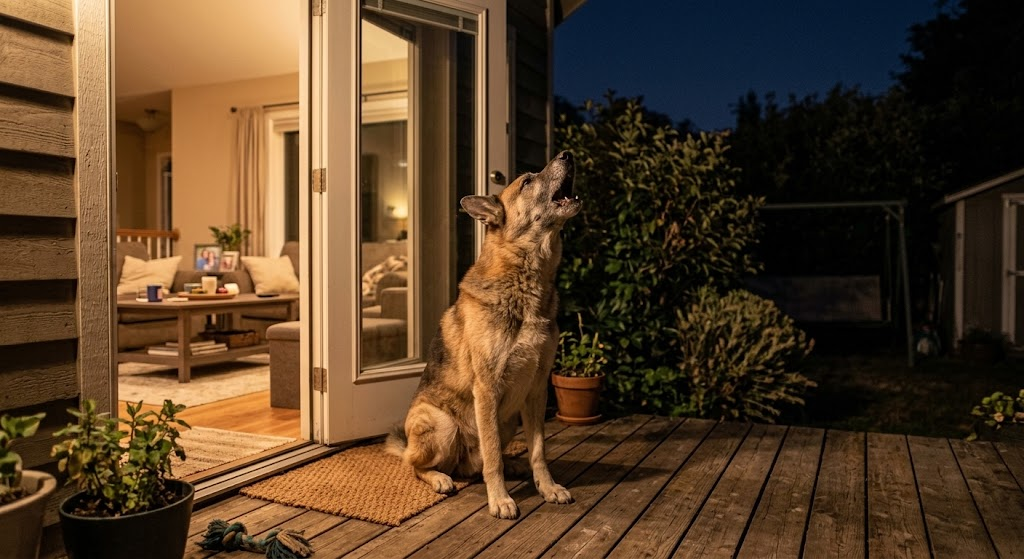
Nighttime vocalization is not a random behavior. The presence of a senior dog barking or howling at night indicates episodes of cognitive disorientation or joint pain that intensify in the dark.
Why is the senior dog barking or howling at night?
As a dog ages, its circadian rhythm (the internal biological clock regulating sleep and wakefulness) undergoes deep changes. Furthermore, reduced light and the isolation of late hours tend to amplify unpleasant sensations that go unnoticed during the day.
Below are the main neurological and physical factors that explain why a senior dog is barking or howling at night:
1. Canine Cognitive Dysfunction Syndrome (CCD)
Popularly known as “canine Alzheimer’s”, Cognitive Dysfunction affects spatial perception, memory, and temporal orientation. During the night, the senior dog may suddenly wake up confused about where it is, fail to recognize its own room, or feel trapped in corners of the house. Barking and howling emerge as an immediate reaction of panic and disorientation.
2. Chronic and Joint Pain
Conditions like osteoarthritis, spondylosis, and neuropathic pain usually intensify when the temperature drops and the body remains still for hours. When trying to turn in bed or get up, sharp pain wakes the animal, causing the senior dog barking or howling at night to express its physical distress through sound.
3. Loss of Vision and Hearing (Feeling of Isolation)
Advanced cataracts and senior deafness reduce environmental stimuli. In pitch darkness, the dog can no longer see the outlines of furniture and cannot hear the owners’ breathing. This lack of sensory references triggers a spike in separation anxiety, leading the pet to howl to call the pack and confirm it is not alone.
4. Unmet Physiological Needs
Senior dogs frequently develop loss of sphincter control, urinary incontinence, or an increased metabolic frequency. They may bark in the middle of the night to signal they need to urinate or because they have already wet their bed and feel uncomfortable with the dampness.
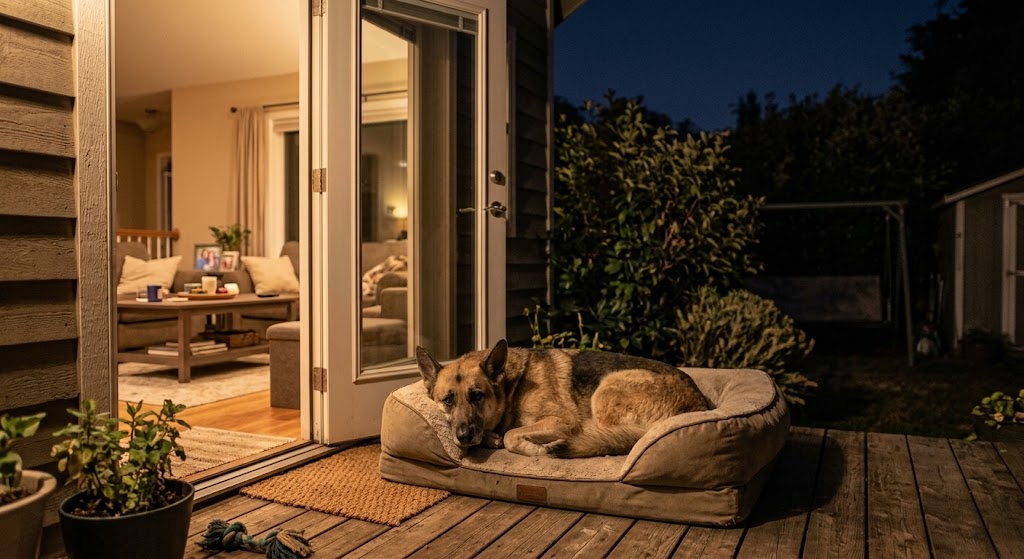
Senior dog barking or howling at night are common signs of cognitive decline in senior dogs, who often lose sphincter control.
👉 Check out complementary content that can help you better understand this topic: https://logicalbark.com/senior-dogs-and-cognitive-dysfunction-how-to-identify-and-care-for-your-pet-in-their-golden-years/
Beyond vocalization: Other signs that accompany nighttime restlessness
Barking or howling rarely appears in isolation. Pay close attention if your senior dog also exhibits these behaviors during the night:
- Panting without heat: Breathing rapidly or shallowly while standing or lying still.
- Compulsive walking: Walking in circles or pacing back and forth in the hallway before starting to bark.
- Constant search for contact: Scratching the bedroom door or resting its head on the owner’s bed looking for protection.
Our real experience: How we dealt with Goe’s nighttime vocalization
At Latido Lógico, all the guidance we share stems from our daily life with Goe, our 16-and-a-half-year-old senior dog. We know firsthand the anxiety of hearing barks and howls in the middle of the night without immediately knowing what to do.
Goe started having episodes where he would wake up startled and begin howling softly while looking at the door. At first, it seemed sporadic, but we soon realized there was a pattern: it wasn’t out of nowhere, it was a response to pain and disorientation caused by the dark.
Following this warning sign, we underwent a thorough medical investigation with our veterinary team. We discovered that joint discomfort and body cooling during the coldest hours of the night were the main triggers for Goe’s anxiety and howling.
With the correct diagnosis, we implemented a set of actions that changed the situation:
- Chronic pain management: Following veterinary prescription, we adjusted support for joint and neuropathic pain (including the proper use of medications such as gabapentin and Omega-3 supplementation).
- Support lights: We left small nightlights plugged in around the areas he moves through, eliminating total darkness and disorientation upon waking.
- Cozy environment and thermal control: We ensured his orthopedic bed was always warm and protected from cold drafts.
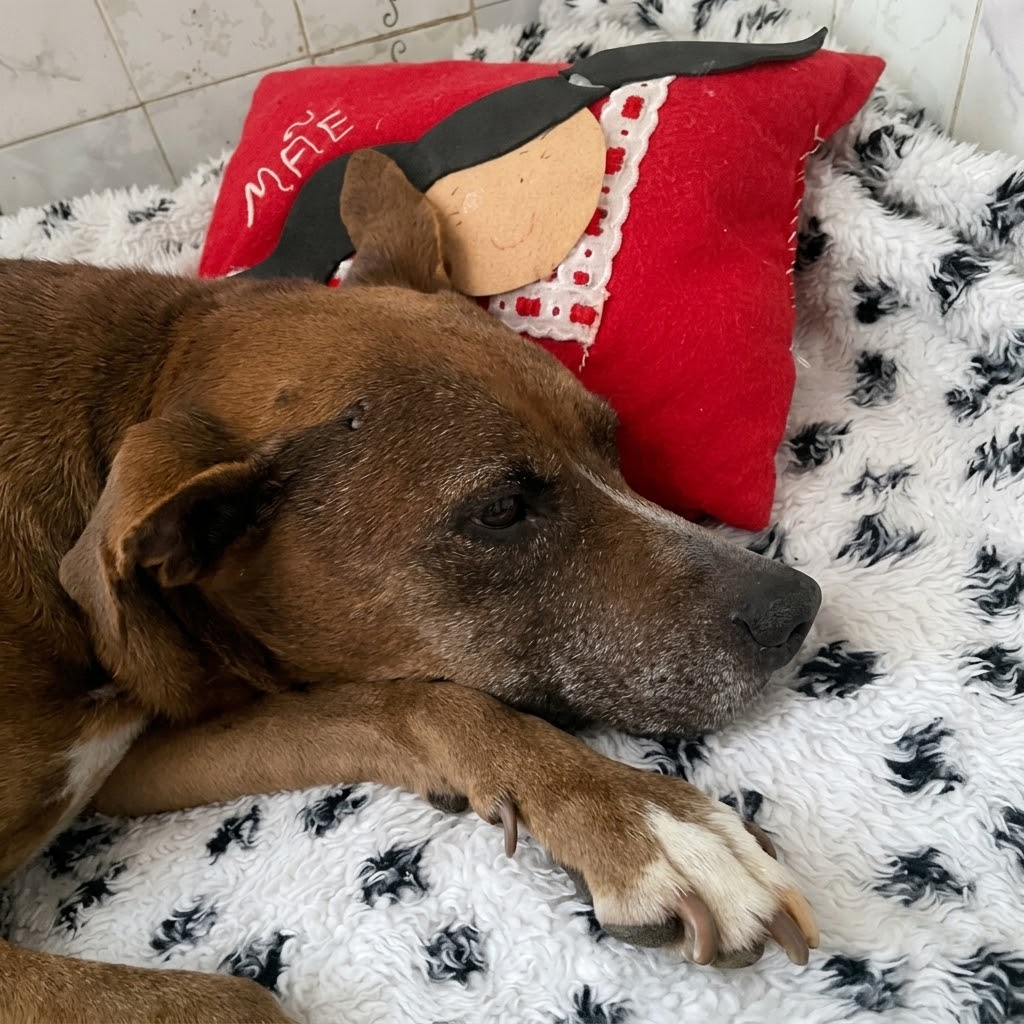
Goe serene on a peaceful night.
Seeing Goe go back to sleeping through the night, calm and pain-free, confirmed what we have always advocated: when your senior dog barks or howls at night, do not scold him. Soothe, investigate, and seek technical help.
What to do to help your senior dog have peaceful nights?
If you are facing the routine of a senior dog barking or howling at night, adopt these practical measures at home:
- Establish a wind-down routine: Create a calm routine before bed. Lower the TV volume, dim the lights in the house, and offer a gentle back massage to your dog.
- Leave a nightlight on: A small plug-in light helps the senior dog navigate the room if it wakes up during the night.
- Offer an orthopedic, warm resting spot: Make sure the bed absorbs joint impact and keeps the body warm against the cold floor.
- Avoid scolding or punishment: Reprimanding a senior dog increases cortisol (stress hormone) levels and worsens anxiety, intensifying vocalizations on subsequent nights.
- Take a calm early evening walk: A short, unhurried walk in the late afternoon helps stimulate the bowels and bladder, allowing it to relieve itself before lying down.
Some owners choose to maintain a comfortable environment in this context; here is a well-rated example: https://amzn.to/4dLuAZX
Conclusion: A cry for help that demands empathy and care
Facing the challenge of a senior dog barking or howling at night requires an extra dose of patience, empathy, and dedication from the owner. Understanding that your best friend is not acting out of stubbornness, but rather expressing real discomfort, is the key to turning anxiety into effective care.
With proper veterinary follow-up, adjustment of invisible pain, and a welcoming environment, it is entirely possible to restore restful sleep to your senior dog.
After all, these are accounts of care routines that require a human perspective that automated answers cannot copy.
Transparency Note: Reports and information shared on Latido Lógico stem from real experiences and dedicated research in the pet universe, serving as support for owners. The appearance of persistent nighttime vocalization should always be evaluated by a trusted veterinarian.

Lusiane Costa is a digital writer with degrees in Marketing and English Literature.
Creator of Latido Lógico and Logical Bark, she develops evidence-based content on canine aging, wellness, and senior-dog health.
The project was inspired by Goe — a senior dog whose longevity and resilience shaped a grounded, compassionate view on the challenges of aging in pets.
Each article reflects her commitment to transforming real experiences into accessible knowledge, helping owners understand, prevent, and care better for their animals at every stage of life.
Goe remains the heartbeat of this project.