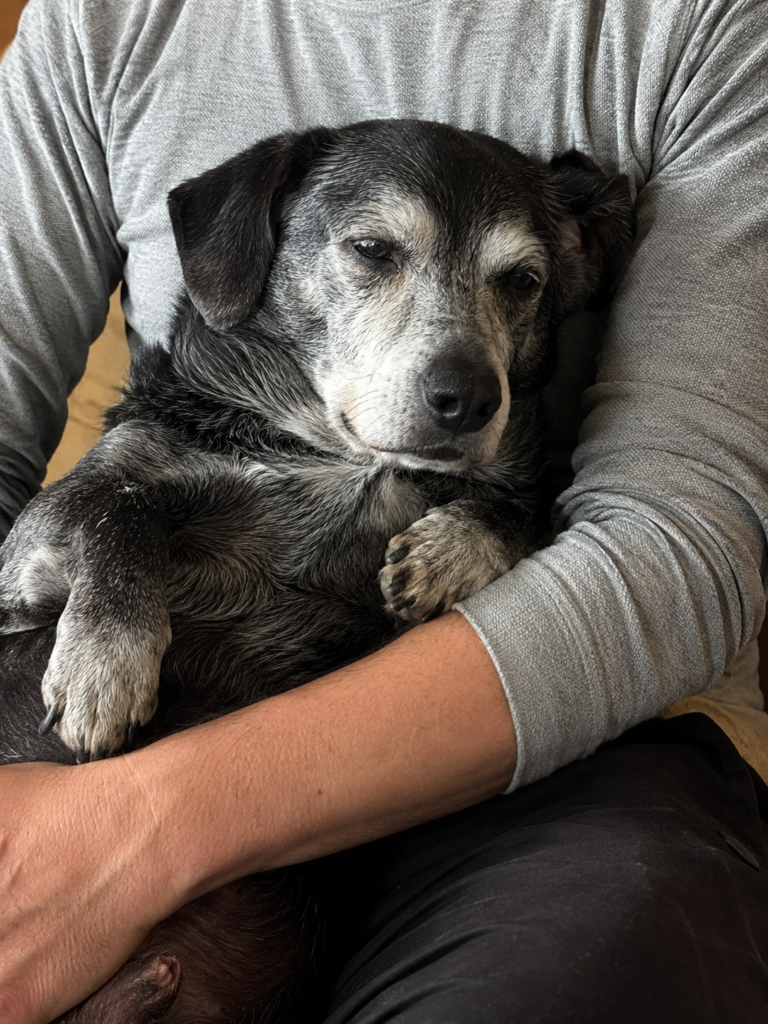
Senior dog attached to owner during a quiet moment of comfort, trust, and affection
If you searched for “senior dog attached to owner”, chances are you are noticing that your older dog has started following you everywhere, crying when you leave the room, wanting constant contact, or becoming emotionally dependent in ways that did not happen before.
This behavior is extremely common in aging dogs.
A senior dog attached to owner behavior pattern is often connected to physical aging, emotional changes, cognitive decline, sensory loss, anxiety, or the simple need for security during old age. Many dogs become more emotionally connected to their primary caregiver as they age because their world becomes smaller, slower, and less predictable.
In many cases, attachment is not manipulation or “spoiling.” It is communication.
Why Is My Senior Dog So Attached to Me?
Aging changes a dog’s body and brain.
As dogs grow older, they may lose hearing, vision, mobility, confidence, and cognitive flexibility. Because of this, the owner becomes a source of orientation, safety, predictability, and emotional regulation.
A senior dog attached to owner behavior may happen because the dog:
- Feels physically vulnerable
- Experiences joint pain or discomfort
- Has canine cognitive dysfunction (dog dementia)
- Feels anxious when alone
- Sleeps more lightly and seeks reassurance
- Loses hearing or vision
- Feels confused during nighttime
- Develops separation anxiety later in life
- Depends on routines to feel emotionally stable
Many older dogs that were previously independent suddenly become extremely affectionate, clingy, or emotionally dependent.
This transition can feel surprising to families.
Common Signs of a Senior Dog Attached to Owner
A senior dog may:
- Follow you from room to room
- Wait outside the bathroom
- Cry or bark when you leave
- Sleep closer than before
- Need physical touch constantly
- Panic when separated
- Stare at you more frequently
- Become restless at night
- Seek reassurance during storms or noises
- Refuse to eat unless you are nearby
Some dogs also become hypervigilant and monitor the owner continuously.
Others simply become softer, calmer, and more emotionally connected.
Is This Normal in Older Dogs?
Yes — to a certain extent.
A senior dog attached to owner situation is often part of the emotional and neurological aging process.
Dogs age socially and emotionally just as humans do.
Older dogs frequently become:
- More sensitive
- More dependent on routine
- More emotionally observant
- More attached to familiar people
- Less tolerant of uncertainty
However, sudden or extreme attachment should always be observed carefully, especially if it appears together with:
- Confusion
- Night pacing
- Disorientation
- Excessive barking
- Anxiety attacks
- Appetite changes
- Sleeping disturbances
- House accidents
These signs can indicate pain, cognitive dysfunction, or sensory decline.
Senior Dog Separation Anxiety
Many people believe separation anxiety only happens in puppies.
That is incorrect.
Senior dogs can develop separation anxiety late in life, even if they were independent for years.
Why does this happen?
Because aging changes the brain.
A dog that once felt secure alone may suddenly feel unsafe without the owner nearby. Cognitive decline, sensory loss, and insecurity can intensify emotional dependence.
A senior dog attached to owner may experience stress simply because the owner represents orientation and emotional stability.
Some older dogs panic when:
- The owner leaves the house
- Doors close
- Nighttime arrives
- Routines change
- Furniture moves
- Visitors appear
- The environment becomes overstimulating
Could My Senior Dog Have Dementia?
Possibly.
Canine Cognitive Dysfunction (CCD), commonly compared to dementia in humans, affects many aging dogs.
Symptoms may include:
- Wandering aimlessly
- Getting “stuck” in corners
- Staring at walls
- Forgetting routines
- Increased anxiety
- Night waking
- Vocalization
- Confusion
- Increased clinginess
A senior dog attached to owner can sometimes be expressing cognitive insecurity rather than simple affection.
If the behavior changed suddenly, veterinary evaluation is important.
Why Older Dogs Need More Emotional Security
Aging changes how dogs experience the world.
Imagine gradually losing:
- Hearing
- Vision
- Physical strength
- Confidence
- Predictability
The owner becomes the safest point in the environment.
For many senior dogs, attachment is a coping strategy.
Your voice, smell, footsteps, and daily routines help regulate their nervous system.
This is why many older dogs:
- Sleep better near their owner
- Relax during physical contact
- Become calmer when hearing familiar voices
- Follow familiar movement patterns through the house
How to Help a Senior Dog That Is Overly Attached
The goal is not to “punish” attachment.
The goal is to reduce anxiety and improve emotional security.
1. Maintain Predictable Routines
Senior dogs rely heavily on routine.
Try to keep:
- Feeding times stable
- Walk schedules consistent
- Sleep environments calm
- Daily rhythms predictable
Predictability reduces stress.
2. Create Safe Resting Spaces
Older dogs benefit from:
- Orthopedic beds
- Quiet sleeping areas
- Warm blankets
- Low-noise environments
A calm environment decreases emotional hypervigilance.
3. Avoid Sudden Changes
Aging dogs struggle more with transitions.
Avoid:
- Constant rearranging
- Excessive noise
- Long periods alone
- Abrupt routine changes
4. Encourage Gentle Independence
If your senior dog attached to owner behavior is becoming extreme, encourage calm independence gradually.
Examples:
- Short separations
- Food puzzles
- Comfortable resting zones
- Calm exits and returns
Avoid dramatic goodbyes.
5. Evaluate Pain and Cognitive Health
Pain often increases clinginess.
Conditions like:
- Arthritis
- Neurological discomfort
- Vision decline
- Hearing loss
- Cognitive dysfunction
can intensify emotional dependency.
Veterinary evaluation matters.
Some owners also choose to improve comfort for senior dogs dealing with arthritis, neurological conditions, joint pain, or mobility difficulties. During this stage of life, orthopedic beds and supportive resting spaces may help improve comfort, sleep quality, and overall well-being.
If it is helpful for your dog, there are some highly recommended bed options designed especially for senior dogs in this stage of life → https://amzn.to/3R3IXAv
Emotional Attachment Is Not “Bad Behavior”
Many owners feel guilty or overwhelmed.
But aging dogs are not trying to manipulate you.
Often, they are adapting to a body and mind that no longer feel completely stable.
A senior dog attached to owner behavior can reflect:
- Trust
- Emotional dependency
- Cognitive vulnerability
- Need for reassurance
- Fear of uncertainty
In many cases, the dog is simply asking for security during a fragile phase of life.
Final Thoughts on Senior Dog Attached to Owner
Aging transforms dogs emotionally as much as physically.
Some senior dogs become quieter. Some become anxious. Some become deeply attached to the person who represents safety in their world.
If your senior dog attached to owner behavior has intensified recently, observe the context carefully:
- Is your dog anxious?
- Confused?
- In pain?
- Losing hearing or vision?
- Sleeping poorly?
- Seeking emotional regulation?
Understanding the cause changes how we respond.
What looks like “clinginess” is often communication from an aging dog trying to feel safe again.
To deepen your understanding of this topic, also check out this related post: https://logicalbark.com/what-is-aging-alongside-a-dog-for-16-years/
Disclaimer: This content is for informational purposes only and does not replace professional veterinary guidance.

For many senior dogs, quality rest is part of emotional and physical well-being. A comfortable orthopedic bed may help reduce pressure, discomfort, and anxiety during aging
You may also like


Lusiane Costa is a digital writer with degrees in Marketing and English Literature.
Creator of Latido Lógico and Logical Bark, she develops evidence-based content on canine aging, wellness, and senior-dog health.
The project was inspired by Goe — a senior dog whose longevity and resilience shaped a grounded, compassionate view on the challenges of aging in pets.
Each article reflects her commitment to transforming real experiences into accessible knowledge, helping owners understand, prevent, and care better for their animals at every stage of life.
Goe remains the heartbeat of this project.