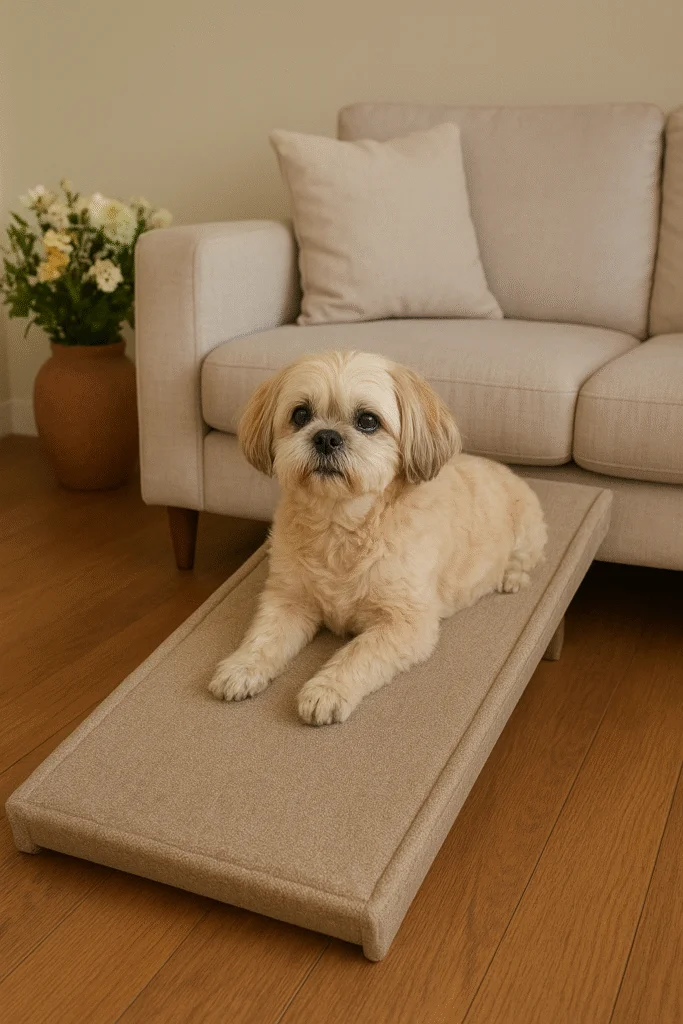
Senior dog using ramps for older dogs
Ramps for senior dogs are essential allies in the care of pets who already feel the limitations of time. As they age, our companions begin to need stable, accessible surfaces to keep exploring their environment safely. Adapting the home is an act of care and responsibility — and it can make all the difference for a senior dog’s health and well-being.
Why Invest in Ramps for Senior Dogs
Over the years, dogs may develop arthritis, loss of muscle mass, joint stiffness, and reduced balance. Simple activities such as jumping on the sofa or getting off the bed become challenging and painful. Ramps for senior dogs help prevent falls, reduce impact, and offer autonomy. See some direct benefits:
- They reduce the risk of injuries and slips on smooth floors.
- They decrease overload on joints and hind legs.
- They boost the dog’s confidence and independence when moving around.
- They make it easier to access elevated areas such as the sofa, bed, and car.
In addition, well-positioned ramps decrease physical and mental stress, allowing the dog to maintain a calmer, more active routine without depending so much on the guardian to go up or down.
In addition, well-positioned ramps decrease physical and mental stress, allowing the dog to maintain a calmer, more active routine without depending so much on the guardian to go up or down.
How to Choose the Best Ramps for Senior Dogs
Not all ramps are the same — and the right choice depends on your pet’s size, weight, and limitations. Consider the following aspects:
✔️ Material and non-slip surface
Ideally, choose ramps for senior dogs made of wood, aluminum, or reinforced plastic, with a rubberized, carpeted, or EVA surface. These coverings prevent slipping and provide traction even on humid days.
✔️ Incline and height
A good ramp should have a gentle incline (between 15° and 25°). Very steep models can cause fear and excessive effort. The longer the ramp, the more comfortable it will be to use.
✔️ Stability and safety
Prefer ramps with non-slip feet and safety locks. The base should stay firm on the floor, without wobbling. For large dogs, always check the maximum weight capacity indicated by the manufacturer.
✔️ Portability and space
Foldable ramps are ideal for those who need to move them between rooms or use them in the car. Fixed ramps are better for places of frequent use, such as access to the sofa or bed.
Explore products designed for more attentive and adapted care: https://amzn.to/3MrTJhB
Ramps for Senior Dogs or Pet Stairs?
Pet stairs can be useful for small dogs with good coordination, but they are not always recommended for seniors with joint pain or muscle stiffness. In these cases, ramps for senior dogs are softer and reduce impact with each step. The choice should always prioritize comfort and the dog’s health history.
See suggestions that can improve mobility: https://amzn.to/4oFv7zn
How to Teach Your Dog to Use the Ramp
Introduce the ramp gradually. Place it in a familiar location and encourage use with treats and praise. Walk alongside your dog without forcing. In the first few days, keep the incline lower and follow each attempt. The secret is to turn the ramp into something positive — a bridge to comfort, not an obstacle.
Where to Place Ramps for Senior Dogs
- Sofa and bed: to provide easy access to favorite resting places.
- Front door or porch: ideal for small steps and thresholds.
- Car: helps with getting in and out without effort.
- Indoor stairs: can replace steep or slippery steps.
Also see ramp options for cars — ideal for senior dogs who need to climb into vehicles safely and without effort: https://amzn.to/3XM2p4N
Another important tip is to keep the path to the ramp free of objects and well lit. Dogs with reduced vision depend on a predictable environment to feel safe.
Complementary Care
The use of ramps for senior dogs should be accompanied by other daily care measures:
- Use non-slip rugs in hallways and high-traffic areas.
- Ensure your dog has an orthopedic, comfortable bed.
- Offer joint supplements as recommended by your veterinarian.
- Take short, frequent walks to keep muscles active.
Useful complement on the topic: https://logicalbark.com/light-exercises-for-senior-dogs-at-home-7-safe-and-gentle-activities/
Conclusion
Ramps for senior dogs are more than an accessory: they represent essential care that reflects respect, empathy, and attention. Every adapted detail in the home shows that the guardian understands their companion’s new needs. And it is precisely this attention that turns canine old age into a lighter, safer, and more dignified phase.
At Logical Bark, we believe every senior dog deserves comfort and accessibility — especially those living with reduced mobility or recovering from illness or surgery. When the environment is designed to welcome, the dog rests peacefully, finds pleasure in moving, and continues to enjoy favorite places like the sofa, bed, and yard. It is in this balance between care and autonomy that true well-being lives.
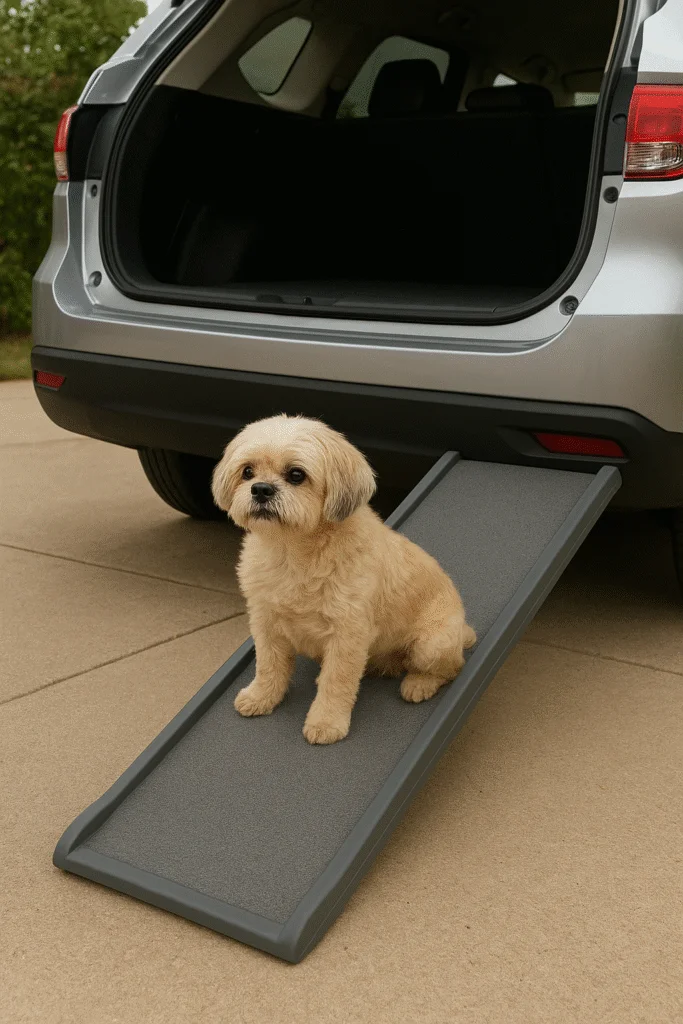
Senior pet using ramps for older dogs to access a car

Lusiane Costa is a digital writer with degrees in Marketing and English Literature.
Creator of Latido Lógico and Logical Bark, she develops evidence-based content on canine aging, wellness, and senior-dog health.
The project was inspired by Goe — a senior dog whose longevity and resilience shaped a grounded, compassionate view on the challenges of aging in pets.
Each article reflects her commitment to transforming real experiences into accessible knowledge, helping owners understand, prevent, and care better for their animals at every stage of life.
Goe remains the heartbeat of this project.