
June 11, 2026
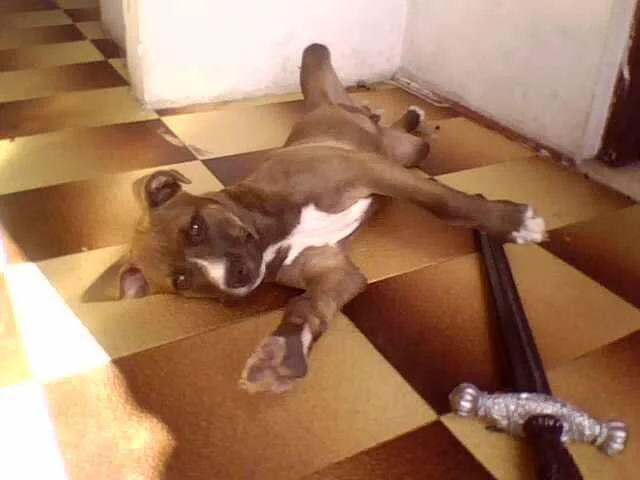
GOE as a puppy, during one of the many playful moments that became part of his story. When an older dog doesn’t want to play, it is often simply because his way of living is changing with time.
When an older dog doesn’t want to play, many owners become worried. After all, the dog who once ran around the house, chased toys, jumped with joy, and showed energy in the small moments of daily life may, over the years, become quieter, sleep more, and show less interest in play.
This change can bring fear, sadness, and many questions. Is it just age? Is he in pain? Is he sad? Could it be a sign that he is nearing the end of life?
The truth is that canine aging must be observed with attention, but also with respect. Just like us, dogs change over time. The body slows down, metabolism becomes slower, muscle mass decreases, joints may suffer wear and tear, and energy is no longer the same.
That is why, when an older dog doesn’t want to play, it does not always mean he is unhappy. Many times, he is simply living old age in a calmer way.
What is considered an older dog?
A dog is considered older according to size, breed, health history, and quality of life. Large dogs tend to age earlier, while small dogs often show signs of aging a little later.
In general, many dogs begin to be considered seniors between 7 and 10 years of age. However, this should not be seen as a strict rule. Some dogs reach 12, 14, or even 16 years old with good energy, while others show limitations earlier.
The most important thing is to observe the individual behavior of senior dogs. Each dog ages in a unique way.
Is it normal for an older dog to become quieter?
Yes, it is common for older dogs to become quieter. With age, many dogs sleep more, spend less energy, and look for calmer environments. They can still be happy, loving, and connected to their family, but they may express this in a different way.
An older dog may no longer want to run, jump, or compete for toys, but he may still enjoy walking slowly, staying close to his owner, receiving affection, and observing the family routine.
That is why, when an older dog doesn’t want to play, it is important to distinguish natural aging from signs of suffering.
What does it mean when a dog does not want to play?
When a young dog suddenly stops playing, it may indicate pain, stress, fear, illness, or emotional change. In the case of an older dog, interpretation must be even more careful.
An older dog doesn’t want to play for several possible reasons, including:
- slower metabolism;
- loss of muscle mass;
- joint pain;
- physical wear and tear;
- vision or hearing problems;
- cognitive changes;
- faster fatigue;
- less interest in intense activities.
Therefore, the absence of play does not always mean sadness. Sometimes, it means adaptation.
Aging changes the way dogs play
Many owners imagine that play means running, biting toys, jumping, or competing for objects. But for an older dog, play may take different forms.
A short walk can be a meaningful activity. Sniffing the yard can be enriching. Walking around the house can represent movement and interaction. Staying close to the family can also be a form of participation.
When an older dog doesn’t want to play, perhaps he has not lost the desire to live. Perhaps he simply no longer wants to play in the same way as before.
What I learned from GOE
In the case of GOE, my four-legged son who lived until he was 16 years old, I observed this change very clearly. Around the age of 13 to 14, he began to lose interest in more intense play.
GOE was a strong dog, with a remarkable presence, and for many years he had energy and personality. But as he aged, he no longer wanted to play as he once did. He did not show the same desire to compete for toys, run, or take part in highly active games.
What he liked to do was walk.
He would walk calmly from one side to the other, at his own pace. Sometimes he came close and simply stood there. Other times he just stayed nearby, observing, as if saying that his way of being present had changed.
I realized that he no longer needed the same intensity. He needed respect.
Over time, I understood that the fact that an older dog doesn’t want to play does not necessarily mean he has lost joy. In GOE’s case, joy was found in peaceful walks, presence, shared silence, and the bond that remained.
Joint pain can make a dog stop playing
One of the most common causes of reduced play in older dogs is pain. Many dogs suffer from joint wear, arthritis, osteoarthritis, spinal changes, and loss of muscle strength.
These conditions can make simple movements uncomfortable. Getting up, running, jumping, or biting a toy with strength may require more effort from the body than before.
The problem is that many dogs hide pain. They do not cry all the time. They simply reduce activity, sleep more, or avoid certain movements.
That is why, if an older dog doesn’t want to play suddenly or shows stiffness, difficulty getting up, limping, or avoiding stairs, it is essential to seek veterinary care.
Some owners choose joint supplementation
In some cases, a veterinarian may recommend joint supplements to help support mobility and comfort in senior dogs.
In GOE’s case, during his aging process, the veterinarian recommended the use of a joint-support supplement as part of his quality-of-life care. It was a resource that became part of his routine for many years.
Out of curiosity, if you would like to know the supplement used by GOE, I will leave the name below. However, it is important to remember that each dog has individual needs and that any supplementation should be evaluated by a veterinarian before being started.
👉 Supplement used by GOE: https://amzn.to/4owYl4T
Sensory problems can also interfere
With age, some dogs begin to see less, hear less, or perceive the environment differently. This can reduce interest in toys, sounds, moving objects, and very fast interactions.
A dog who does not see well may become startled by thrown toys. A dog who hears less may not respond to calls. A dog with reduced balance may avoid games that require quick movements.
These changes should not be interpreted as disobedience or lack of affection. They are part of a body that is aging.
Canine cognitive dysfunction: the “Alzheimer’s” of dogs
Another important point is canine cognitive dysfunction, often compared to Alzheimer’s disease in humans. This condition can affect older dogs and cause behavioral changes.
Some signs include:
- disorientation;
- walking aimlessly;
- sleep changes;
- confusion in familiar places;
- less interaction with the family;
- loss of interest in old activities;
- anxiety or restlessness.
In these cases, when an older dog doesn’t want to play, the change may be related not only to the body, but also to cognitive function.
That is why important behavioral changes should always be evaluated.
What are the signs of aging in dogs?
Some common signs of aging in dogs include:
- sleeping more hours per day;
- walking more slowly;
- becoming quieter;
- gray hair around the muzzle;
- loss of muscle mass;
- stiffness when getting up;
- less interest in intense play;
- seeking more comfort and calm.
These signs may be part of natural aging. However, when they appear suddenly or intensely, they deserve professional attention.
👉 For a better understanding of this topic, we recommend reading the article below: https://logicalbark.com/what-is-aging-alongside-a-dog-for-16-years/
What signs may indicate the end of life?
This is a delicate question. Not every older dog doesn’t want to play because he is nearing the end of life. However, some signs require greater care, such as:
- significant loss of appetite;
- difficulty standing up;
- persistent pain;
- intense isolation;
- frequent confusion;
- loss of interest in everything;
- breathing changes;
- progressive weakness.
In these cases, a veterinarian should evaluate the dog’s overall condition, considering pain, quality of life, appetite, mobility, and comfort.
The importance of not ignoring behavior changes
Although it is common for older dogs to become calmer, important changes should never be ignored. If the dog suddenly stopped playing, stopped walking, lost appetite, or seems to be in pain, veterinary evaluation is necessary.
Aging should not be used as an explanation for everything.
Many conditions can be treated, controlled, or relieved, helping provide more comfort for the senior dog.
Who said older dogs do not play?
Older dogs can still play, but they may need different kinds of play. Instead of intense running, they may prefer lighter activities.
Some possibilities include:
- snuffle mats;
- food-dispensing toys;
- short walks;
- treat-finding games;
- calm interactions with the owner;
- moments of affection and presence.
The secret is to adapt life to the dog he is today, not only to the dog he was years ago.
Conclusion
When an older dog doesn’t want to play, this may be normal, but it can also be a warning sign. Aging brings changes in the body, behavior, senses, and the way the dog relates to the world.
In GOE’s case, I learned that old age did not erase his essence. He simply stopped playing as he once did. He walked, observed, came closer, and stayed nearby. That was his new way of saying he was still there.
Respecting an older dog means understanding that love also changes rhythm.
Happiness is not always found in excitement. Sometimes it is found in silent presence, slow walks, shared rest, and the bond that remains until the end.
Disclaimer
This article is for informational and educational purposes only. It does not replace veterinary consultation, diagnosis, or treatment. Each dog has individual physical, behavioral, and clinical characteristics. If your older dog suddenly stops playing, shows pain, difficulty moving, loss of appetite, disorientation, or any significant behavioral change, seek proper evaluation from a veterinarian.
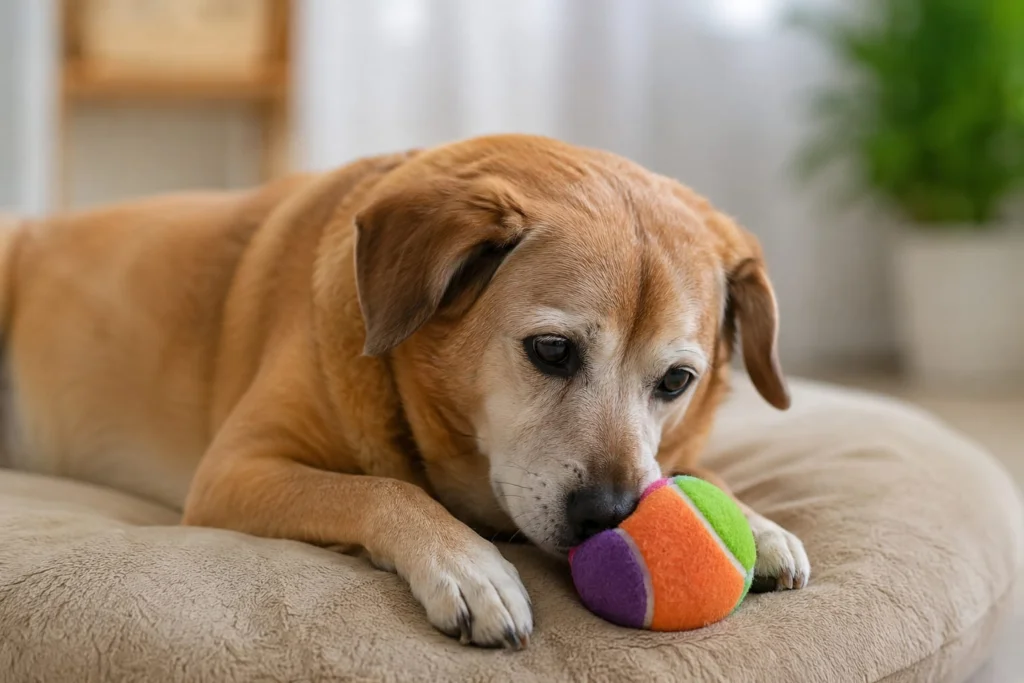
lder dogs still play. They simply play at the rhythm of wisdom
You may also like

Lusiane Costa is a digital writer with degrees in Marketing and English Literature.
Creator of Latido Lógico and Logical Bark, she develops evidence-based content on canine aging, wellness, and senior-dog health.
The project was inspired by Goe — a senior dog whose longevity and resilience shaped a grounded, compassionate view on the challenges of aging in pets.
Each article reflects her commitment to transforming real experiences into accessible knowledge, helping owners understand, prevent, and care better for their animals at every stage of life.
Goe remains the heartbeat of this project.