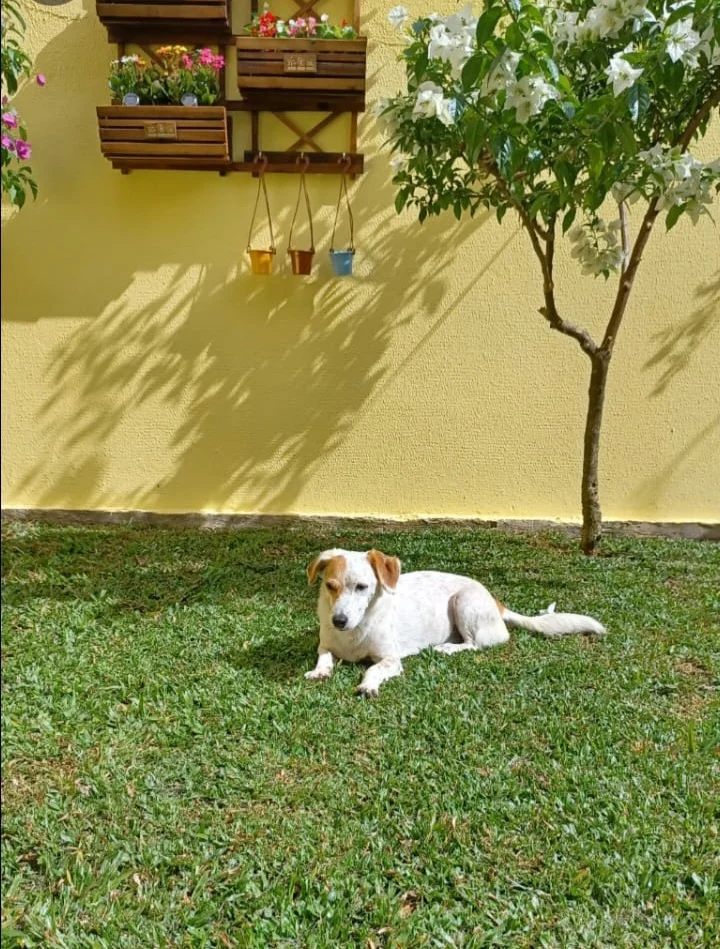
In natural dog food routines, each detail of daily care can contribute to lighter and more balanced days.
When people talk about natural dog food, many imagine that the main issue lies only in choosing the ingredients. However, in some contexts, especially when a dog has greater gastrointestinal sensitivity, care needs to go beyond the food itself. The way the food is prepared, the time between one step and another, and the way it is stored can also affect how the body responds. That was exactly the kind of lesson our experience with Loli allowed us to understand more deeply.
At first, natural dog food seemed like a simple and functional option. It was being considered as an alternative better suited to Loli’s reality, within a routine that required constant attention to her body and digestive signs. There was, however, an important practical demand: the preparation involved a large volume of food, around 30 kilos per month. And it was precisely within this more extensive routine that some warning signs began to appear, even though, at first glance, they might have gone unnoticed.
The process was being done in stages. At night, the sweet potato was peeled and cut, but still raw. It was then stored so that, the next morning, it could be placed in the pressure cooker and the preparation could continue. In practical terms, this seemed like an organizational solution. Over time, however, it became clear that this interval between one step and another was not neutral for the food. Even before being cooked, the sweet potato was beginning to change. And one important observation emerged: this prior storage seemed to encourage fermentation.
This detail, which might sound small to an outside observer, became truly relevant when episodes of nausea began to be noted. Based on the routine and the repetition of these signs, the interpretation that emerged was that the fermentation of the sweet potato might be contributing to gastrointestinal discomfort. In addition, there was also concern that this process could interfere with glycemic issues and with the way the body reacted to food that had already been altered by time and storage between preparation stages.
This kind of experience shows something very important: in more sensitive dogs, food care does not depend only on choosing between kibble and natural food. In some cases, the way the body responds can also be influenced by how the food is handled even before it is served. The way it is peeled, cut, stored, cooked, and offered becomes part of daily clinical care itself. And that completely changes the way feeding is understood.
In Loli’s case, the lesson did not come from an abstract theory, but from concrete observation of her routine. When it became clear that there were episodes of nausea and that these episodes could be related to sweet potato that had been stored from one day to the next, it became necessary to review the preparation logistics. This point is important because, many times, a tutor imagines that everything is being done correctly simply because a more natural food has been chosen, when in practice some details of execution end up interfering decisively with the result.
One of the most important lessons from this experience was this: in natural dog food routines, sweet potato should not remain peeled, cut, and raw from one day to the next while waiting to be cooked. The most prudent approach, within a routine involving greater gastrointestinal sensitivity, was to understand that sweet potato needs to be cooked at the time of preparation. This care reduces the risk of prior fermentation and makes the food more compatible with a more attentive and responsible management approach.
In dogs with a history of greater digestive sensitivity, this kind of care tends to be even more necessary. The intestines do not react only to what enters the body, but also to the condition in which that food reaches the organism. For this reason, in certain situations, preparing everything at the same time, reducing long intervals between steps, or reviewing the amount produced at once may be more prudent than insisting on a routine that seems efficient but does not actually favor the dog’s well-being.
This review process still requires practical decisions. When the monthly amount is large, as in the case of around 30 kilos of food, the preparation routine naturally demands time, organization, and availability. And it is exactly at this point that many families begin to reflect on the best way to move forward: doing everything themselves, reviewing how this preparation has been carried out, or, in the future, considering alternatives that offer more practicality and greater control over the process. Today, there are even specialized services focused on natural dog food, which may be a possibility worth considering in some contexts, always with discernment and without turning it into an automatic or universal solution.
The most important point, however, is understanding that a dog’s body responds to details. In Loli’s experience, natural dog food was not seen as a simplistic choice, but as part of a broader form of care that requires attentive observation, constant adjustments, and willingness to review what initially seemed to work. Instead of treating nausea as an isolated episode, the entire process began to be observed. And it was this shift in perspective that made it possible to realize that the problem might not lie only in the food itself, but in the way it had been prepared and stored.
In some routines, tutors use smaller containers to store treats or small daily portions, helping maintain organization and freshness.
See a practical container for storing small portions →https://amzn.to/4dle43v
In the end, this experience taught us something very valuable: in dogs with greater gastrointestinal fragility, small details in the kitchen can have concrete effects on the body. Natural dog food can, in fact, be an important path in some cases, but it requires responsibility, observation, and technical care in the routine. It is not enough to offer an ingredient considered healthy. It is necessary to understand how it is being prepared, under what conditions it is being stored, and how the dog’s body responds to that entire set of factors.
With Loli, this lesson came in a very practical way. And perhaps this is the most relevant point of all: caring also means noticing when the routine needs to be reorganized. In some cases, what makes the difference is not changing everything at once, but correcting exactly what had been compromising the dog’s well-being.
To continue this reflection, you may also explore other possibilities related to natural dog food and gastrointestinal care.
👉 Discover some fruits that can be included in your dog’s diet →https://logicalbark.com/what-fruits-can-dogs-eat-a-safe-guide-to-including-fruit-in-your-dogs-diet/
Disclaimer: This content is for informational purposes only and does not replace the evaluation of a veterinarian. Each dog has specific needs, and dietary changes or signs such as nausea should be monitored by a qualified professional.
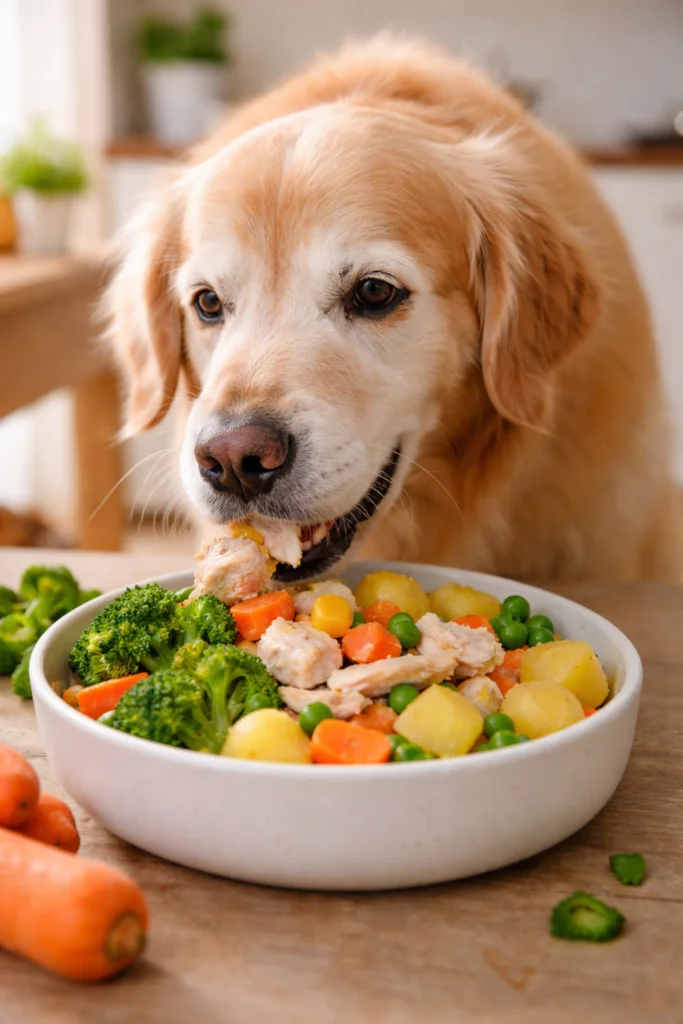
In natural dog food routines, each choice made throughout the day directly affects well-being.
You May also like


Lusiane Costa is a digital writer with degrees in Marketing and English Literature.
Creator of Latido Lógico and Logical Bark, she develops evidence-based content on canine aging, wellness, and senior-dog health.
The project was inspired by Goe — a senior dog whose longevity and resilience shaped a grounded, compassionate view on the challenges of aging in pets.
Each article reflects her commitment to transforming real experiences into accessible knowledge, helping owners understand, prevent, and care better for their animals at every stage of life.
Goe remains the heartbeat of this project.