March 25, 2026

Loli enjoying the comfort of her magnetic dog bed
Anyone who lives closely with a dog going through more delicate phases learns something very important over time: there are more stable days, and there are days when small signs begin to appear more intensely. These signs do not always come in a dramatic way. Sometimes, they appear in the routine, in the way the dog walks, in the way the dog moves around the house, in the level of agitation, or in repeated behaviors that indicate that something is not completely right.
With Loli, this also happens. There are days when she is better, calmer, and more balanced. On other days, however, we notice an increase in agitation. In those moments, she runs more from one side to the other, goes from the back of the house to the front very quickly, sometimes slips even with a non-slip rug, and also starts going in fast circles around the table. After this more agitated state, another behavior becomes quite noticeable: she starts biting her little paw and her little knee more.
When living a routine of continuous care, observing this kind of pattern makes all the difference. It is not always possible to immediately state the exact cause of each behavior. What can be done, responsibly, is to look carefully, connect the signs, notice what repeats itself, and look for alternatives that promote more comfort. It was exactly within this logic that the experience with the magnetic dog bed emerged.
Before anything else, it is important to emphasize that this content is not an absolute statement of results. It is a real care experience, built from daily observation. On more agitated days, when Loli runs too much, slips, and then starts biting her paw and knee more, it becomes clear that her body asks for accommodation, relief, and an environment more favorable to rest. It was in this context that we decided to try the magnetic bed.
In simple terms, this bed is made with magnetic elements in its internal structure, designed to offer a different resting surface. In general, the idea is connected to comfort and bodily support. In some situations, tutors seek this kind of resource when they want to offer the dog a more welcoming base for rest, especially during phases of greater physical sensitivity, joint discomfort, or the need for more stability in the resting routine.
Especially during phases of greater sensitivity, this resource may also help in the management of inflammatory discomfort.
In Loli’s case, the decision to try this resource did not come on impulse. It came after many days of observation, realizing that the agitation was not expressed only in the behavior of running or circling around the house, but also seemed to affect her body. When a dog enters this cycle of greater movement, slipping, and tension, all of this can increase general discomfort. And when that discomfort appears, rest starts to play an even more important role.
In Loli’s case, to reduce slipping, non-slip rugs were also used in some areas of the house.
Explore this practical solution →https://amzn.to/4rV6DUi
That is exactly why the bed came to be seen as a comfort resource, not as an isolated alternative. The idea was to offer Loli a more welcoming place to rest on the days when she was more agitated. And, within this experience, it seemed to help a little. Not in the sense of completely transforming the routine from one day to the next, but in the sense of contributing to more accommodation and well-being.
This point is important because, when we talk about real care, especially with dogs that require more attentive follow-up, the most valuable changes are not always grand. Sometimes, what makes a difference is precisely the set of small adjustments. A non-slip rug here, more careful observation there, an environmental adaptation, a more comfortable resting surface. In practice, care is usually built this way: with regularity, reading the signs, and decisions made based on the reality of the dog itself.
Another important aspect is understanding that when a tutor notices the dog biting the paw or knee more, this should never be treated as an unimportant detail. This type of behavior always deserves observation, because it may be related to discomfort, tension, irritation, or other factors that only careful follow-up can properly clarify. In our case, the most important thing was noticing the pattern: more agitated days seemed to come together with more biting of the paw and little knee. This reading of the routine was essential for thinking about practical comfort measures.
Therefore, when we talk about differentiated resources, what matters most here is not presenting one factor as a single measure. What matters is showing a concrete experience: that of a family that observes, adapts, tests, and evaluates. Instead of ignoring the signs or waiting for everything to pass on its own, the choice was made to seek an alternative that could make Loli’s moments of rest more favorable.
And this is perhaps the most valuable point in this whole process: learning that caring also means interpreting the routine. It means realizing that a dog does not “do random things” all the time. Many times, the dog shows in the body and in behavior what it cannot communicate in any other way. An increase in agitation, intense running around the house, and repeated biting of the paw and knee make up a set of signs that should not be read in isolation.
The experience with the magnetic bed emerged exactly from this more attentive observation. And, within this reality, it was a resource that seemed to help. Thus, becoming part of a broader, more sensitive, and more coherent form of care with what Loli had been showing on the days when she was more restless.
At the end of the day, this kind of experience teaches something very true: care is not always about doing more; many times, it is about observing better. And when observation comes together with intelligent adaptations and a continuous eye on the dog’s well-being, small choices can indeed contribute to slightly more comfortable days.
Also see other content from Loli’s care routine →https://logicalbark.com/the-joints-in-dogs-with-ibd-what-lolis-experience-helped-us-understand/
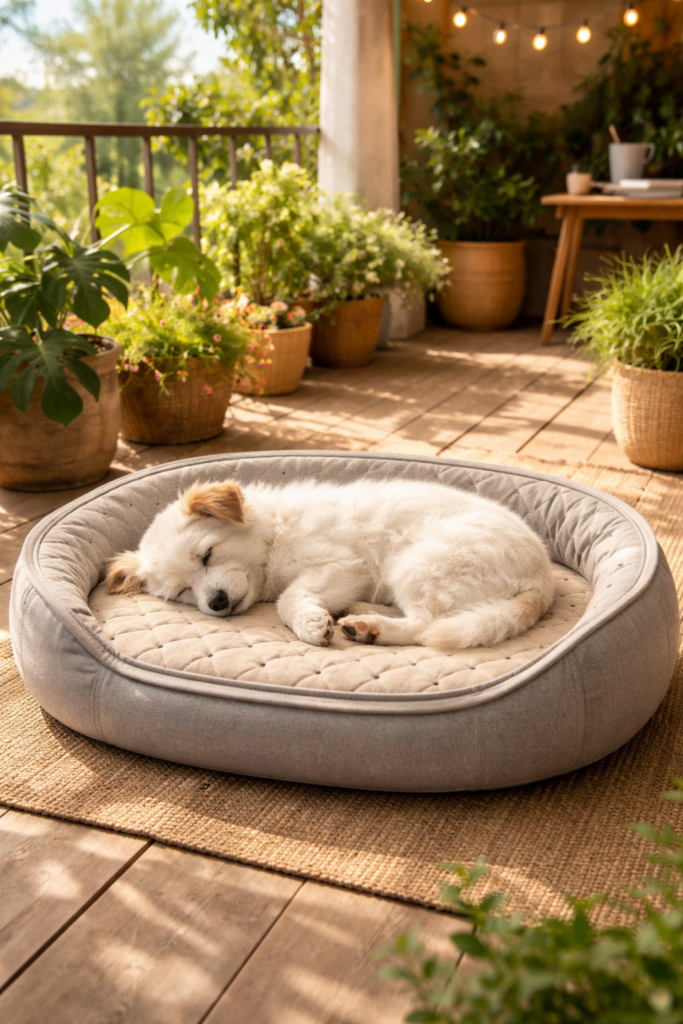
The quality of rest also influences the dog’s overall well-being.
You may also like
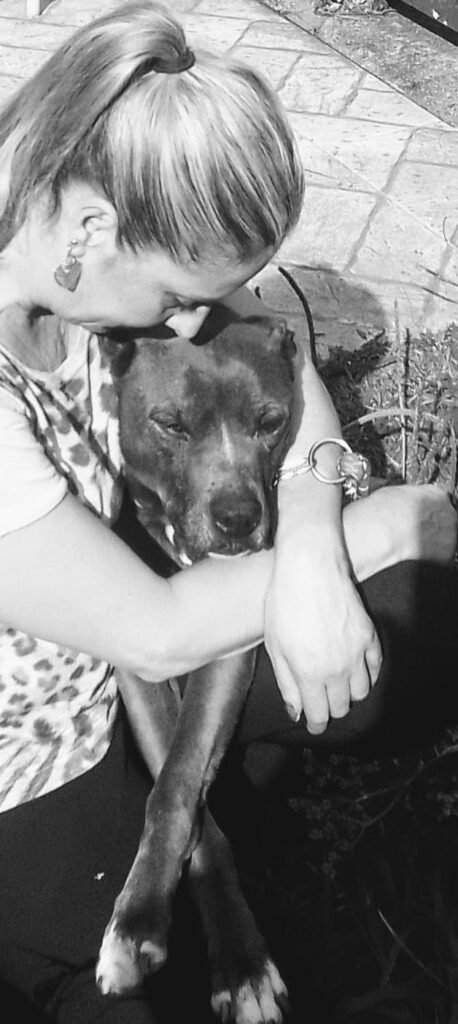

Lusiane Costa is a digital writer with degrees in Marketing and English Literature.
Creator of Latido Lógico and Logical Bark, she develops evidence-based content on canine aging, wellness, and senior-dog health.
The project was inspired by Goe — a senior dog whose longevity and resilience shaped a grounded, compassionate view on the challenges of aging in pets.
Each article reflects her commitment to transforming real experiences into accessible knowledge, helping owners understand, prevent, and care better for their animals at every stage of life.
Goe remains the heartbeat of this project.