January 21, 2026
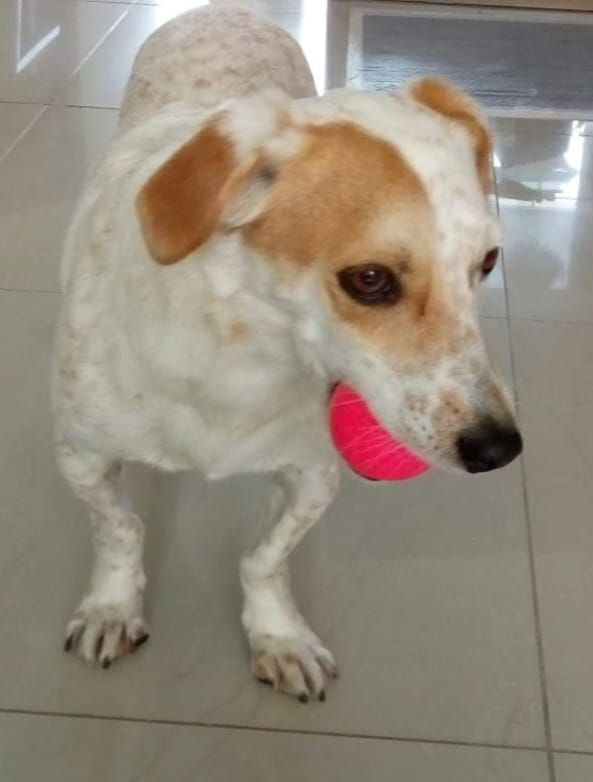
Consistent Care and Joyful Days, Even with IBD in Dogs
Loli has always been singular — not only because of her history, but because of the way she navigated complex clinical phases with a resilience that prompted us to observe the canine body as an integrated system. Over time, signs that initially seemed disconnected began to recur — and it was precisely this pattern that revealed something larger.
Inflammatory Bowel Disease (IBD) in dogs is a chronic condition that can manifest far beyond the digestive tract. In Loli’s case, understanding this connection was essential to rebuilding her quality of life and expanding our understanding of how the gut, immune system, skin, and joints engage in continuous dialogue.
Loli’s Journey and the Signs That Didn’t Seem to Fit
From a young age, Loli displayed behaviors that, when viewed in isolation, could easily be dismissed. Excessive skin licking, intermittent digestive discomfort, subtle behavioral changes, and episodes that led to inaccurate assumptions along the way.
Among these signs, one of the most striking was fly biting — a behavior often described as “snapping at imaginary flies.” This manifestation frequently leads to premature neurological interpretations, including suspicions of epilepsy, when in reality it may originate in gastrointestinal discomfort.
In Loli’s case, careful observation revealed that the episodes did not occur randomly. They consistently appeared during periods of increased digestive instability, reinforcing the conclusion that the issue was not neurological in origin, but intestinal.
IBD in Dogs: When the signs don’t start in the gut
IBD in dogs is characterized by a chronic inflammatory process of the gastrointestinal tract, often mediated by an exaggerated immune response. What many caregivers are unaware of is that this inflammation rarely remains confined to the intestines.
When the intestinal barrier is compromised, systemic immune activation occurs. This may manifest in the skin through persistent itching and recurrent lesions; in the joints through inflammatory conditions; and even in behavior, through subtle but consistent changes.
In Loli’s case, understanding this mechanism was crucial to abandoning fragmented approaches and adopting a broader interpretation of the canine organism.
Fly Biting in Dogs: Why It Isn’t Always Epilepsy
Fly biting remains one of the most misunderstood symptoms in veterinary medicine. While it may have neurological origins in some cases, a significant number of dogs exhibit this behavior as a response to gastrointestinal distress.
With Loli, the episodic pattern, the absence of classic neurological indicators, and the positive response to gut-focused interventions made it clear that the behavior reflected systemic imbalance — not a primary neurological disorder.
This distinction is essential, as inappropriate treatments may not only fail but can worsen the condition over time.
Gut, Immunity, and Systemic Inflammation
The gut plays a central role in immune regulation. In dogs with IBD, chronic inflammation disrupts the intestinal microbiota, weakens the mucosal barrier, and sustains inflammatory immune responses.
Find additional details →https://logicalbark.com/when-the-gut-of-senior-dogs-becomes-the-starting-point-lolis-experience/
This systemic inflammation may present in various forms, including joint discomfort, dermatological changes, and behavioral signals that are often treated as isolated issues.
In Loli’s journey, stabilization only became possible when the focus shifted from controlling individual symptoms to strengthening the foundation: the gut.
In cases such as IBD in dogs, management moves beyond isolated symptom control toward reinforcing the intestinal base. Strategies targeting microbiota balance, mucosal integrity, and modulation of systemic inflammation are often decisive in achieving stability.
👉 Explore intestinal support options that align with this approach: https://amzn.to/45RzFMi
Careful Management and Continuous Observation
Caring for a dog with IBD requires patience, information, and a strategic approach. Every adjustment must be introduced gradually, respecting individual physiological responses and carefully observing clinical outcomes.
In Loli’s case, the combination of a restricted diet, deliberate nutritional choices, and appropriate support helped reduce inflammation, stabilize intestinal function, and consequently minimize dermatological and joint manifestations.
Nutrition support commonly used in similar intestinal management protocols: https://amzn.to/4r48HJp
Rather than following a rigid formula, the process required attentive interpretation of bodily signals and readiness to recalibrate whenever necessary.
What Loli’s Journey Teaches Us
Loli’s story clearly illustrates that IBD in dogs is not confined to the digestive system. It represents a systemic imbalance that demands an integrated perspective of the canine body.
With knowledge, appropriate monitoring, and conscious choices, it is possible to restore stability and quality of life even in chronic and complex cases.
Observing, understanding, and respecting canine physiological signals is often the most reliable path toward transforming trajectories marked by discomfort into stories of balance and recovery.
Final Reflection
More than affection, Loli became a unique point of learning, care, and connection. Through her, we came to understand the profound and immeasurable value of remaining present — always — alongside those we are entrusted to care for.
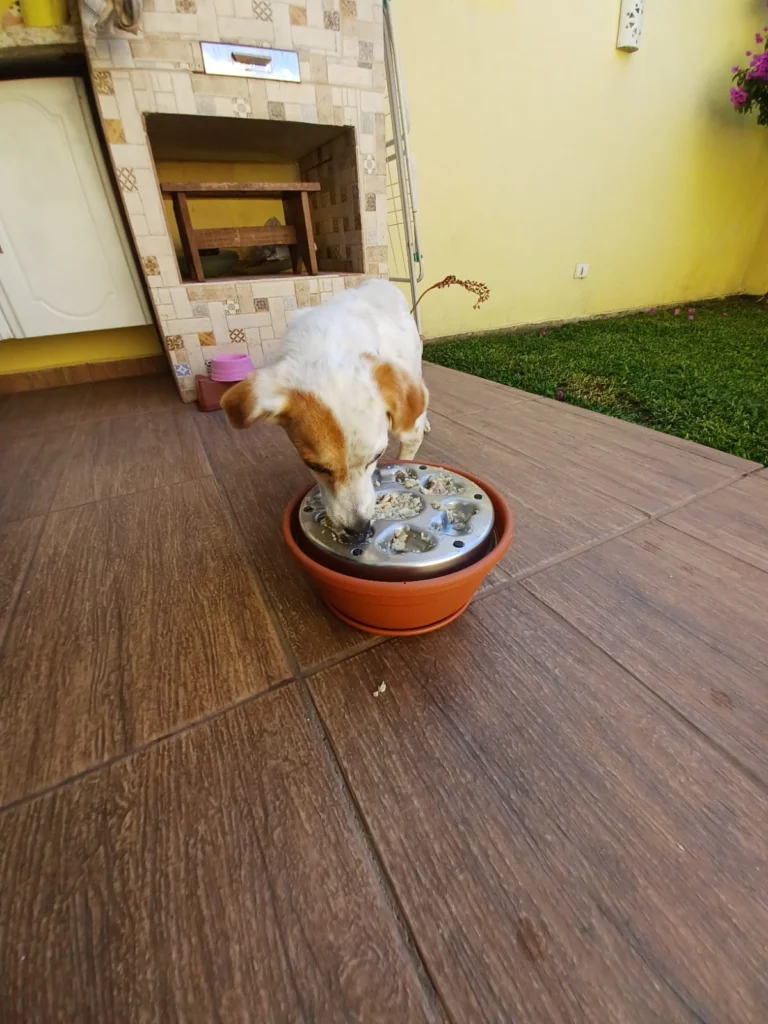
Adjusted dietary routines, thoughtful choices, and intestinal stability are integral components of managing dogs with IBD
You may also like

Lusiane Costa is a digital writer with degrees in Marketing and English Literature.
Creator of Latido Lógico and Logical Bark, she develops evidence-based content on canine aging, wellness, and senior-dog health.
The project was inspired by Goe — a senior dog whose longevity and resilience shaped a grounded, compassionate view on the challenges of aging in pets.
Each article reflects her commitment to transforming real experiences into accessible knowledge, helping owners understand, prevent, and care better for their animals at every stage of life.
Goe remains the heartbeat of this project.
[…] Deepen your understanding → https://logicalbark.com/lolis-journey-ibd-in-dogs-and-when-the-gut-skin-and-joints-are-connected/ […]
[…] See this complementary article → https://logicalbark.com/lolis-journey-ibd-in-dogs-and-when-the-gut-skin-and-joints-are-connected/ […]
[…] See the related article here: https://logicalbark.com/lolis-journey-ibd-in-dogs-and-when-the-gut-skin-and-joints-are-connected/ […]
[…] Read the full article on the subject → https://logicalbark.com/lolis-journey-ibd-in-dogs-and-when-the-gut-skin-and-joints-are-connected/ […]