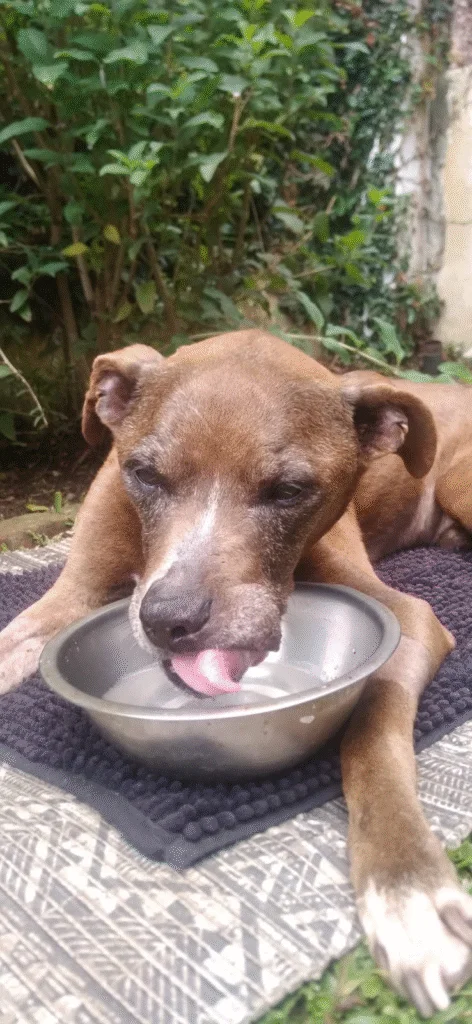
Hydration in Senior Dogs: Goe’s 70 Sips
As dogs age, their physiological needs change significantly. Metabolism slows down, mobility decreases, and water intake behavior becomes more dependent on the environment than on a natural thirst impulse. Among daily care routines, proper hydration in dogs is one of the most important — and at the same time, one of the most overlooked by caregivers.
The experience with Goe, a senior dog going through recovery and adaptation, shows how observing an animal’s daily routine can help prevent dehydration and preserve quality of life.
1. Why senior dogs drink less water
As dogs grow older, many begin to drink less water — not because they need less, but because their bodies no longer signal thirst as clearly. In addition, physical and environmental factors directly affect water intake.
- Difficulty walking to the water bowl
- Joint pain or weakness after treatment
- Reduced perception of thirst
- Very hot or very cold environments
- Water bowls placed in uncomfortable positions
This combination can lead to silent dehydration, which in senior dogs may affect kidney function, skin health, digestion, and even behavior.
2. When care requires adaptation
In Goe’s case, mobility became limited, and I had to adapt his routine. At first, I supported him so he could urinate; immediately afterward, I placed the water bowl close to him to take advantage of the moment when the body naturally seeks fluid replacement. This was a practical adaptation, not an emotional one — it was simply the most effective way to help him drink without unnecessary effort.
These adjustments illustrate how, in canine aging, caregivers must make small but intentional changes, such as:
- Bringing the water bowl closer during moments when the dog is already moving;
- Raising or stabilizing the bowl to reduce strain on the neck;
- Offering water right after urination or medication, when thirst tends to increase.
These subtle changes contribute significantly to better hydration in dogs.
3. The experience of Goe’s 70 sips
During this routine of observation, I began counting how many sips he took. On average, Goe drank about 70 sips per session. This was not done out of curiosity, but to assess whether he was actually replacing the fluids his body needed.
It is important to clarify: this has nothing to do with cognition or training. It relates to the fact that he was a senior dog with a medical history and reduced mobility. In such cases, caregivers must understand the animal’s limitations and create conditions that allow drinking without pain or fatigue.
Counting sips became a monitoring strategy. On days when he drank significantly less, I knew I needed to encourage hydration more actively — bringing the bowl closer or even offering slightly warm water.
According to studies from the University of São Paulo (USP), water is one of the most essential nutrients for animals, playing a fundamental role in physiological balance, body temperature regulation, and organ function. This reinforces the importance of maintaining adequate hydration in senior dogs, especially those with physical limitations or in recovery.
4. How to encourage hydration in senior dogs
For those caring for senior dogs, a few simple actions can make a meaningful difference:
- Offer fresh water several times a day (replace it, not just refill);
- Keep the bowl in an accessible area, free of obstacles;
- Use elevated or non-slip bowls for dogs with joint pain;
- On hot days, offer filtered water in smaller amounts more frequently;
- Observe whether medications increase thirst and adjust water availability accordingly;
- Consult a veterinarian if the dog drinks much less or much more than usual.
Explore solutions that provide comfort, support, and practicality:
Balanced Option (Recommended)
A practical and well-balanced water fountain for senior dogs. It provides continuous water flow, easy access, and encourages hydration without unnecessary complexity: https://amzn.to/4pJaEej
Premium option: https://amzn.to/455qJ5B
5. What this observation teaches
The experience of Goe’s “70 sips” shows that caring for a senior dog requires attentiveness. It is not enough to place a bowl of water and assume the dog will drink. Sometimes the dog wants to drink, but the position causes pain; sometimes the bowl is too far; sometimes the dog is simply exhausted after using the bathroom.
When caregivers understand this, hydration stops being accidental and becomes intentional care. This makes a significant difference, especially for dogs who have experienced illness, surgery, or have more sensitive organs.
Complementary reading: https://logicalbark.com/how-to-prepare-your-home-for-a-senior-dog/
Conclusion
Hydrating a senior dog is not just about keeping water available. It is about building a routine that respects aging, physical limitations, and health history. Observing how many sips the dog takes, when hydration works best, and how the dog positions itself at the bowl are simple practices that help prevent dehydration and support longevity with comfort.
Goe’s experience shows that small adjustments — working together — are enough to transform a basic physiological need into meaningful care.
The example also reveals that, in daily caregiving, each action connects to a larger whole. Just as each drop contributes to the water cycle, each attentive act forms the invisible structure that sustains our bond with dogs.
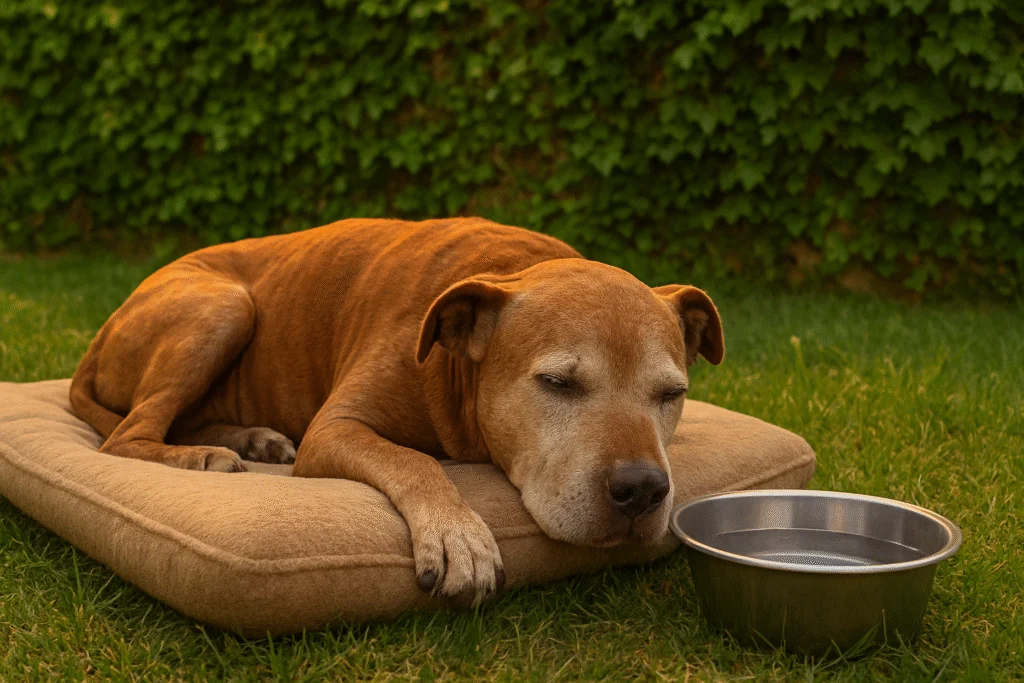
Image caption: Senior dog resting after hydration
Related articles
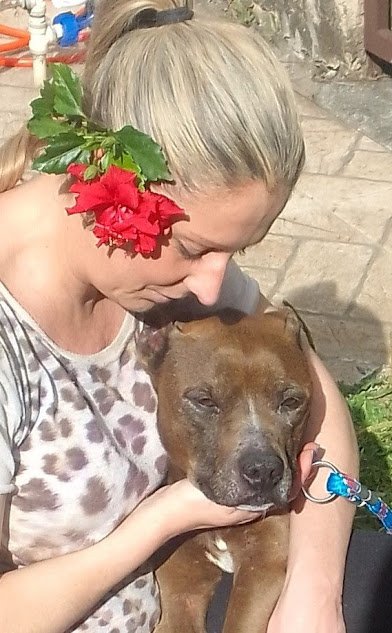

Lusiane Costa is a digital writer with degrees in Marketing and English Literature.
Creator of Latido Lógico and Logical Bark, she develops evidence-based content on canine aging, wellness, and senior-dog health.
The project was inspired by Goe — a senior dog whose longevity and resilience shaped a grounded, compassionate view on the challenges of aging in pets.
Each article reflects her commitment to transforming real experiences into accessible knowledge, helping owners understand, prevent, and care better for their animals at every stage of life.
Goe remains the heartbeat of this project.