
July 10, 2026
Observing a lifelong companion enter a veterinary clinic is, for any owner, an exercise of deep humility and attention. What were once vigorous and curious steps now become more calculated, often hesitant movements. Canine aging is not just a succession of years; it is a paradigm shift in how they perceive the world and, inevitably, how they react to the clinical environment, a place that carries aromas and sounds that can awaken deep anxiety.
Stress in the canine third age is not a capricious behavior; it is a complex biological response. Understanding how to manage stress in senior dogs during medical consultations requires us to set aside haste and embrace the other’s pace. The clinic must cease to be a place of fear and become a space of welcoming.
Preparation as an Act of Care
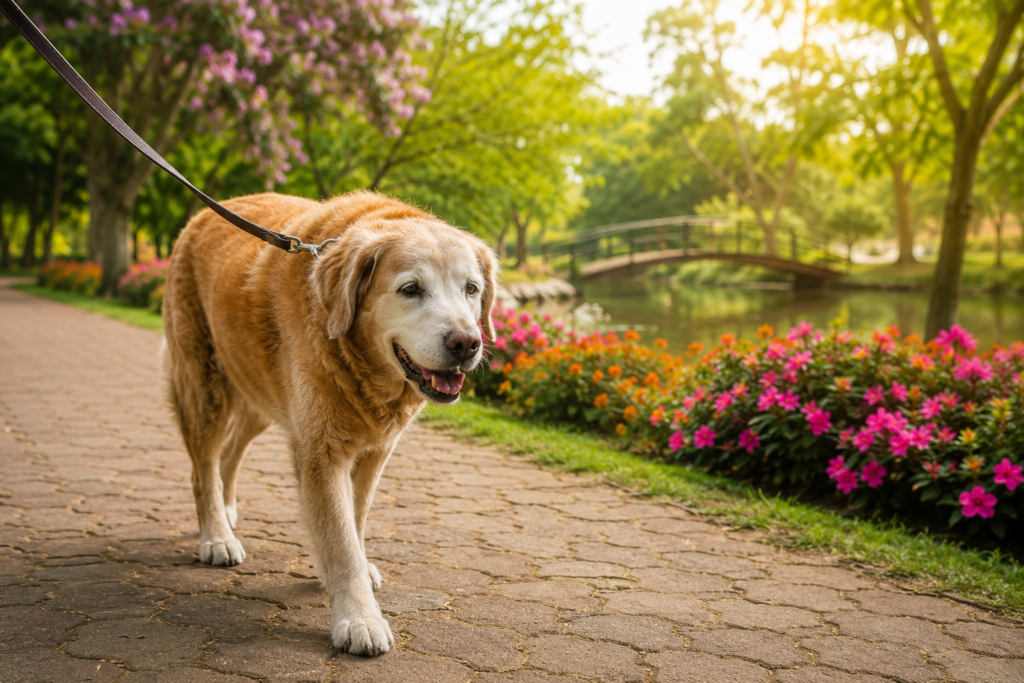
A calm walk before the clinic is the first step toward welcoming: when I am asked how to manage stress in senior dogs during medical consultations, my answer always begins here, in the calm rhythm of their steps.
The consultation experience begins long before the clinic door. Prior planning is the cornerstone of well-being. A relaxing walk, carried out at the animal’s pace — without the commitment of long distances, but with the necessary time for olfactory recognition of the environment — helps in discharging accumulated tensions. Pheromonotherapy, applied in the vehicle or the transport crate, can be a silent ally, creating an aura of familiarity that reduces reactivity toward the unknown.
Subtlety is fundamental. During transport, restraint should be gentle, ensuring the dog feels safe and not isolated. The focus is on preserving the emotional stability built during the walk, avoiding adrenaline spikes even before arriving at the office.
The Environment: A Refuge for the Senior
Once in the examination room, the senior dog’s physical vulnerability becomes evident. Many suffer silently with chronic joint pain, which makes slippery surfaces a painful challenge. The use of non-slip mats on the examination table is more than a technical adjustment; it is a gesture of respect for their physical dignity. Stability creates confidence.
Environmental management must be complemented by the constant presence of the owner. The owner’s figure acts as an emotional anchor, a safe harbor where the dog can seek refuge when feeling pressured. If medical protocol permits, the use of natural supplements or mild anxiety medication may be considered for severe cases of anxiety, always aiming for the mitigation of suffering, never the suppression of consciousness.
👉 Learn more about how this topic relates to other aspects of canine health: https://logicalbark.com/do-senior-dogs-feel-human-emotional-energy-the-science-behind-the-bond-between-guardians-and-their-dogs/
Silent Pain and Behavior
It is a common error to interpret certain resistances as stubbornness or disobedience. Often, a senior dog’s behavior during a consultation is a coded symptom of physical pain they cannot verbalize. An animal that shies away from touch or exhibits disproportionate panting may be communicating that its body cannot withstand the pressure of conventional handling.
As owners, our role is to be the translator of this silent pain. The medical consultation must be a three-way dialogue: the veterinarian, the owner, and the dog. The professional must have the sensitivity to conduct the clinical evaluation while respecting the senior’s physical limits, ensuring the procedure is executed with maximum gentleness.
By investing time and technique in stress management, we are not just making the consultation faster or more efficient; we are honoring the history we have built alongside these loyal beings. Managing stress is, ultimately, an act of deep love for longevity.
Preparation Makes All the Difference
The most common error is not preparing the pet in advance. A calm consultation starts long before leaving home. Here are the pillars to calm your dog:
- Pheromone use: An excellent alternative is synthetic pheromones (in sprays or diffusers). They emit signals of well-being that help reduce anxiety and create an environment of security around the animal, acting as a natural calming agent before and during the consultation.
- Strategic supplementation: Talk to your veterinarian about the use of nutraceuticals. There are specific supplements aimed at anxiety control and cognitive support for senior dogs, which help keep the dog more emotionally balanced in stressful situations.
- Comfort and welcoming: Remain calm, as the dog senses your emotional state. Use a secure transport crate or a blanket with the scent of home so they feel protected.
Want to facilitate your pet’s next consultation? Check out the pheromones and supplements here that are highly recommended, available on my Amazon list: https://amzn.to/4bgtnsg
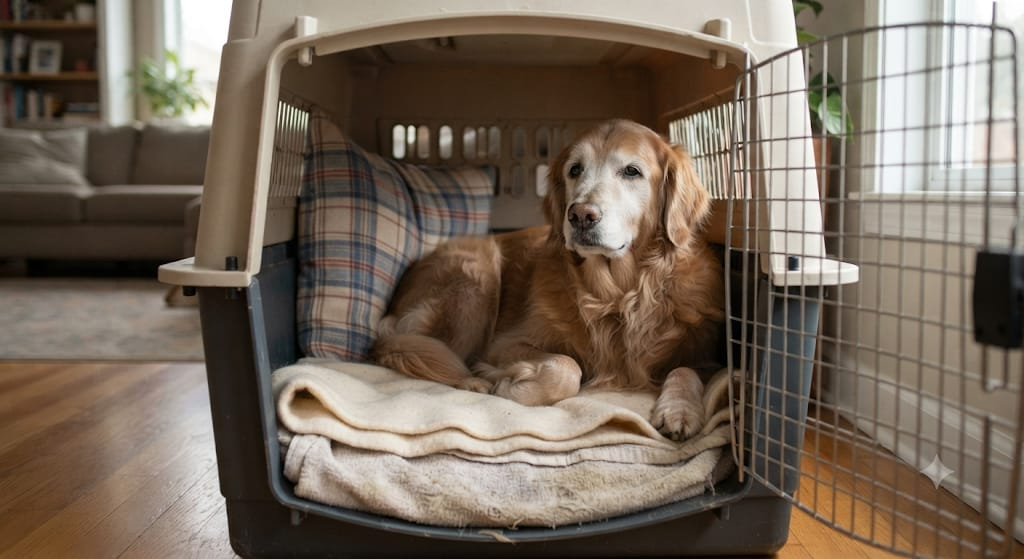
Nothing better than the scent of home and a soft pillow to feel safe and comfortable in the transport crate.
Conclusión
Taking care of your senior dog’s health does not need to be a source of suffering for them. Small adjustments in preparation, combined with the use of technologies like pheromones and appropriate supplementation, make the veterinary consultation stop being a trauma and become a necessary moment of care. Remember: your attentive gaze and advance planning are the greatest allies of your pet’s well-being in their third age.
Legal and Responsibility Note: The content presented here is strictly for informational and educational purposes. Stress management in senior dogs, including the administration of any type of medication, anxiety medication, or supplement, must be performed exclusively under the guidance and supervision of a qualified veterinarian. Each dog is a unique individual, and the guidance in this article does not replace a personalized clinical consultation and professional diagnosis.
You may also like

Lusiane Costa is a digital writer with degrees in Marketing and English Literature.
Creator of Latido Lógico and Logical Bark, she develops evidence-based content on canine aging, wellness, and senior-dog health.
The project was inspired by Goe — a senior dog whose longevity and resilience shaped a grounded, compassionate view on the challenges of aging in pets.
Each article reflects her commitment to transforming real experiences into accessible knowledge, helping owners understand, prevent, and care better for their animals at every stage of life.
Goe remains the heartbeat of this project.