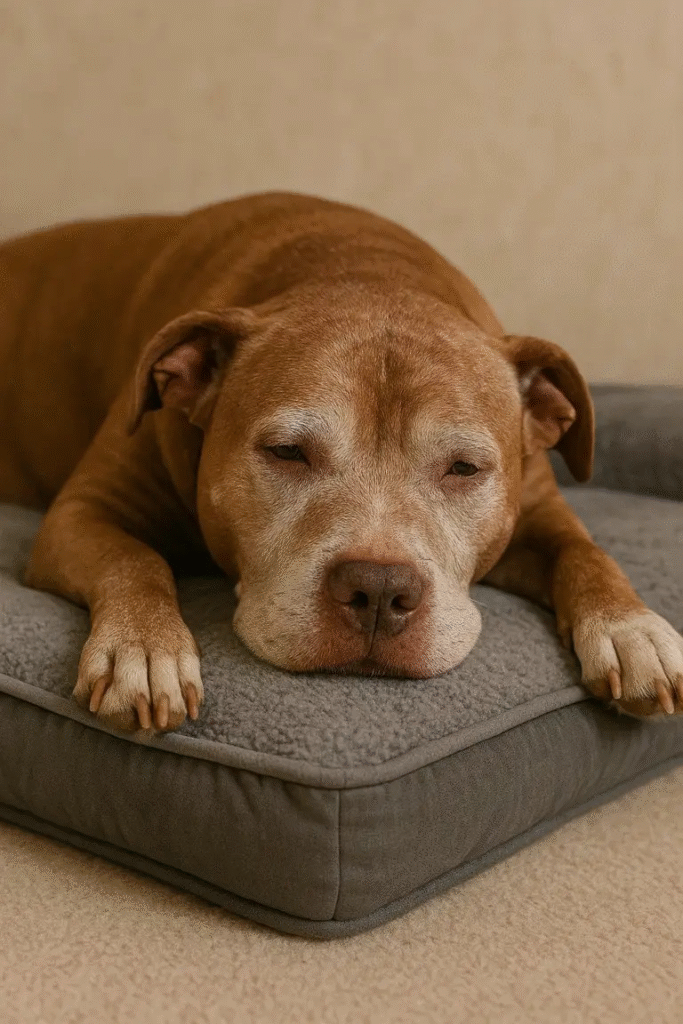
Senior dog showing signs of pain
As dogs age, they experience physical and behavioral changes that may indicate discomfort. The challenge is that they cannot describe what they feel. Identifying pain requires careful observation and attention to subtle day-to-day changes.
Why Is It Hard to Identify Pain in Dogs?
- Dogs naturally hide signs of weakness as an instinct for survival.
- In the wild, showing pain can expose vulnerability.
- When a dog displays clear signs of discomfort, the pain may already be advanced.
- The guardian’s attentiveness is essential for detecting small changes in behavior.
Behavioral Signs of Pain
- Social withdrawal: a once-sociable dog may prefer isolation.
- Agitation or irritability: some dogs become reactive or aggressive.
- Vocalization: whining or crying without a clear reason.
- Excessive licking: the dog repeatedly licks a painful area.
- Changes in sleep: sleeping too much or struggling to rest.
Physical Signs of Pain
- Difficulty getting up: stiffness, especially after rest.
- Limping or favoring a limb: avoiding weight on one leg or dragging a paw.
- Loss of appetite: pain can reduce interest in food.
- Shaking or tremors: may indicate significant discomfort.
- Rapid breathing: when unrelated to exercise, this can be a sign of pain.
Real-Life Examples
With my senior dog, Goe, I noticed moments when he moved less, hesitated to climb steps, or declined activities he previously enjoyed. These small changes are signals that prompt us to seek veterinary guidance. Pain is not always loud — sometimes it shows up in a tired expression or in the refusal to play.
Common Conditions That Cause Pain in Senior Dogs
- Arthritis and osteoarthritis: common joint diseases that limit mobility.
- Dental disease: tooth and gum pain can reduce appetite.
- Kidney or liver disease: internal discomfort also generates pain signals.
- Cancer: tumors may initially appear as localized pain.
- Muscle or joint injuries: even small efforts can cause pain in frail dogs.
What to Do if You Suspect Pain
- Contact your veterinarian as soon as possible.
- Clinical exams and imaging (such as X-ray or ultrasound) help identify the source.
- Never give human medications without guidance — many are toxic to dogs.
Treatment Options
- Pain relievers and anti-inflammatories — always prescribed by a veterinarian.
- Supplements, such as omega-3 and chondroitin, which help support the joints.
- Read a similar guide → https://logicalbark.com/omega-3-for-senior-dogs-goes-experience/
- Physical therapy and acupuncture as complementary options for pain relief.
- Orthopedic beds that reduce pressure points and improve comfort.
- Adjusted routine — shorter walks, avoiding stairs, and a safer environment.
Deepen your understanding →https://logicalbark.com/%f0%9f%90%be-top-5-comfortable-beds-for-senior-dogs-giving-your-best-friend-the-rest-they-deserve/
👉 A good option for senior dogs with joint pain is to invest in a comfortable orthopedic bed.
- Accessible option: https://amzn.to/4a2XCmC
- Premium option: https://amzn.to/4p7uAXw
The Guardian’s Role
More than offering medication, the guardian plays a central role in support and care. Being attentive to changes, adapting the routine, and providing company all help to ease both physical and emotional discomfort. A calm presence and consistent attention help senior dogs feel safer and more comfortable.
Conclusion
Identifying pain in a senior dog requires sensitivity and observation. Each change in posture, appetite, interaction, or movement can be a quiet signal that something is wrong. Aging does not have to mean constant suffering; it can be a phase marked by care, dignity, and comfort.
If you notice signs of pain, seek veterinary help and do not hesitate to ask for professional guidance. Senior dogs deserve to live this stage with as much comfort and well-being as possible.
🌿 If you share your life with a senior dog, take time to observe their signals closely. Every day together is a chance to protect their comfort and quality of life.
At Logical Bark, we believe that every careful observation of pain in senior dogs is an act of responsibility and genuine care. Noticing small changes, offering support, and adapting their routine are simple gestures that make their golden years more comfortable, safe, and full of dignity. Each attentive moment strengthens their well-being and ensures they age with the comfort they deserve.

Senior dog visibly uncomfortable

Lusiane Costa is a digital writer with degrees in Marketing and English Literature.
Creator of Latido Lógico and Logical Bark, she develops evidence-based content on canine aging, wellness, and senior-dog health.
The project was inspired by Goe — a senior dog whose longevity and resilience shaped a grounded, compassionate view on the challenges of aging in pets.
Each article reflects her commitment to transforming real experiences into accessible knowledge, helping owners understand, prevent, and care better for their animals at every stage of life.
Goe remains the heartbeat of this project.