February 2, 2026
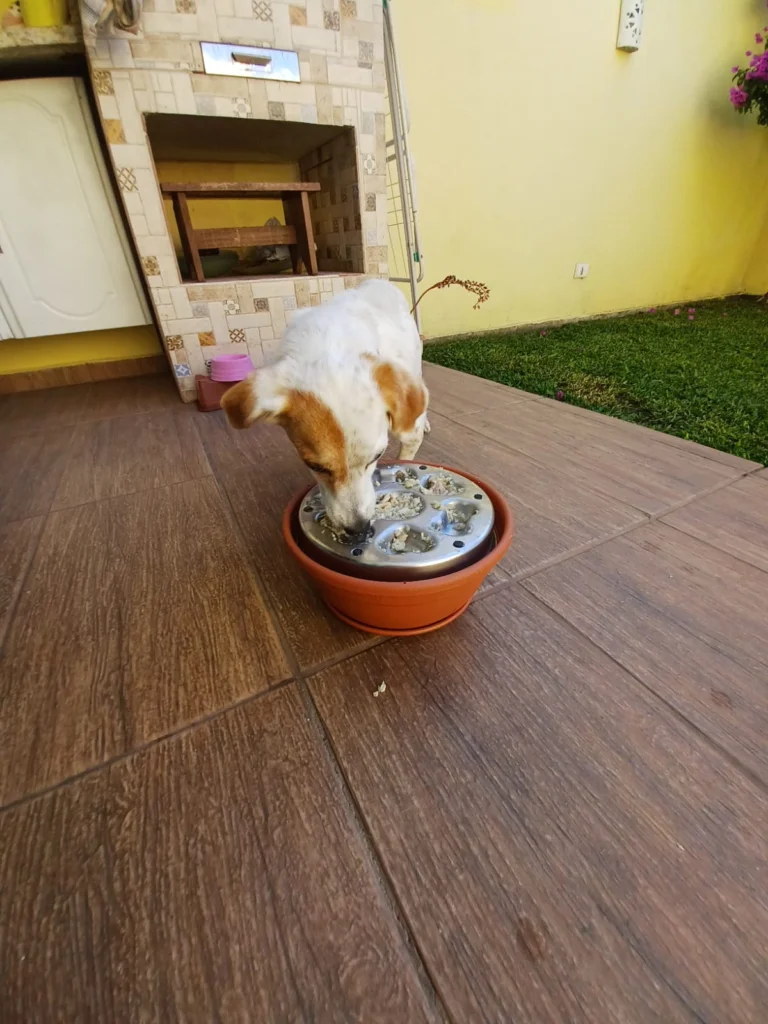
Natural food for dogs with a sensitive gut: Loli’s experience with a restricted diet and long-term nutritional management</h2
For dogs with a sensitive gut, food stops being “just nutrition” and becomes a central part of day-to-day management. In Loli’s case, simplifying her diet made it possible to stabilize a chronic intestinal condition, reduce flare-ups, and preserve her quality of life over time.
After years of trial and error with commercial kibble, different homemade approaches, and repeated adjustments, one pattern became obvious: the more ingredients we added, the greater the chance of disrupting her gut again. The turning point came when her meals stopped being complex and became predictable.
Hormone-free chicken and sweet potato: a simple, functional base
Loli’s current diet is built essentially around chicken without antibiotics or hormones and sweet potato, following veterinary guidance. This choice is not about trends. It is about reducing inflammatory triggers in a dog with a history of Inflammatory Bowel Disease (IBD).
We choose chicken without antibiotics to avoid residues that may interfere with the gut microbiome and immune response. Sweet potato provides a gentle, well-tolerated energy source and a helpful fiber profile for dogs with intestinal sensitivity.
This diet is offered in three meals a day, respecting not only digestibility but also Loli’s behavior. When she is agitated, she will not eat. Forcing food during those moments has never worked well. Waiting for a calmer window is part of the management and supports a more efficient digestion.
Why some dogs can do well on a very restricted diet
A common question is whether a dog can live well on such a simple diet. The answer is: yes—as long as the diet is properly structured and followed with appropriate guidance.
For dogs with a sensitive gut, the priority is not variety. It is stability. The fewer potentially irritating ingredients, the lower the chance of reactivating inflammation. Loli’s diet is not designed for diversity; it is designed for steadiness—and that has been crucial for keeping her symptoms under control.
This approach gives the gut a chance to reorganize, helping reduce episodes of diarrhea, abdominal discomfort, skin changes, and joint issues that can be associated with systemic inflammation.
The indispensable role of supplementation
It is important to highlight that, in Loli’s case, food alone would not have been enough. Supplementation played a decisive role in maintaining clinical stability, especially because dogs with IBD often deal with nutrient malabsorption.
Support options typically aim at different fronts: intestinal mucosa recovery, strengthening the gut barrier, immune modulation, and support for joints and skin. Together, this makes it easier for the body to respond well to a simple diet and to maintain balance over time.
Any supplement introduction should be done gradually, one at a time, with careful observation of the dog’s response. This reduces the risk of overload and allows small, precise adjustments—particularly important for a sensitive gut.
Some dog owners also look into glutamine as supportive help for intestinal health. Below is one option included strictly as an informational reference.
See a suggested option here → https://amzn.to/45FA1Wu
Food and supplementation as a long-term strategy
Loli’s experience shows that for dogs with a sensitive gut, food is not a one-size-fits-all recipe—it is a strategy. Reducing ingredients, respecting the animal’s rhythm, and integrating diet and supplementation as parts of the same plan can make a meaningful difference.
Discover more details in this post → https://logicalbark.com/when-the-gut-of-senior-dogs-becomes-the-starting-point-lolis-experience/
When food stops being a source of instability and becomes a supportive foundation, the gut can reorganize. As a result, immune balance improves, the skin responds better, and the joints often face less inflammatory pressure.
For other owners living with dogs who have intestinal sensitivity, this experience shows that it is possible to keep a dog healthy and stable with a simple, well-guided diet—when the focus stays on careful observation and the right choices over time.

Sunset teaches that care is not haste — it is diligence.
You may also like

Lusiane Costa is a digital writer with degrees in Marketing and English Literature.
Creator of Latido Lógico and Logical Bark, she develops evidence-based content on canine aging, wellness, and senior-dog health.
The project was inspired by Goe — a senior dog whose longevity and resilience shaped a grounded, compassionate view on the challenges of aging in pets.
Each article reflects her commitment to transforming real experiences into accessible knowledge, helping owners understand, prevent, and care better for their animals at every stage of life.
Goe remains the heartbeat of this project.