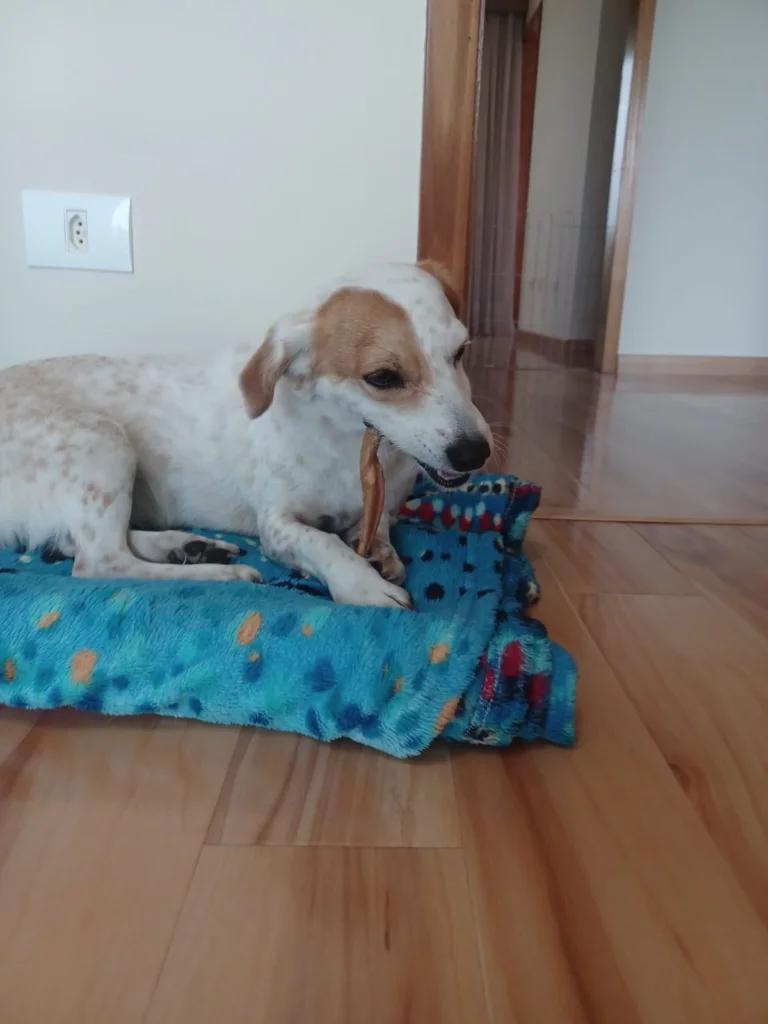
In Loli’s case, fly snapping in dogs was observed as a behavior of biting at the air, associated with careful reading of context and daily routine.
The behavior commonly known as fly snapping in dogs often causes concern among dog guardians. In English, this pattern is referred to as fly snapping or fly biting and describes episodes in which the dog appears to bite at the air, as if chasing something invisible. Although the gesture draws attention, it should not be interpreted in an isolated or immediate way.
In Loli’s case, fly snapping in dogs was not an isolated event, but rather observed within a broader context of intestinal sensitivity.
Over extended periods of observation, the behavior of biting at the air in dogs has been associated with different factors, including sensory stimuli, gastrointestinal discomfort, changes in the gut–brain axis and, in some cases, neurological considerations. For this reason, understanding the context is more important than labeling the behavior.
What characterizes fly snapping (fly biting) in dogs
Fly snapping in dogs commonly presents the following features:
- rapid jaw movements, as if the dog were trying to catch something;
- fixation of the gaze on specific points;
- brief or recurrent episodes throughout the day;
- frequent occurrence after meals or during rest;
- absence of visible stimuli in the environment.
These signs do not, by themselves, constitute a diagnosis. They act as behavioral indicators that call for broader observation of the dog’s routine, diet and clinical history.
Fly snapping in dogs and its possible relation to the gut
In recent years, interest in the relationship between the gut and behavior in dogs has grown. The gastrointestinal tract communicates directly with the nervous system through inflammatory, metabolic and neurochemical pathways. In dogs with a history of intestinal inflammation, this dialogue may manifest through signs that go beyond the digestive system.
In contexts of inflammatory bowel disease (IBD) in dogs, reflux, mild nausea, abdominal discomfort or altered nutrient absorption may trigger atypical behavioral responses. Fly snapping associated with gut-related issues thus emerges as a plausible hypothesis that should be considered carefully, without premature conclusions.
Loli’s case and her history of IBD
Loli has a real and documented history of inflammatory bowel disease (IBD) in dogs, accompanied by cutaneous and joint manifestations. In the early stages, some signs were confused with other conditions, precisely because the symptoms did not present in a classic or obvious way.
The management that brought greater stability over time involved a systemic approach: a restricted diet for dogs with IBD, based on sweet potato and antibiotic-free chicken, combined with specific supplementation. Among the resources used were Fiberlift, glutamine for dogs, vitamins D3 and B12, Food Dog Transition and algae-based omega-3, with a focus on reducing intestinal inflammation and supporting the nervous system.
Within this context, the appearance of behaviors such as fly snapping in dogs was not interpreted as an isolated event, but as a possible sign that the organism was responding to some imbalance. In dogs with a history of IBD, small changes in routine, diet or stress may be reflected in subtle behavioral manifestations.
In some monitored contexts, soluble fibers such as psyllium have been used cautiously to support gut health, always with professional guidance.
Explore this useful item → https://amzn.to/3NKKwl6
🔹 Glutamine
In similar routines, glutamine has appeared as a resource to support the integrity of the intestinal mucosa, especially in contexts of digestive sensitivity.
See another recommended product → https://amzn.to/3Z7Gy8G
Essas frases estão:
Gut, inflammation and canine behavior
The so-called gut–brain axis in dogs helps explain why digestive and behavioral signs may occur together. Low-grade inflammatory processes, even when they do not produce obvious pain, can alter how the nervous system processes stimuli. In such cases, behavior may function as a marker of discomfort.
This does not mean that every dog with fly snapping has an intestinal problem, nor that every intestinal issue leads to this behavior. The correct approach lies in observing patterns, recurrence and associations, always with professional guidance.
How to observe fly snapping in dogs responsibly
For guardians who notice air-biting behavior in their dogs, some practices help with evaluation:
- recording short videos of the episodes;
- noting the timing and relation to feeding;
- observing stools, appetite and signs of discomfort;
- mapping recent changes in routine or diet.
This information is essential for more accurate veterinary assessment, especially in dogs with a history of gastrointestinal sensitivity.
Deepen your understanding →https://logicalbark.com/when-the-gut-of-senior-dogs-becomes-the-starting-point-lolis-experience/
When to seek veterinary guidance
Professional evaluation should be sought if fly snapping in dogs is accompanied by disorientation, loss of balance, excessive salivation, frequent vomiting, apparent pain or sudden behavioral changes. Early investigation helps avoid misinterpretation and unnecessary interventions.
Final considerations
Fly snapping in dogs is rarely a simple phenomenon. In dogs like Loli, with a history of IBD and intestinal sensitivity, this behavior reinforces the importance of viewing the organism as a whole. Rather than seeking quick answers, the safest path lies in careful observation, consistent management and respect for each dog’s individuality.
Important notice
This content is informational and based on observations within a family context. It does not replace veterinary evaluation. Each dog has its own history and needs, and any conduct should be guided by a qualified professional.
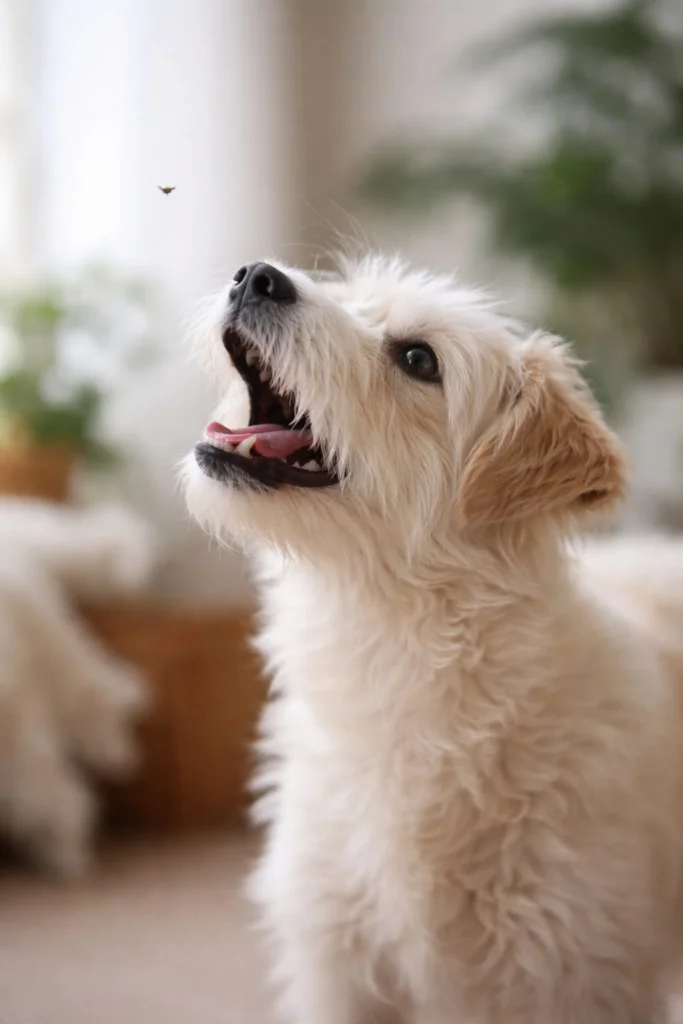
Fly snapping in dogs may present itself discreetly in everyday life.
You may also like

Lusiane Costa is a digital writer with degrees in Marketing and English Literature.
Creator of Latido Lógico and Logical Bark, she develops evidence-based content on canine aging, wellness, and senior-dog health.
The project was inspired by Goe — a senior dog whose longevity and resilience shaped a grounded, compassionate view on the challenges of aging in pets.
Each article reflects her commitment to transforming real experiences into accessible knowledge, helping owners understand, prevent, and care better for their animals at every stage of life.
Goe remains the heartbeat of this project.